
Toadstool Leather Coral Care: Hardy Soft Coral Essentials for Beginner Reef Tanks
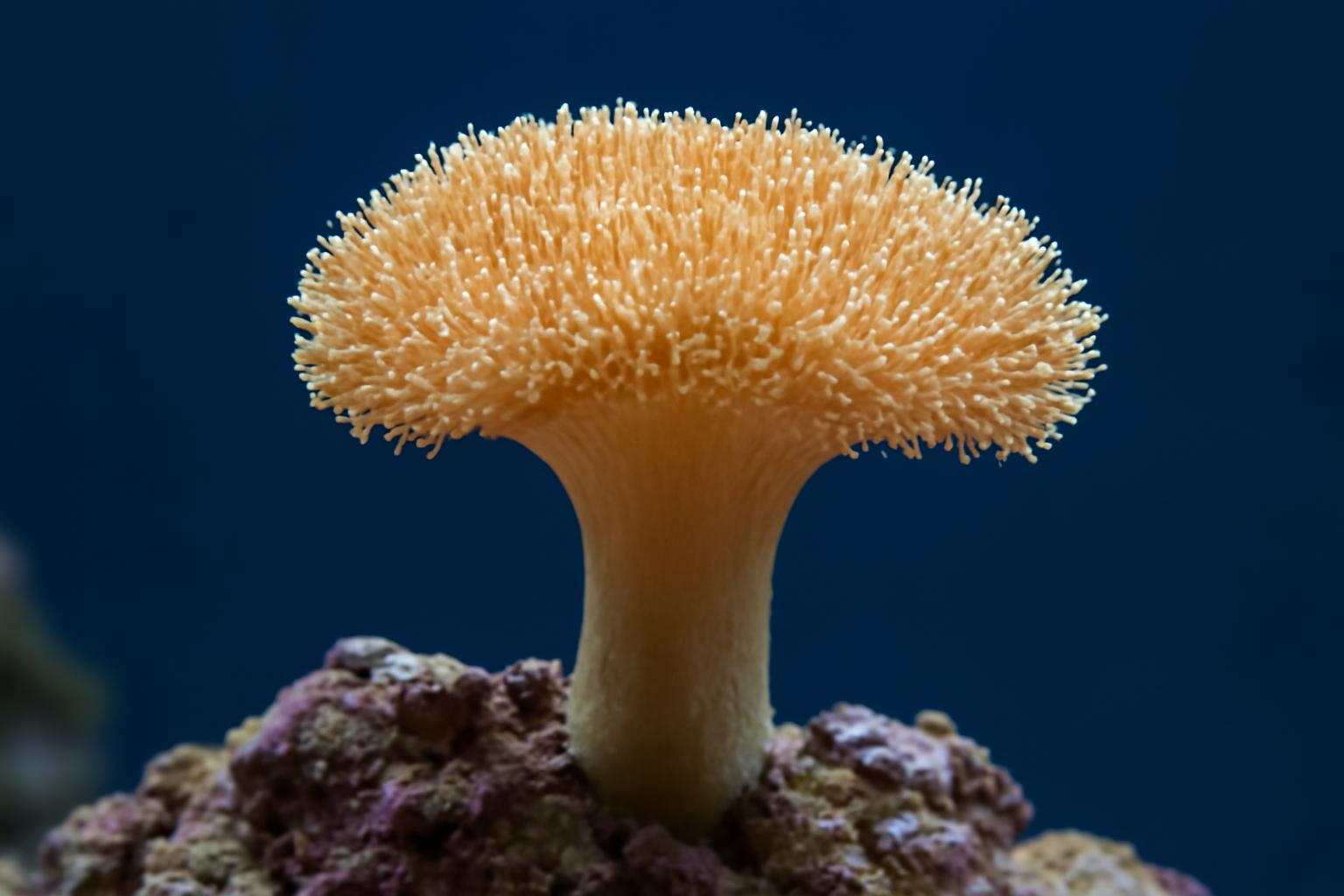
A healthy specimen may close its polyps, look dull, develop a waxy or slimy film and seem to decline before recovering.
A toadstool leather coral is one of the more forgiving ways to add real coral movement to a reef tank without stepping straight into the tighter demands of many stony corals. In hobby sources, it is widely described as hardy, adaptable, and beginner-friendly, especially compared with more demanding SPS corals and many touchier LPS choices. The appeal is easy to see: a broad cap, long waving polyps, a recognizable mushroom-like shape, and a colony form that gives a tank motion and height without asking for expert-level precision on day one.
The part that matters just as much, though, is what “easy” actually means. A toadstool is not a throw-it-anywhere coral. It still does best in an established system with stable salinity, temperature, and alkalinity, plus enough room to grow into a real colony. If your aquarium is still bouncing around after every top-off or every maintenance lapse, it is smarter to get the basics under control first with a reef tank setup guide and a saltwater aquarium water parameters guide.
That parameter-first mindset is exactly what makes this coral such a good beginner choice. Toadstools usually reward consistency more than gadgets, bottled fixes, or constant intervention. In a stable tank, they can become one of the most useful corals you own visually: movement, texture, height, and a “finished reef” look from a single expanding colony.
What Is Toadstool Leather Coral?
Toadstool leather coral usually refers to species in the genus Sarcophyton, a group of soft corals in the family Alcyoniidae. The common name comes from the basic body plan: a stalk topped by a cap, giving the colony a leathery mushroom or toadstool shape. One commonly referenced species, Sarcophyton glaucum, is identified as a toadstool leather coral and listed from the Red Sea to the western Pacific in general taxonomy references for the genus (Wikipedia).
That silhouette is only part of what makes the coral distinctive in aquariums. When open, the cap extends long, slender polyps that create the flowing look most aquarists want. Some descriptions of Sarcophyton also note dimorphic polyps, with larger pinnate polyps extending from the cap and smaller, shorter ones closer to the base. Like many reef corals, toadstools rely primarily on symbiotic zooxanthellae for energy rather than needing heavy direct feeding (AlgaeBarn).
Color is usually subtler than many new hobbyists expect from named frags. Common forms are often beige, tan, gray-brown, or yellow-brown, with greener or brighter polyps in some variants. In practice, structure and health matter more than a trade name: look for a firm stalk, intact tissue, and a specimen that appears settled enough to adapt well after transfer.
It also helps to think of a toadstool as a structure coral, not just a decorative frag. Even when a new frag looks small and simple, the colony form is the point. Over time, healthy specimens can broaden enough to define their own patch of movement and shade in the aquascape, which is why these corals often make a tank look more mature long before they reach maximum size.
Ideal Tank Setup and Water Parameters
A toadstool leather coral is best added to a reef tank that has already proven it can stay stable. That means more than having completed an initial cycle once. It means salinity is not creeping upward every week, temperature is not drifting, and alkalinity is not swinging whenever maintenance slips. This coral is often called tolerant, but tolerance is not the same thing as thriving.
If you are still building the system itself, start with a sound reef tank setup sequence before worrying about coral placement.
For planning purposes, space matters more than the size of the frag you buy. In mixed-reef terms, 75 gallons or more is a practical benchmark once mature colony size, future shading, and coral spacing all start to matter, and 8 inches or more from nearby corals is a useful starting distance for growth and chemical competition (Queen City Corals).
Across hobby care guidance, a conservative beginner target is 75–80°F, specific gravity 1.023–1.026, pH 8.1–8.4, and alkalinity 8–12 dKH (Extreme Corals; Manta Systems; Vivid Aquariums).
As a quick-reference setup chart, those targets translate into the following practical starting point:
| Factor | Practical beginner target | Why it matters |
|---|---|---|
| Temperature | 75–80°F | Avoids repeated heat or chill stress |
| Specific gravity | 1.023–1.026 | Salinity stability matters more than chasing an exact decimal |
| pH | 8.1–8.4 | Supports normal reef chemistry stability |
| Alkalinity | 8–12 dKH | Swings here commonly show up as coral stress |
| Light | Moderate to moderately high | Enough for photosynthesis without abrupt shock |
| Flow | Moderate, indirect, somewhat chaotic | Keeps the cap clean and helps with shedding |
| Spacing | At least 8 inches to start | Leaves room for expansion and chemical competition |
| Tank planning | Mature reef, often 75 gallons or more in communities | Allows for colony growth and mixed-reef spacing |
The table is useful, but the real lesson is stability. A toadstool usually handles ordinary reef conditions well when those conditions stay steady. If the tank ricochets between corrections, the coral may survive, but it is more likely to stay closed, look dull, or shed more dramatically.
A helpful way to think about this coral is to separate a stable target from a broad survivable range. The stable target is where you try to keep the aquarium every day. The survivable range is what the coral may tolerate temporarily. Beginners get into trouble when they confuse the second with the first. Toadstools are forgiving because they can absorb mild imperfection, not because they enjoy instability.
A few practical habits make success much easier:
- use an ATO if evaporation causes salinity creep,
- test alkalinity often enough to catch trends before they become swings,
- avoid major changes to light and flow on the same day,
- leave open room around the future cap, not just the stalk,
- and keep pumps clean so the flow pattern you intended is the flow pattern the coral actually receives.
This is one of those corals that teaches a good reefkeeping lesson early: hardy livestock often thrives in boring tanks. Predictable top-off, restrained corrections, and repeatable maintenance matter more than constant tinkering.
Lighting and Flow Requirements
Lighting advice for toadstool leather coral varies a bit across the hobby, but the overlap is still clear enough to use. Most care sources place them in the moderate to moderately high range and emphasize gradual acclimation so the coral is not shocked by a sudden jump in intensity. That acclimation point matters more than obsessing over an exact shelf in the tank or a brand-specific lighting recipe (Extreme Corals).
This is why some recommendations sound contradictory when they really are not. One guide may describe the coral as happy under modest lighting, another as preferring moderate to high light, and another as highly adaptable. In practice, those can all be true at once. The coral is flexible, but abrupt change is where flexibility runs out.
Flow guidance is more consistent. Toadstools generally do best in moderate, indirect, somewhat chaotic flow that moves the polyps, keeps debris from settling on the cap, and helps the coral clear its periodic surface film. Leather coral care guidance also warns against strong direct jets, because too much direct flow can keep polyps retracted and even damage tissue over time (Reef Chasers).
For a beginner, the easiest translation is simple: avoid the dead zone, and avoid the fire hose.
If the cap looks dusty, stagnant, or repeatedly coated in film, it probably needs better indirect movement. If one side looks battered or the polyps stay tucked in under a constant blast, the flow is too direct. The right result is gentle sway, not whipping.
A good starting placement usually gives the coral:
- enough light to maintain normal extension and color,
- enough movement for the polyps to sway rather than snap,
- no constant laminar blast from one pump,
- and no low-flow pocket where film and detritus settle on the cap.
If your tank runs bright, start the coral a little lower and adjust only if it asks for more. If your tank runs strong flow, aim pumps past the coral rather than directly at it. Toadstools usually respond better to patient adjustment than to immediate “optimization.”
Placement and Growth Expectations
Placement advice can sound inconsistent because tanks differ so much. You will see recommendations ranging from the sandbed to mid-level rockwork to the middle third of the aquarium. The contradiction mostly disappears once you realize that placement is really about matching your own light and flow pattern, not obeying a universal shelf rule.
In brighter, more turbulent tanks, lower placement may be the safer starting point. In dimmer mixed reefs, mid-level rockwork often makes more sense. What matters most is that the coral gets enough light and indirect movement without being blasted, and that it is mounted securely enough not to topple or twist.
Spacing is the part beginners most often underestimate. Toadstools do not just occupy the small plug or base you see on purchase day. The future footprint is defined by the cap above the stalk, and that cap can eventually shade neighbors below it. That is why the 8-inch spacing mindset is useful even with a tiny frag, and why mature mixed-reef planning often points toward 75 gallons or more rather than squeezing the coral into whatever open hole happens to exist (Queen City Corals).
Growth descriptions in hobby sources vary from slow to moderate, and it is better to stay conservative here. Do not buy a toadstool expecting rapid expansion on a schedule. Buy it with the assumption that, given time and stable conditions, it can become large enough to dominate a section of the aquascape.
That long-view planning matters in three dimensions:
- leave open space above the colony, not only around the base,
- avoid placing delicate or light-hungry corals directly under the future cap,
- expect the coral to change local flow once the cap broadens,
- and remember that “room to grow” includes chemical distance as well as physical distance.
Hobbyists also report very large specimens and occasional splitting under favorable conditions, but those reports are anecdotal, not a timetable you should expect in every tank. The same forum discussions that describe foot-wide colonies also describe wide variation in growth and behavior from one system to another (Reef2Reef).
This colony-first way of thinking is part of why toadstools work so well in beginner reefs. They do not just fill a plug. They create a visible center of motion and texture that can make the whole tank look more intentional.
Feeding and Nutrition Basics
Toadstool leather coral is primarily photosynthetic. Although symbiotic algae called zooxanthellae hosted within them supply most of their nutritional requirements through photosynthesis they do require supplemental feedings of phytoplankton and marine snow Toadstool Leather Coral - Vivid Aquariums. If you choose to feed, hobby care guidance generally keeps the recommendation modest: fine foods such as microplankton or phytoplankton once or twice weekly are the reasonable end of supplementation, not chunky target feeding or a heavy coral-food routine (Manta Systems).
That distinction matters because beginners often see visible polyps and assume the coral must be target fed to survive. With toadstools, that usually is not the case. In a normal reef tank with fish feeding, suspended organics, and workable nutrient availability, the coral is often getting what it needs already.
If you want to experiment with supplemental feeding, keep the experiment small:
- choose very fine particulate foods,
- feed infrequently,
- and let the tank’s response decide whether it is worth continuing.
A toadstool that opens well, sheds normally, and slowly expands is not asking to be force-grown. Overfeeding the system in the name of “helping” a leather coral can create the exact problems beginners least want: unstable nutrients, nuisance algae, cloudy water, and extra maintenance.
For most reefers, the best nutrition plan for a toadstool is simply a healthy, fed reef tank with stable parameters. This is one of the reasons its reputation for simplicity is deserved.
Compatibility and Managing Allelopathy
Toadstool leather coral looks peaceful, and in one sense it is.
Hobby guidance repeatedly describes Sarcophyton as allelopathic, meaning it can release compounds that irritate or inhibit nearby corals. Manta Systems specifically frames terpenoid-based chemical defenses as an important consideration when mixing toadstools with SPS, LPS, or other soft corals in shared water volume (Manta Systems).
That does not mean a toadstool is automatically unsuitable for every mixed reef. It means compatibility is conditional. Water volume, spacing, colony size, filtration, and maintenance all influence whether the coral remains a manageable neighbor or becomes the colony that quietly leaves everything around it looking irritated.
The standard control tools are straightforward: give the coral room, run activated carbon, maintain good filtration, keep indirect flow adequate, and stay consistent with water changes. Those are the recurring management steps in leather-heavy and mixed systems because they reduce the concentration and local impact of released compounds (Reef Chasers).
Placement strategy matters just as much as filtration. If you crowd a toadstool into a chemically busy mixed reef and let the cap expand right over sensitive stony corals, the problem is not that the leather “suddenly turned aggressive.” The problem is that the tank was planned around a frag instead of a colony.
One especially familiar pairing is clownfish using a toadstool as a substitute host. Tidal Gardens notes that clownfish often gravitate toward toadstool leathers and that the coral generally tolerates that contact better than many other corals would (Tidal Gardens).
That pairing is possible, not guaranteed. Some clownfish ignore toadstools entirely. Others adopt them quickly. It is best treated as a bonus rather than a reason to buy the coral.
The broader rule is safer and more useful: toadstools are peaceful to the eye, competitive in the water.
Shedding, Stress, and Troubleshooting
One of the most important things to understand about toadstool leather coral is that normal behavior can look alarming. A healthy specimen may close its polyps, look dull, develop a waxy or slimy film, and seem to decline before recovering. That shedding behavior is widely described in hobby guidance as a routine self-cleaning cycle rather than an automatic sign of disease or collapse (AlgaeBarn).
During a shed, the coral may stay closed for several days. That can be stressful for new keepers who are used to reading closed polyps as an immediate emergency. With toadstools, short shutdown periods often follow shipping, fragging, relocation, changes in light, changes in flow, or a normal shed cycle.
The real skill is separating expected closure from prolonged stress. A coral that is intact, merely coated in a film, and otherwise holding its form may simply need time and good indirect flow. A coral that is shrinking, trapping detritus for long stretches, or failing to improve after settling deserves closer inspection.
When a toadstool looks unhappy, work through the simple causes in order:
- Check what changed recently. New light intensity, redirected pumps, fresh glueing, or a move in the aquascape are common triggers.
- Check salinity and alkalinity first. These are common beginner trouble spots because they drift quietly before the coral makes the problem visible.
- Check the flow pattern on the cap. Too little flow lets film and debris accumulate; too much direct flow can keep the polyps retracted.
- Check nearby coral pressure. Crowding, new additions, or a slowly expanding neighbor can change how the toadstool behaves.
- Check your own patience. Many intervention mistakes start when a normal shed is mistaken for a rescue situation.
If the shed leaves loose material hanging on the colony or nearby rock, hobby guidance recommends siphoning away the remnants rather than letting them sit and decay in place. And if you suspect broader chemical irritation in a mixed reef, activated carbon, protein skimming, and about 20% weekly water changes are common measures recommended to reduce the impact of released compounds (AlgaeBarn).
There is a difference between helping a coral and harassing it. Beginners often make the worst problems worse by moving a closed toadstool repeatedly, changing both light and flow at once, or adding supplements without a clear reason. A leather that is only shedding usually wants steady conditions, not constant rescue attempts.
Signs that justify more concern include:
- closure that drags on with no sign of the shed resolving,
- obvious tissue deterioration rather than temporary dullness,
- chronic inability to clear debris from the cap,
- or persistent failure to extend after the coral should reasonably have adjusted.
Even then, the best response is usually methodical rather than dramatic. Verify the basics, improve indirect flow if needed, refresh carbon, maintain water changes, and then give the coral time. Toadstools are hardy partly because they recover from common stressors when the environment is allowed to stabilize.
That is also the broader lesson of keeping them. Stable chemistry comes first, moderate light and indirect flow come next, spacing matters more over time than it does on day one, and carbon plus water changes become more useful as mixed-reef crowding rises. For beginners, that is exactly the kind of coral worth learning on.
Is toadstool leather coral beginner-friendly?
Usually, yes. In hobby and editorial sources, toadstool leather coral is widely described as one of the easier soft corals for new reef keepers because it tolerates ordinary reef conditions better than many stony corals, provided those conditions are reasonably stable (Practical Fishkeeping). “Beginner-friendly” should still be read as “appropriate for a stable tank,” not “safe for an uncycled or constantly swinging tank.”
How do I manage allelopathy from toadstool leather coral?
Start with spacing, then support that spacing with filtration. Leave open room around the colony, avoid packing sensitive corals around or beneath the future cap, run fresh activated carbon, and stay consistent with water changes and general nutrient export. Those steps do not eliminate allelopathy, but they are the standard hobby tools for reducing its real-world impact in mixed reefs.
What causes toadstool leather coral to close polyps?
The most common causes are normal shedding, recent handling or shipping, sudden changes in light or flow, debris accumulation on the cap, parameter instability, or irritation from nearby corals. In other words, closure is a symptom, not a diagnosis. The first question usually is not “what should I dose?” but “what changed?”
Can clownfish live with toadstool leather coral?
Often, yes. Some clownfish ignore toadstools, while others use them like a substitute host. Tidal Gardens specifically notes that clownfish often gravitate to toadstool leathers and that the coral generally tolerates the contact well (Tidal Gardens). Just do not treat it as a guaranteed anemone replacement.
Does toadstool leather coral need special trace elements?
There is not strong, consistent support in this evidence set for special trace-element dosing as a core requirement. One retailer care panel for a green polyp variant lists iodine, strontium, and trace elements among its needs, but broader care guidance in the evidence is more consistent on the fundamentals: stable salinity, pH, alkalinity, sensible maintenance, and a stable environment matter more than chasing coral-specific bottles (LiveAquaria).