
Master Water Testing for Your Marine Fish Tank: Parameters, Schedules, and Kit Essentials
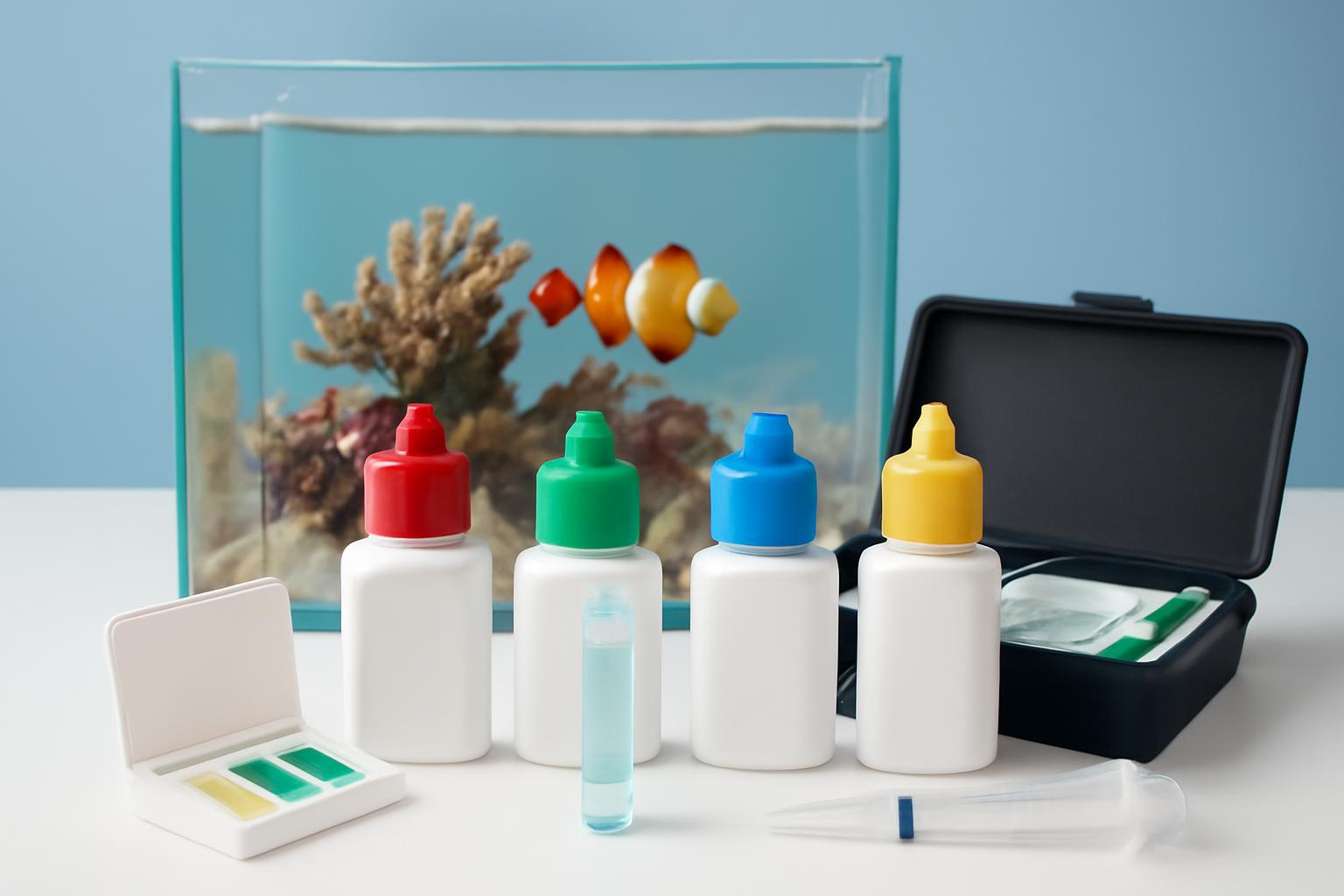
A practical setup uses a trusted salinity tool and a basic cycling set, adding alkalinity when corals arrive and other tools only as tank demands justify them.
Marine fish tank test kits are less about collecting numbers and more about preventing surprises. A saltwater aquarium can look crystal clear while salinity drifts, alkalinity falls, or nutrients rise enough to stress fish, fuel nuisance algae, or complicate coral growth. Good testing gives you early warning while a problem is still manageable.
The most useful way to buy marine fish tank test kits is to match them to the stage of the tank. A brand-new fish-only system does not need the same toolkit as an established mixed reef, and an SPS-heavy reef usually needs tighter, more frequent measurement than a soft-coral tank. If you keep that stage-based mindset, you can build a reliable testing setup without turning a practical hobby into a lab project on day one.
That buyer mindset also helps cut through equipment hype. A skimmer, controller, light, or reactor may matter in the right setup, but none of them tells you whether the water is actually stable. Parameter-first guidance from Reef Directory frames the hobby exactly that way: chemistry and verification first, hardware claims second (Reef Directory).
Why Test Water Parameters in Marine Fish Tanks
Regular testing matters because many of the most damaging problems in a marine tank are invisible at first. You cannot reliably see a low-level ammonia issue during cycling, a slow salinity climb from evaporation, or an alkalinity drift that begins to affect calcifying livestock before anything looks obviously wrong.
Testing frequency also changes as the aquarium matures. The pattern many experienced hobbyists follow is simple: test more often while the tank is new, unstable, heavily stocked, or being adjusted; test less often only after you understand your system’s normal pattern and can predict it with reasonable confidence. The Nano-Reef community’s guide makes that explicit, noting that once you can accurately predict a parameter before testing, you can usually check it less often—while still monitoring it periodically because reef tanks are always changing (Nano-Reef’s “What to Test, and When” guide).
That is why tracking parameters beats guessing from appearance. Fish behavior, algae growth, and coral extension can hint that something is off, but they usually lag behind the underlying chemistry. A dependable testing routine lets you act before livestock becomes the indicator.
Testing priorities also shift with purpose. During cycling, the central question is whether the biofilter can process ammonia safely. After fish are added, salinity stability and nutrient accumulation become more important. Once you add stony corals or other calcifiers, alkalinity, calcium, and magnesium move from occasional interest to routine husbandry. The common thread is straightforward: test the numbers that move fastest or matter most for the animals you actually keep.
For buyers, this means the “best” marine fish tank test kits are not the ones with the longest feature list. They are the kits that answer the questions your tank is asking right now. A cycling tank needs confidence on ammonia, nitrite, nitrate, and salinity. A fish-only system needs stable salinity plus routine nutrient checks. A reef needs all of that and usually tighter control over the major ions corals consume.
Key Parameters to Test in Marine Fish Tanks
Every marine tank needs a core set of tests, and reef tanks add another layer.
For everyday buying and testing decisions, it helps to think in tiers rather than one giant “master kit” mindset.
If you need a deeper target-range reference alongside this kit guide, saltwater aquarium water parameters covers the ranges, testing cadence, and practical consequences of parameter drift in more detail.
- Core parameters for nearly every marine tank
- Salinity: the first number to trust, because evaporation changes it constantly.
- Ammonia and nitrite: essential during cycling and after major disturbances; both should be zero in a cycled tank.
- Nitrate: a routine nutrient check for fish-only and reef systems.
- Phosphate: especially useful once nuisance algae, coral health, or nutrient export becomes part of the conversation.
-
pH: often used as a stability check, though many hobbyists test it less frequently once the tank is predictable.
-
Reef-specific major ions
- Alkalinity: usually the most important reef chemistry test because it can move quickly and directly affects calcification.
- Calcium: important once stony corals, coralline algae, or other calcifiers are consuming it at a meaningful rate.
- Magnesium: often slower-moving than alkalinity, but still important for overall chemistry balance.
For fish-only systems, the emphasis is usually different. You are mostly asking whether the tank is safely cycled, whether salinity is stable, and whether nutrients are accumulating over time. Calcium and magnesium may still be present in the water, but unless you are keeping calcifiers, dosing intentionally, or planning a reef transition, they rarely deserve the same testing intensity they do in a coral-heavy system.
A useful buying shortcut is to separate must-have, nice-to-have, and reef-only tests:
- Nice-to-have early: pH, phosphate
- Reef-only routine tests: alkalinity first, then calcium and magnesium as coral demand increases
That order keeps a new hobbyist from overspending on tests that will sit unused while missing the few measurements that actually determine whether the tank is safe.
Whatever parameters you choose, keep a log. A single nitrate or alkalinity reading can mislead; a month of readings usually shows whether the tank is stable, drifting slowly, or reacting to feeding, dosing, stocking, or maintenance changes. Trend tracking is one of the most consistent pieces of advice in saltwater hobby guidance because patterns are usually more actionable than isolated numbers.
Testing Frequencies by Tank Stage
The best schedule is not “test everything every day.” It is “test what changes fast enough to matter for this stage of the tank.” Bulk Reef Supply’s testing FAQ lays out the basic pattern clearly: ammonia and nitrite daily during cycling; nitrate and phosphate weekly; calcium 1-2 times per week; magnesium weekly or bi-weekly; alkalinity 2-4 times per week and daily in SPS tanks; pH and salinity weekly or continuously, with testing often reduced as the tank stabilizes (Bulk Reef Supply’s saltwater testing FAQ).
In practice, that usually looks like this.
1. New tank cycling
- Test ammonia and nitrite daily.
- Check nitrate as the cycle progresses and especially as ammonia and nitrite begin resolving.
- Do not treat a calendar alone as proof of readiness.
- Keep the focus on whether the tank can process an added ammonia source safely.
The most conservative first-party guidance here is still patience: Reef Directory describes 6-8 weeks minimum as a normal no-shortcuts cycle and says the cycle is complete only when ammonia and nitrite both read zero after you dose ammonia (Reef Directory).
2. Just after fish are added
- Check salinity and temperature routinely.
- Test nitrate weekly.
- Keep ammonia available for event-driven safety checks, especially after heavy feeding, unexplained death, or new livestock.
- Check pH weekly if you are still learning the tank’s daily rhythm.
This stage is less about chasing perfection than about catching instability early. The tank may be cycled, but bioload has changed, feeding often increases, and top-off habits are still settling in.
3. Established fish-only marine tank
- Test nitrate regularly.
- Add phosphate if nuisance algae, rising nutrients, or export decisions become important.
- Monitor salinity weekly or continuously.
- Use ammonia and nitrite mainly as event-driven tests rather than standard weekly tests.
At this point, the schedule should follow tank behavior. A large, lightly stocked fish-only system may show very slow movement between checks. A heavily fed predator tank may not.
4. Established reef or coral-heavy tank
- Test alkalinity most often, because it is the major parameter most likely to move quickly.
- Check calcium and magnesium on a schedule that matches coral demand and dosing intensity.
- Keep nitrate and phosphate in routine rotation.
- Continue regular salinity checks even if everything else feels stable.
A useful rule of thumb is this: the more coral growth and dosing you have, the more important repeatability becomes. In a lightly stocked soft-coral system, weekly checks may be enough for several parameters. In a dosed nano reef or SPS tank, a couple of missed days can matter.
That is why two tanks with the same livestock list can justify different testing schedules if one is a large system and the other is a nano.
For buyers, the schedule tells you what deserves the better tool. If you will test a parameter constantly, ease of use and repeatability matter more. If you will check it occasionally for confirmation, a simpler manual kit may be perfectly adequate.
Types of Test Kits for Marine Fish Tanks
When hobbyists compare marine fish tank test kits, they are usually balancing five things: precision, repeatability, ease of use, calibration burden, and how often the parameter actually needs testing. That matters more than brand names.
Liquid reagent and titration kits remain the backbone of many marine setups. They are the standard manual option for parameters such as alkalinity, calcium, magnesium, nitrate, and phosphate. They take more hands-on time, and color interpretation can vary a little between users, but they stay popular because they cover the major parameters without requiring a digital device for every test.
For a hobbyist who tests infrequently and needs only a rough check, they may be workable. For someone trying to hold a narrow target, they are usually less forgiving.
Test strips are best understood as screening tools. They can be fast and convenient, but marine systems often operate in ranges where “close enough” is not very helpful. If the result will change dosing, nutrient export, or a livestock decision, most hobby guidance leans toward liquid or digital methods instead of strips.
Automated testers and controllers become more attractive when the tank reaches the point where the same tests are being done over and over, often to support dosing or tight reef control. They can reduce manual repetition, but they also add setup complexity and another device to maintain.
ICP and other lab tests serve a different purpose. They are not substitutes for daily, weekly, or event-driven hobby testing. They are broader audits used when you want a trace-element snapshot, contamination clues, or a bigger-picture chemistry review that normal home kits cannot provide.
A practical buyer framework looks like this:
- Cycling tank: salinity tool + ammonia/nitrite/nitrate kit
- Established fish-only tank: keep the above, add phosphate if nutrient management becomes relevant
- First reef corals: add alkalinity first
- Mixed reef: add calcium and magnesium
- High-demand reef: consider digital or automated help where you test frequently enough that repeatability and time savings actually matter
Another useful way to choose is by parameter rather than by kit category:
- Salinity: use the most trusted tool you can operate consistently
- Ammonia/nitrite/nitrate during cycling: speed and clarity matter more than premium features
- Alkalinity: choose a method you will actually repeat multiple times per week
- Low-range phosphate or fine nutrient tuning: digital tools become more attractive
- Calcium and magnesium: manual testing is often fine unless coral demand is high and you are making frequent dosing decisions
For most hobbyists, the sweet spot is a mixed toolkit rather than one all-in-one answer. That usually means a trusted salinity instrument, a basic cycling set, a dependable alkalinity test once corals arrive, and then calcium, magnesium, phosphate, or digital tools added only when the tank’s demands justify them.
Fish-Only vs Reef Tank Testing Needs
Fish-only marine tanks do not usually need the same test depth as reef tanks. That does not make them effortless, but it does change which numbers deserve the most attention.
In a fish-only marine tank, the key questions are usually:
- Is the nitrogen cycle complete?
- Is salinity stable?
- Are nitrate and phosphate accumulating?
- Is there any reason to suspect a sudden ammonia event?
That makes ammonia, nitrite, nitrate, salinity, and usually pH the core toolkit. Alkalinity can still matter, but it is not usually the number that drives day-to-day decisions in the way it does for stony coral systems. Calcium and magnesium often move slowly enough in fish-only tanks that frequent testing adds little unless you are dosing or preparing for a reef transition.
In a reef tank, the job expands. Now you are not only preventing fish stress; you are maintaining a water chemistry environment suitable for calcification. Alkalinity becomes central, calcium follows, magnesium supports the chemistry balance, and nutrient testing matters because both excess and deficiency can create problems depending on the coral mix.
This is also where tank size changes urgency. Smaller marine tanks are generally less stable and may require more frequent testing because temperature, salinity, pH, and other parameters can shift faster than they do in larger systems (Coralife’s beginner saltwater testing guide).
For buyers, a staged kit plan is often more practical than buying every possible test in advance.
New fish-only build - Salinity - Ammonia - Nitrite - Nitrate
Established fish-only - Keep the above - Add phosphate if nutrient control or algae issues make it relevant
First corals or visible coralline growth - Add alkalinity first
Mixed reef or stony corals - Add calcium and magnesium - Improve phosphate testing if you need finer nutrient control
High-demand SPS or heavy dosing - Consider digital or automated help where small changes affect dosing decisions and you are testing very frequently
That approach is not about buying the cheapest possible setup. It is about keeping your toolkit aligned with the biology of the tank instead of paying attention to numbers that are not yet decision-critical.
A second distinction is emotional, not chemical: fish-only keepers can often get into trouble by underestimating nutrients, while reef keepers can get into trouble by overreacting to every single number. Both tanks benefit from the same discipline—stable salinity, documented trends, and changes made for a reason rather than in panic.
Salinity Testing: Refractometers and Hydrometers
Salinity is the one number almost every marine keeper should be able to check confidently. Coralife’s beginner saltwater guidance gives 1.024-1.026 specific gravity for reef systems and 1.021-1.023 for fish-only systems, which is why reef keepers often target the upper marine range while some fish-only systems run slightly lower (Coralife’s beginner guide to saltwater water testing).
In practice, the exact target matters less than consistency and suitability for the animals you keep. A stable marine system is usually safer than one that constantly swings around a theoretically perfect number.
For most hobbyists, a refractometer is the more confidence-inspiring long-term salinity tool. It is especially useful when mixing new saltwater, checking evaporation drift, or trying to hold a reef close to natural-seawater salinity. Beginner guidance aimed at saltwater hobbyists specifically notes refractometer bundles that include 35 ppt calibration fluid, which reflects the standard marine reference many hobbyists use when checking salinity accuracy (My First Fish Tank’s beginner saltwater test kit guide).
That calibration point matters. A salinity tool is only as good as the trust you can place in it. A refractometer that is never checked can still mislead you; a simpler tool that is used carefully and consistently may serve you better than a more sophisticated one handled casually.
Hydrometers still have a place because they are inexpensive and easy to use. The tradeoff is that they are more vulnerable to error from salt creep, residue, trapped bubbles, and wear. If a hydrometer is what you already own, keep it clean and use it consistently. If you are choosing a salinity tool for the long term, especially for a reef, a refractometer is usually the safer starting point.
However you test salinity, log it. Salinity drift is one of the easiest problems to normalize because it happens gradually. Written records catch what habit hides.
Best Practices for Accurate Test Results
Even the best marine fish tank test kits can produce bad answers when the technique is sloppy. The same guide also recommends gloves and eye protection because many test reagents are hazardous chemicals (Practical Fishkeeping’s test kit handling guide).
A few habits improve reliability far more than hobbyists expect.
Use one-way sampling
Once tank water goes into a test vial, it is waste water. Do not pour it back into the tank. This is basic contamination control, but it is also basic livestock safety.
Standardize your timing
If a kit says to read at a certain minute mark, follow that instruction closely every time. Color-development tests often drift if you read them too early or too late.
Keep viewing conditions consistent
Color-comparison kits are easier to trust when you read them under similar lighting every time. If you compare one test in daylight and the next under warm room lighting, you are adding your own inconsistency.
Retest strange results before reacting
One number that does not fit the recent pattern deserves confirmation before you change dose volumes, feeding, or water-change strategy. Clean the vial, repeat the test, and look for user error before assuming the tank changed dramatically overnight.
Watch reagent age and storage
Expired or poorly stored reagents can quietly undermine your whole routine. A kit that used to be trustworthy can become the source of the problem if it sits hot, unsealed, or half-used for too long.
Keep context with the number
Write down what else changed: water change, new livestock, heavier feeding, dose adjustment, missed top-off, or a dead snail in the rockwork. Test results are much easier to interpret when they come with context.
For buyers, this is worth remembering: method choice matters, but user consistency matters almost as much. A modest kit used carefully often beats a premium kit used carelessly.
Advanced Testing: ICP and Automation
ICP testing becomes useful when routine hobby kits stop answering the question you actually have. If corals are declining without an obvious cause, if you suspect contamination, or if you want a broader look at trace elements that your usual kits do not cover, lab testing can add a different layer of information.
Retail ICP listings illustrate that breadth clearly. Approved product-category evidence from SaltwaterAquarium.com includes an ICP water test described as analyzing 43 parameters and using a prepaid shipping label, which captures both the appeal and the tradeoff: broader chemistry coverage, but only after you collect, ship, and wait for a result (SaltwaterAquarium.com test-kit listings).
That delay is the key limitation. ICP cannot tell you tonight whether a salinity correction overshot, whether a fresh ammonia event is happening, or whether alkalinity consumption suddenly accelerated. It works best as a supplement: periodic auditing, contamination hunting, or deeper troubleshooting when routine tests and observation stop being enough.
Automation sits between manual kits and lab testing. It is most useful when the same parameters are being checked frequently enough that consistency and time savings start to matter. Mature reefs with regular dosing are the obvious case, but not every reef needs automation, and almost no beginner tank requires it.
If you are new, manual testing is not a downgrade. It is the standard starting point, and for many tanks it remains the sensible long-term option. Advanced tools are best treated as upgrades for convenience, tighter repeatability, or troubleshooting depth—not as prerequisites for keeping a healthy marine tank.
The bigger lesson is that advanced testing should follow a real question. If a manual routine already gives you stable salinity, safe nutrients, predictable alkalinity, and healthy livestock, adding complexity may not change outcomes much. If you are chasing unexplained coral decline, persistent nuisance issues, or tight dosing control, then ICP or automation may finally earn its place.
Consistent testing, matched to tank stage and livestock demands, is what keeps a saltwater system steady. The goal is not to own the most gear. It is to know which parameters matter now, test them well, and respond to trends instead of panic.
How often should I test alkalinity in a marine reef tank?
A good starting point for most reef tanks is 2-4 times per week, with daily testing in SPS-heavy systems or any tank where alkalinity moves quickly because of high coral demand or active dosing (Bulk Reef Supply’s alkalinity testing guidance).
If you are new to reef testing, start a little more often than you think you need. Once you can predict your tank’s alkalinity use with reasonable confidence, you can reduce frequency without guessing.
Are test strips reliable for marine fish tanks?
Usually not for critical marine decisions. AlgaeBarn’s beginner testing guide says test strips are not trustworthy as a routine method and recommends more dependable liquid or electronic approaches for marine systems where accuracy matters (AlgaeBarn’s beginner guide to aquarium water testing).
That does not make strips completely useless. They can still serve as a quick screen. But for reef-level nutrient control, alkalinity decisions, or anything that will change dosing or livestock plans, they are generally not the first-choice tool.
What confirms nitrogen cycle completion in a new marine tank?
The strongest confirmation is not that a certain number of weeks has passed. It is that the tank can process an added ammonia source and return ammonia and nitrite to zero after that challenge, which Reef Directory treats as the real proof of cycle completion rather than a calendar milestone.
That is why “the tank has been running for a month” is not enough on its own. Time suggests when to test; the test result tells you whether the biofilter is actually ready.
Why prefer refractometers over hydrometers for salinity?
Because hydrometers are more vulnerable to reading errors from buildup, bubbles, and handling, while refractometers are generally favored when marine keepers want tighter salinity control. AlgaeBarn’s beginner guide specifically recommends refractometers over hydrometers for that reason (AlgaeBarn’s discussion of salinity tools).
Hydrometers can still work as budget tools, especially for rough checks. But if salinity precision matters to the system you are keeping, a refractometer is usually the more dependable path.
How to avoid errors in marine test kit usage?
Start with clean equipment and disciplined handling: clean tubes and lids, measure to the bottom of the meniscus, shake reagents, hold bottles upright for consistent drops, avoid returning sample water to the tank, and replace old reagents when needed. Practical Fishkeeping also recommends gloves and eye protection because many test reagents are hazardous (Practical Fishkeeping’s guide to avoiding test kit mistakes).
And when a result looks strange, retest before you react. In saltwater aquariums, a bad correction based on a bad reading can create a bigger problem than the one you were trying to solve.