
Change RO/DI Filters by Pressure, Chlorine Breakthrough, Rejection Rate and Product TDS
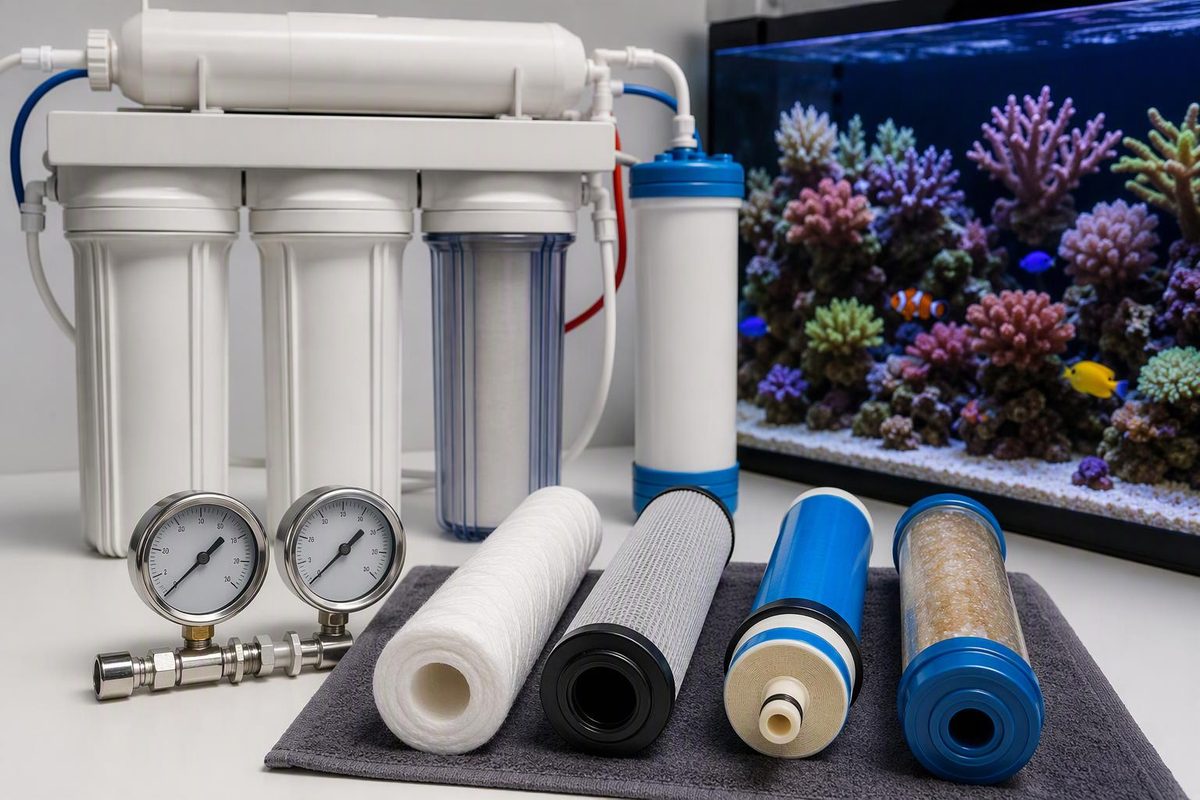
Change reef RO/DI sediment, carbon, membrane and DI stages using pressure, chlorine and TDS readings rather than one replacement schedule.
Do not replace every RO/DI filter because one stage is exhausted. Each stage has a different job and failure signal:
- Sediment filter: change it when clogging causes a meaningful pressure drop or loss of production.
- Carbon block: change it before disinfectant breaks through, or when its rated capacity or maximum service interval is reached.
- RO membrane: change it when rejection remains below specification after pressure, temperature and installation problems are excluded.
- DI resin: change it when final product water no longer remains at the intended 0 ppm TDS after startup water has been flushed.
Calendar dates are useful reminders, but source-water quality, disinfectant concentration, pressure and total water production all affect service life.
Measure the right point
A useful reef RO/DI setup allows you to check:
- Feed-water TDS
- RO permeate TDS before DI
- Final TDS after DI
- Pressure reaching the membrane
- Total chlorine immediately after the carbon stages, where the source water contains chlorine or chloramine
Final water at 0 ppm TDS does not prove that the membrane and carbon stages are healthy. Fresh DI resin can hide declining membrane rejection by removing the extra dissolved load, exhausting itself faster in the process. A TDS meter also cannot establish whether chlorine or chloramine is breaking through carbon.
Check your water utility’s current disinfectant information. If it uses chloramine, choose a total-chlorine test suitable for the expected range rather than a free-chlorine-only test. Carbon configuration and capacity must also be appropriate for the disinfectant and the exact cartridge—not simply the number of housings.
When to change each RO/DI stage
Sediment filter: follow pressure and flow
Replace the sediment cartridge when pressure downstream of the prefilters falls meaningfully from the clean-filter baseline or production slows because the cartridge is clogged. First check whether household supply pressure has changed.
Color is only a supporting clue. A visibly dirty filter may still flow adequately, while fine sediment can restrict one without dramatic discoloration. Do not exceed the system manufacturer’s maximum service interval merely because pressure remains acceptable.
Carbon block: prevent breakthrough
Change carbon at the earliest of these points:
- Total chlorine is detectable after the carbon stage.
- The cartridge reaches its rated capacity under its specified flow and test conditions.
- Its maximum service interval arrives.
- Clogging causes an unacceptable pressure loss.
Six to 12 months is a common planning interval, but it is not a universal service life. Bulk Reef Supply recommends the shorter end for high-volume production or chloraminated source water and notes that actual replacement frequency depends on water use, source-water quality and contaminants (Bulk Reef Supply).
If disinfectant is detected after carbon, stop producing aquarium water. Replace the appropriate carbon cartridge or cartridges and retest before resuming normal use. Replacing DI resin does not correct carbon breakthrough.
RO membrane: calculate rejection
Use feed TDS and RO-only permeate TDS—not final DI water:
Rejection % = (feed TDS − RO permeate TDS) ÷ feed TDS × 100
With feed water at 200 ppm and permeate at 4 ppm, rejection is 98%. If permeate rises to 10 ppm under comparable conditions, rejection is 95%.
Let readings stabilize, then compare the result with the specification for the exact membrane and its clean, established baseline. Low pressure and cold feed water can reduce apparent performance. An incorrect flow restrictor, fouling or a poorly seated membrane or seal may also cause disappointing readings.
Replace the membrane when rejection remains materially below its specification after correct operating conditions and installation have been confirmed. Do not replace an effective membrane merely because DI resin is exhausted. As a useful point of comparison—not a rule for every aquarium unit—EPA requires a WaterSense-labeled point-of-use RO system to demonstrate at least one year of membrane life (EPA WaterSense).
DI resin: follow final TDS
For a reef system intended to produce 0 ppm TDS water, replace or rotate the final DI cartridge when the stabilized product reading repeatedly rises above 0 ppm. First flush startup water and verify the result with a clean container and a meter that has been checked against another reliable meter or standard.
Treat resin color as a secondary indicator. Color can change unevenly, and poorly packed refillable resin may allow water to channel around the media. If DI life suddenly becomes short, check RO rejection before repeatedly buying more resin.
How to change the filters safely
Follow the manual for the unit’s valve positions, sanitation method and required flush volume.
- Record the baseline. Note feed TDS, RO-only TDS, final TDS, membrane pressure and production rate.
- Isolate and depressurize the unit. Shut off feed water and any booster pump, close the storage-tank valve if fitted, and relieve pressure as directed.
- Confirm replacements. Match cartridge dimensions, micron rating, carbon type, membrane capacity and DI configuration. Physical fit alone does not establish compatibility.
- Inspect the housings. Check O-rings, grooves, sealing surfaces and housings for grit, distortion or cracks. Replace damaged seals and use only an approved lubricant.
- Install each stage. Seat cartridges squarely. Pack refillable DI according to its instructions to limit channeling. Avoid overtightening housings.
- Restore water slowly. Inspect every housing and fitting for leaks.
- Flush to drain. Keep startup water out of the aquarium reservoir. Flush carbon fines, a new membrane and new DI media for the time or volume specified by their manufacturers.
- Retest. Confirm carbon protection, pressure, feed and permeate TDS, membrane rejection and final TDS before collecting reef water.
Label each housing with its change date, baseline readings and approximate gallons produced. That record makes the next filter change a response to your source water and system performance rather than a calendar guess.