
Why Stable Magnesium Levels Are Crucial for Reef Tank Success – Targets, Testing, and Safe Adjustments
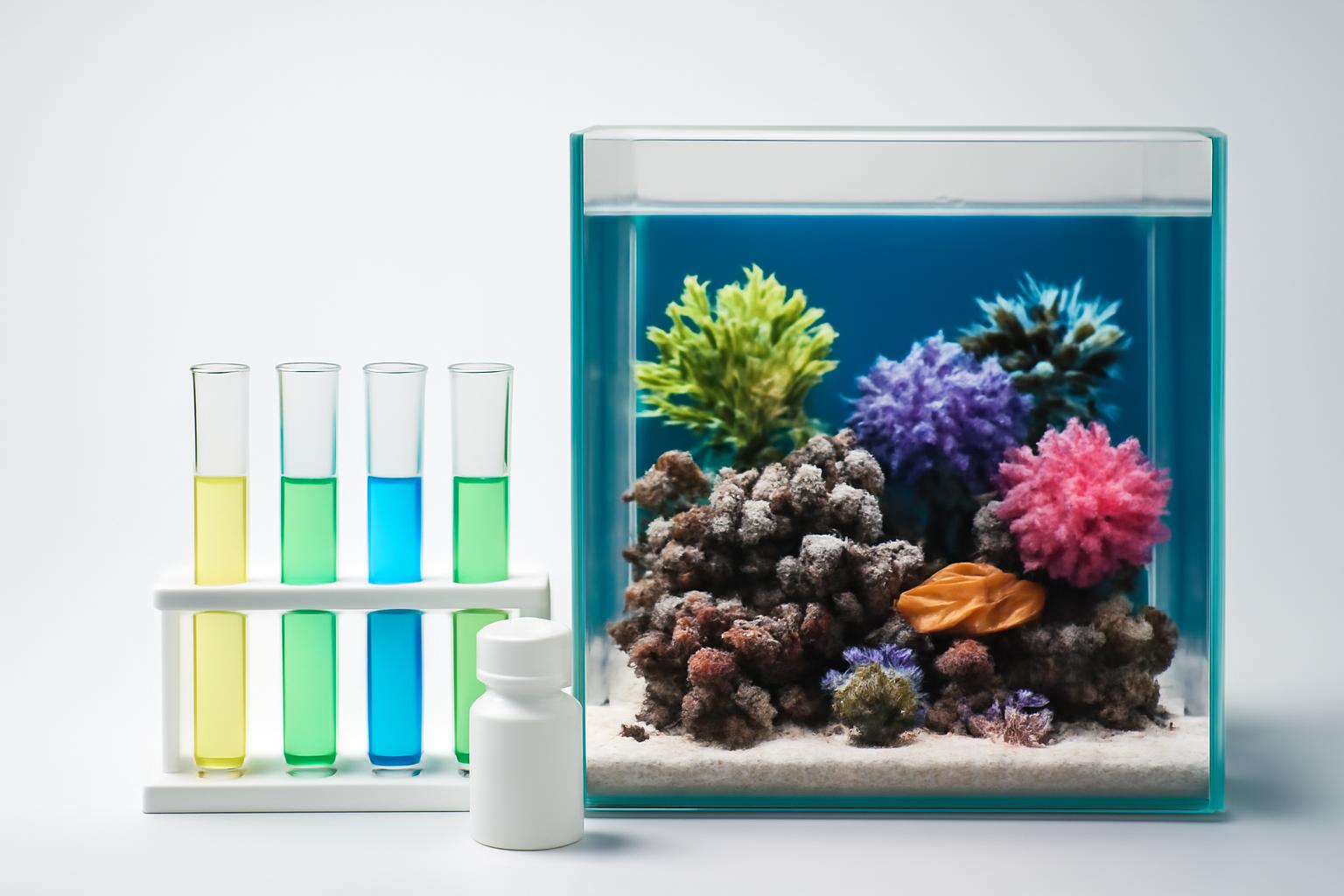
For most reef tanks, target 1250-1350 ppm; natural seawater is often cited near 1285 ppm, and small movement within the band is normal.
For reef keeping, the practical topic is simply magnesium level in saltwater: how much is dissolved in the system, how stable it stays, and how safely you can correct it before sensitive livestock goes in.
For new reefers, magnesium is easy to underestimate because it rarely creates the same immediate panic as ammonia or a major alkalinity swing. But it still matters. Magnesium sits inside the same chemistry system as calcium and alkalinity, so when it drifts far enough out of range, those other parameters usually become harder to hold steady.
A good beginner workflow is intentionally boring: choose a sensible target, test the same way each time, correct slowly, and treat magnesium as one part of a stable baseline rather than a number to chase. The goal is not to maximize magnesium. The goal is to make the whole tank predictable.
Quick-start workflow: target a normal reef range, log your results, verify sudden swings before dosing, and do not add coral until the major parameters have been stable long enough to prove the system is consistent.
The Role of Magnesium in Reef Aquarium Chemistry
Its practical importance is less glamorous than many beginners expect. Magnesium’s value is not that it somehow “feeds” corals on its own. Its more important chemistry job is helping keep the calcium-alkalinity system usable. Fauna Marin describes magnesium as part of the calcium supply system and says it helps keep calcium in solution by preventing unwanted calcite formation. In plain reef-keeping terms, that means normal magnesium helps reduce the tendency for calcium and carbonate to fall out of solution as solid deposits instead of remaining available in the water.
That matters because coral growth never depends on a single test number in isolation. When magnesium is low, you may first notice the problem as calcium that refuses to stay put or alkalinity that seems more erratic than it should.
There is an important beginner lesson inside that: magnesium is significant as part of a system. Low magnesium can undermine calcium and alkalinity stability. Excessively high magnesium can create a different imbalance. The right mindset is not “How high can I push this?” but “How calm can I keep the whole chemistry package?”
Optimal Magnesium Target Range for Reef Tanks
For most reef tanks, a sensible working target is 1250–1350 ppm, and natural seawater is often cited around 1285 ppm (Top Shelf Aquatics magnesium calculator).
That target is narrow enough to keep you near normal reef chemistry, but not so narrow that you start reacting to meaningless wiggles. Fauna Marin’s hobby guidance puts the broader acceptable band at roughly 1200–1350 mg/L and specifically notes that 20–30 mg/L of movement in magnesium is not significant in practice (Fauna Marin magnesium guide). For a beginner, that is reassuring. A test result of 1290 ppm one week and 1310 ppm the next is not a crisis.
The startup benchmark that matters most is not a single reading; it is duration. Reef Directory’s baseline guidance is to hold salinity at 1.025–1.026, alkalinity at 8.3–9.0 dKH, calcium at 400–450 ppm, and magnesium at 1250–1350 ppm for two weeks straight before adding the first coral frag (Reef Directory reef-starting parameters). That standard filters out tanks that only look “ready” on one lucky test day.
A practical way to think about magnesium ranges is this:
- Primary target: 1250–1350 ppm
- Comfort zone: low- to mid-1300s
- Broader workable range: roughly 1200–1400 ppm in hobby guidance
- What matters most: reasonable stability, not hitting one magical number
That last point is worth remembering because beginners often overdose in pursuit of symmetry. A stable 1280 ppm is much better than a tank that swings between 1180 and 1380 because the aquarist keeps “fixing” it.
Signs and Symptoms of Magnesium Imbalance
That is one reason new reefers miss them.
On the low side, Seachem says magnesium depletion is often driven by kalkwasser use, frequent overdosing of carbonate additives, or a salt mix that starts low in magnesium. In that guidance, kalkwasser can precipitate magnesium as magnesium hydroxide, while excess carbonates can precipitate magnesium as magnesium carbonate; Seachem also says severely depleted magnesium below about 800 mg/L can contribute to depressed pH (Seachem Reef Advantage Magnesium).
In ordinary reef practice, low magnesium is more commonly noticed because calcium and alkalinity become irritatingly difficult to stabilize. Fauna Marin’s guidance places below about 1100 mg/L in the range where calcium and carbonate hardness become unstable and coral bleaching may appear, and says below 1000 mg/L growth can be reduced while calcium becomes hard to stabilize. On the high side, it describes above about 1600 mg/L as a chemical-imbalance risk associated in hobby guidance with precipitation on rock and substrate, soft-coral tissue problems, and SPS detachment (Fauna Marin magnesium guide).
Those warning signs should be treated as hobby indicators, not as a diagnosis chart. Bleaching, pH issues, slowed growth, and strange calcium demand can all have multiple causes. But when several of them appear together, magnesium deserves a test before you start changing lights, flow, trace elements, or feeding strategy.
A simple troubleshooting pattern looks like this:
- Magnesium too low: calcium falls faster than expected, alkalinity gets harder to hold, growth slows, coralline can stall, and pH may trend lower
- Magnesium too high: stress after aggressive dosing, unexplained precipitation, unusually high calcium or alkalinity consumption, or a recent attempt to force magnesium upward for algae control
- Most common mistake: treating the visible symptom while ignoring the parameter relationship underneath it
In a tank with no corals yet, the signs may be subtler. You may simply notice that the water chemistry refuses to stay where you set it. That alone is enough reason to slow down and investigate.
Best Test Kits for Accurate Magnesium Testing
Good magnesium management starts with trusting the number you got. If the result is wrong, every dosing decision after it is guesswork.
Among commonly discussed hobby kits, Queen City Corals lists three main options: the Hanna Marine Magnesium Checker with a 1,000–1,800 ppm range at about $65, the Red Sea Magnesium Pro at about $25 with roughly ±20 ppm accuracy and about 100 tests, and the Aquaforest Magnesium kit at about $20 with around 60 tests plus a reference solution. The same source also notes reports of unusually high Hanna readings in the past that were addressed with reagent replacement (Queen City Corals test-kit roundup).
The tradeoffs are fairly straightforward:
- Aquaforest: attractive if you want a lower-cost kit and like having a reference solution to sanity-check your results
For most beginners, the best kit is the one they will actually use every week without cutting corners. A highly praised kit does not help if it lives unopened in a cabinet.
A few habits improve reliability more than swapping brands:
- Test at roughly the same time of day.
- Keep salinity stable before interpreting magnesium.
- Rinse vials exactly as the instructions require.
- Log every result instead of trusting memory.
- If a reading changes suddenly and dramatically, confirm it with a second kit or a reference solution before making a large correction.
That last habit saves a lot of trouble.
How to Raise Low Magnesium Safely
If magnesium is low, the safest correction is usually the least dramatic one.
A common reef-calculator formula is:
Dose (mL) = (target ppm − current ppm) × volume (L) × 1000 ÷ product strength
More important than the formula is the pace. Conservative hobby guidance is to begin with half the calculated dose, spread the change over 1–2 days or longer, keep the increase under 100 ppm per day, retest 24 hours later, and monitor pH so swings stay below about ±0.20 while the system settles (Top Shelf Aquatics dosing notes).
For a beginner, that becomes a simple routine:
- Test magnesium.
- Pick a realistic target inside the normal range.
- Calculate the full correction.
- Add only half first.
- Wait, retest, and only then finish the correction if it is still needed.
That approach protects you from both bad math and bad assumptions about real system volume. Display size is not the same as actual water volume once rock, sand, equipment, and sump operating level are considered.
Product directions can also help you sanity-check the calculator result. Seachem’s Reef Advantage Magnesium says 5 g per 80 L raises magnesium by about 5 mg/L and warns not to directly mix magnesium supplements with carbonate additives; dose them separately, ideally on alternate days or at least with time between additions (Seachem Reef Advantage Magnesium directions).
Some useful safety rules:
- Do not dump the full calculated amount in at once.
- Do not correct magnesium, calcium, and alkalinity aggressively on the same day unless you truly understand the interaction.
- Do not judge the result immediately after dosing; let the tank mix completely, then retest.
- If pH, alkalinity, or calcium starts behaving strangely during the correction, slow down.
Most beginner trouble comes less from low magnesium itself than from trying to repair it too quickly.
Correcting High Magnesium Levels
If the reading is genuinely high, the conservative correction is usually small, repeated water changes with a lower-magnesium salt mix. One hobby guide specifically recommends 10% water changes as a practical way to bring magnesium down gradually (Queen City Corals magnesium guide). That approach lowers magnesium without deliberately adding another chemical to “counteract” it.
Many tanks will also drift downward on their own if you simply stop overdosing. Queen City Corals notes that high magnesium is often not a major concern unless there has been an overdose and that levels may come down naturally over time once excess dosing stops (Queen City Corals magnesium guide). In other words, the first fix is often to do less.
When magnesium reads unexpectedly high, check the boring explanations first:
- the salt mix was not fully mixed before use
- the test kit or reagent is old
- the sample volume or drop count was wrong
- salinity is actually higher than you think
- the substrate or decorative material is contributing ions
Fauna Marin specifically warns that artificial substrates such as dolomite or marble may release magnesium and says sudden magnesium shifts can also trace back to poor salt mixing or expired tests (Fauna Marin magnesium guide). That is why source-water testing and fresh-mix testing matter whenever the tank’s behavior stops matching the dosing log.
As a practical upper ceiling, Fauna Marin strongly advises against intentionally raising magnesium above 1800 mg/L for algae control (Fauna Marin magnesium guide). Even well below that point, magnesium that is pushed high on purpose is rarely a sound beginner strategy.
Dosing Strategies and Maintenance Tips
Long-term magnesium management should feel almost uneventful. If it feels dramatic every week, the process is probably wrong.
In many tanks, especially newer ones with little coralline algae and few heavy calcifiers, regular water changes cover most magnesium demand. Fauna Marin says magnesium consumption varies by tank and that regular water changes are often enough; in a Balling Light setup, low magnesium is typically corrected from canister 2 rather than by random extra additions (Fauna Marin magnesium guide).
That leads to the best maintenance mindset: dose to actual consumption, not to anxiety.
A practical routine looks like this:
- Track trends, not isolated single readings
-
Adjust slowly if magnesium is genuinely drifting
-
Let water changes do the easy work whenever possible
If you use a balanced dosing system, keep magnesium inside that same disciplined framework. If you use standalone supplements, choose products intended for marine aquariums and follow their ionic-balance guidance rather than improvising blindly.
One caution is worth repeating: avoid relying on Epsom salt alone as a long-term magnesium solution. Queen City Corals warns that repeated use by itself can create sulfate excess, which is why reef magnesium products are commonly built around a chloride/sulfate mix rather than a single salt (Queen City Corals magnesium guide).
It also helps to remember that magnesium usually changes more slowly than alkalinity. That is useful because you do not need to obsess over it daily in a stable tank. But it also means an overcorrection tends to linger. A rushed mistake can take much longer to unwind than an alkalinity bump.
Common Mistakes and Prevention in Magnesium Management
Most magnesium problems are preventable, and most beginner mistakes come from the same urge: changing too much, too fast.
The first mistake is reacting to one strange test result without context. A single reading is not enough to justify a major correction if salinity was off, the kit was old, or the result has not been confirmed. Verification is part of reef keeping, not a delay tactic.
The second mistake is making large corrections because the target looks far away. Even when the end number is better, the rate of change still matters. A slow move back into range is usually safer than a sudden same-day jump.
The third mistake is using high magnesium as an algae weapon. Hobby anecdotes about oversized magnesium dosing have circulated for years, but this is not beginner chemistry. Once you intentionally push far above normal reef values, you are no longer making a routine adjustment. You are running an experiment on a system that may soon hold sensitive animals.
The fourth mistake is ignoring source water, salt, and substrate. If magnesium keeps rising or falling in ways your log cannot explain, test the fresh saltwater, verify salinity calibration, and consider whether rock, substrate, or mineral media is affecting the reading. Fauna Marin’s guidance about dolomite and marble is especially useful here because it reminds you that not every mystery number comes from the bottle you dosed.
The fifth mistake is treating magnesium as separate from the rest of the tank. Before livestock goes in, the real goal is stable salinity, alkalinity, calcium, and magnesium together, held in range long enough to prove the system is predictable (Reef Directory startup checklist).
A simple prevention checklist for new reefers:
- mix salt thoroughly before testing or doing water changes
- calibrate salinity tools regularly
- use a magnesium kit you trust and can repeat
- log every test and every dose
- verify sudden swings before correcting
- keep changes gradual
- do not add corals until the full parameter set is steady, not just one number
That is the larger lesson behind magnesium management. Reef tanks usually do not unravel because one magnesium reading was imperfect. They unravel because several unstable parameters are allowed to stack on top of each other.
FAQ
What is the ideal magnesium level for a reef tank?
For most reef tanks, the practical target is 1250–1350 ppm, with natural seawater often cited near 1285 ppm and hobby guidance generally treating small movement inside that band as normal (Top Shelf Aquatics magnesium calculator; Fauna Marin magnesium guide). For a new tank, consistency matters more than landing on one exact number such as 1300.
How quickly can I raise magnesium in my reef aquarium?
Slowly. A conservative beginner ceiling is under 100 ppm per day, ideally by dosing part of the correction first, waiting for the system to mix, and retesting after about 24 hours before deciding whether more is needed (Top Shelf Aquatics dosing notes). Starting with half the calculated dose is a sensible safety habit.
What are the best magnesium test kits for reef keepers?
A commonly recommended short list is the Hanna Marine Magnesium Checker if you want digital readings, the Red Sea Magnesium Pro if you want a widely used titration kit with about ±20 ppm stated accuracy and roughly 100 tests, and the Aquaforest Magnesium kit if you like having a reference solution available (Queen City Corals test-kit roundup). The best kit is usually the one you will use consistently and correctly.
Can high magnesium harm corals?
Yes. In hobby guidance, magnesium above about 1500–1600 ppm is associated with chemical imbalance and coral stress, and Fauna Marin warns that levels above 1600 mg/L may contribute to tissue problems, SPS detachment, and precipitation issues; the same source strongly advises against intentionally pushing magnesium above 1800 mg/L for algae control (Fauna Marin magnesium guide; Queen City Corals magnesium guide). The practical takeaway is to avoid aggressive overdosing, not to panic over every mildly elevated test result.
Why test magnesium before adding corals?
Because magnesium is part of the chemistry foundation that helps keep calcium and alkalinity stable. Reef Directory’s startup guidance is to hold salinity at 1.025–1.026, alkalinity at 8.3–9.0 dKH, calcium at 400–450 ppm, and magnesium at 1250–1350 ppm for two weeks straight before the first coral frag (Reef Directory reef-starting parameters). Testing magnesium before livestock goes in helps confirm the tank is actually stable, not just briefly on target.