
Should You Use Berghia to Control Aiptasia in Your Reef Tank?
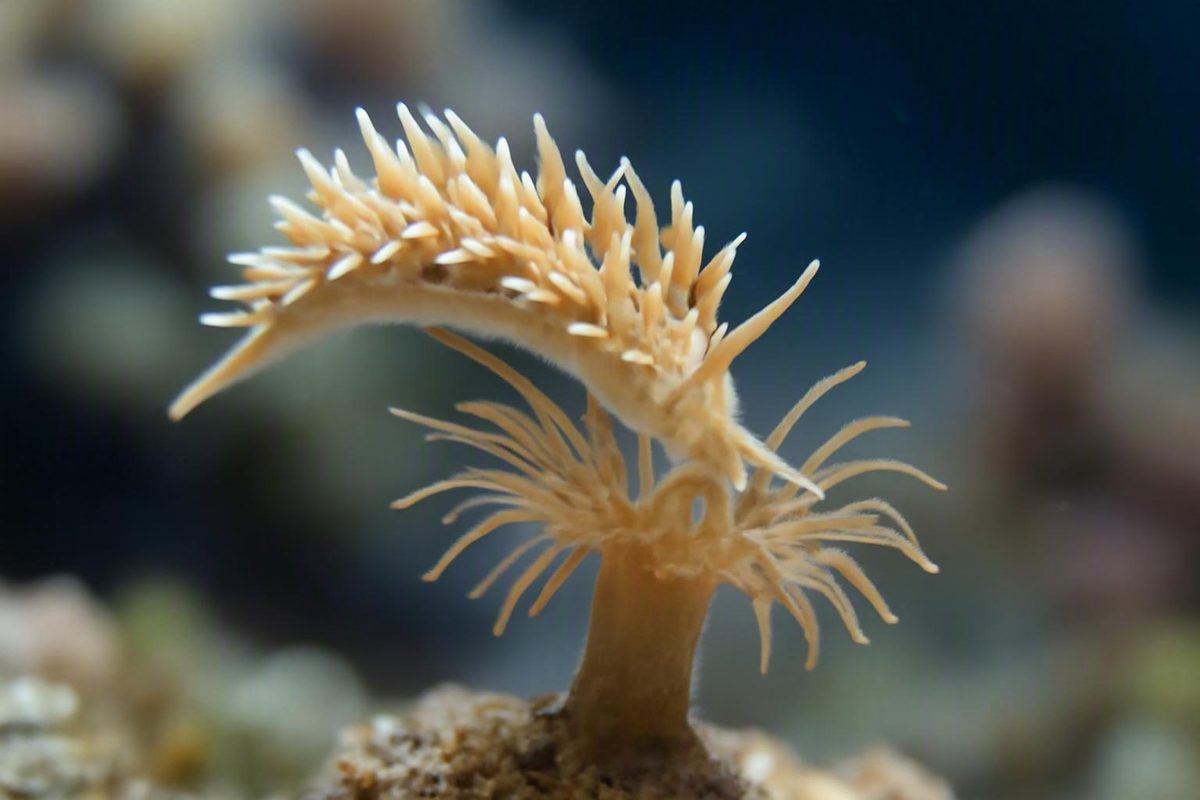
Berghia-type nudibranchs may suit stable, predator-light reefs with enough accessible Aiptasia when you can wait, monitor the whole system and rehome survivors.
Berghia-type nudibranchs can be useful biological controls for Aiptasia, but they are not a fixed-dose treatment or a guaranteed cure. Success depends on correct pest identification, enough accessible Aiptasia to support a specialist feeder, limited predator pressure, careful introduction, stable conditions, and enough time for a population-based treatment to work.
They are best suited to a stable, predator-light reef with a substantial infestation in accessible rockwork. They are a poor fit when only a few polyps are present, likely predators cannot be removed, most Aiptasia are inside equipment, immediate results are required, or chemical spot treatment must continue.
The evidence for aquarium use is limited. Most practical recommendations come from vendors, hobbyist guides, propagation accounts, and forum reports rather than controlled trials. Stocking ratios, timelines, compatibility lists, and categorical “reef-safe” claims should therefore be treated as aquarium guidance—not proven guarantees.
The direct answer: which nudibranch eats Aiptasia?
The Aiptasia-eating nudibranch commonly sold to reef keepers is called a Berghia nudibranch, or more cautiously, a Berghia-type nudibranch. It is a small marine sea slug used as biological control in saltwater reef aquariums.
The name is less precise than it sounds. One aquarium guide identifies the commonly traded animal as Aeolidiella stephanieae, explaining that the Berghia trade name persisted after a taxonomic reassessment. That guide also says the intended animal does not control Majano anemones.
A specialist seller identifies its animals as Berghia verrucicornis. The supplied evidence cannot establish which identity applies to every animal currently sold under the common name, so the trade label should not be treated as a precise identification guarantee.
Before ordering, ask the seller:
- What scientific name do you use for this stock?
- Is the stock captive-bred?
- Is the breeding stock maintained on Aiptasia?
- Can you document the origin of the breeding line?
- What arrival, acclimation, and transfer instructions do you provide?
Do not buy an unrelated nudibranch merely because it looks similar. Other sea slugs can have very different diets, and the available evidence does not provide a dependable visual authentication test for buyers.
Vendors and hobbyists consistently describe the intended Berghia-type animal as an Aiptasia specialist. That makes it a credible biological-control option, but it does not independently prove that every traded lineage eats nothing else under every possible condition. Claims such as “100% reef-safe,” “eats only Aiptasia,” and “will never touch coral” remain primarily commercial and hobbyist assertions.
Correct pest identification is therefore essential. The supplied aquarium guidance says Berghia-type nudibranchs do not eat Majano anemones. If the organism is Majano, another anemone, or a coral polyp, this is the wrong control animal.
Is your aquarium a good candidate for Berghia?
Tank volume matters, but it should not decide the treatment by itself. A 50-gallon aquarium with dense Aiptasia colonies in connected, accessible rockwork may be a better candidate than a 150-gallon system with five isolated polyps divided among the display, overflow, and sump.
Evaluate four variables first:
- Prey density: Is there enough Aiptasia for the nudibranchs to find and continue feeding?
- Predator pressure: Are fish or invertebrates likely to consume adults, juveniles, or eggs?
- Physical access: Can the nudibranchs reach most of the infestation without crossing pumps or other barriers?
- System stability: Can the aquarium receive delicate invertebrates without abrupt environmental change?
Salty Underground, a Berghia retailer, recommends these animals primarily for moderate-to-heavy infestations because sparse Aiptasia may be difficult to locate before the food supply is exhausted. Its husbandry guidance also calls for zero detectable ammonia and nitrite, manageable current, and limited predator pressure; its example stocking rule is at least eight animals per 100 gallons for what it defines as a moderate infestation. These are seller recommendations, not scientifically validated requirements or doses (Berghia suitability and husbandry guidance).
A favorable candidate usually has:
- Stable conditions appropriate for an established reef
- No detectable ammonia or nitrite
- Substantial Aiptasia in accessible display rock
- Crevices and sheltered release sites
- Flow that can be moderated around the introduction area
- Few likely nudibranch predators
- An owner willing to wait weeks or months
- A transfer or rehoming plan for surviving animals
A poor candidate usually has:
- Only a few reachable Aiptasia that can be treated individually
- An unstable, immature, or recently disrupted aquarium
- Multiple fish or invertebrates that actively hunt through rockwork
- A need for immediate visible reduction
- Most Aiptasia isolated in an overflow, sump, filter, or plumbing
- An ongoing need to apply chemical Aiptasia products
- No practical destination for survivors once prey becomes scarce
Do not adopt a seller’s exact temperature, salinity, nitrate, or flow target as a scientifically proven requirement. Maintain stable conditions appropriate for the established reef, confirm that ammonia and nitrite are not detectable, and avoid abrupt temperature or salinity changes during introduction.
Map the entire system before buying
Inspect more than the front of the display. Record Aiptasia in:
- Display rock and shaded undersides
- Overflow boxes and weirs
- Sump chambers
- Filter housings and media compartments
- Return and drain plumbing
- Frag racks and coral bases
- Pump guards and removable equipment
- Refugia and connected treatment tanks
A Berghia population released in the display cannot be assumed to cross pumps, plumbing, dry barriers, or isolated chambers safely. Clearing the visible reef therefore does not prove that the connected system has been cleared.
Pre-purchase decision checklist
Before placing an order:
- [ ] Confirm that the pest is Aiptasia, not Majano or another organism.
- [ ] Estimate the number and distribution of visible Aiptasia.
- [ ] Inventory possible fish and invertebrate predators.
- [ ] Review recent chemical and spot-treatment use.
- [ ] Identify colonies inside inaccessible equipment and plumbing.
- [ ] Confirm that aquarium conditions are stable.
- [ ] Decide whether strong localized flow can be reduced during release.
- [ ] Arrange a possible transfer to another aquarist, store, club, or breeder.
- [ ] Ask the seller how its stock is identified and bred.
If several of these questions cannot be answered, delay the purchase. Berghia should be selected because the aquarium suits the treatment—not simply because the infestation is frustrating.
Predator audit: tankmates that can make the treatment fail
Predation is one of the most frequently cited reasons Berghia treatments fail. Most of the evidence consists of seller warnings and aquarium observations rather than controlled compatibility testing, so the following groups should be treated as a risk inventory. Inclusion does not mean every species or individual will attack Berghia.
Wrasses
Wrasses deserve particular attention because several unrelated aquarium sources repeatedly identify them as a concern. Berghia are small, soft-bodied animals that move through the same rockwork searched by many wrasses. One retailer specifically warns that fish such as wrasses may consume them (Berghia compatibility warning).
That does not mean every wrasse is equally risky. Species, size, feeding behavior, individual history, and access to the release area all matter. Nevertheless, a wrasse that spends the day picking through crevices should not be treated as harmless to small nudibranchs. Care information for species such as the yellow coris wrasse also illustrates why a generally coral-compatible fish may still hunt small invertebrates.
Other active hunting fish
Other repeatedly listed concerns include:
- Butterflyfish
- Dottybacks
- Hawkfish
- Filefish
- Puffers
- Other fish that investigate or pick small animals from rockwork
Some of these fish are themselves proposed as Aiptasia controls. That creates a strategic conflict: an animal selected to hunt Aiptasia or small invertebrates may also make the aquarium unsuitable for delicate nudibranchs.
A Humble.Fish discussion involving a significant infestation recommends addressing wrasse and hawkfish risk before adding Berghia and characterizes peppermint shrimp as inconsistent Aiptasia predators. These are community observations rather than controlled results (discussion of biological-control conflicts).
Shrimp
Peppermint shrimp and coral-banded shrimp are repeatedly listed by vendors and hobbyists as possible Berghia predators. Peppermint shrimp create the clearest conflict because aquarists may already have introduced them to control the same infestation.
Reported peppermint shrimp performance is inconsistent. Some hobbyists describe rapid Aiptasia consumption; others report that the shrimp ignored the pest, disappeared, stole food, or disturbed corals. Identification may also be uncertain when similar-looking shrimp are sold under the same common label.
Do not assume that a shrimp is harmless to Berghia merely because it is sold as reef-compatible.
Crabs and other invertebrates
Aggressive or opportunistic crabs and some hermit crabs may pose a risk. Vendor and hobbyist sources also mention brittle stars, bristle worms, and amphipods, but the supporting observations are less consistent. ReefTown’s seller guidance lists fish, shrimp, crabs, some brittle stars, bristle worms, and Aiptasia-treatment chemicals among possible threats to Berghia (Berghia risks and husbandry).
Distinguish direct observation from inference. If a crab is seen seizing a nudibranch, that individual is incompatible. If a Berghia simply disappears, predation remains only one possible explanation.
Berghia are commonly described as nocturnal and crevice-dwelling. Disappearance after release therefore does not prove that they were eaten—but it also does not prove that they are alive, laying eggs, or controlling Aiptasia.
Options for a high-risk aquarium
If the predator audit identifies substantial risk:
- Temporarily rehome likely predators when doing so is practical, appropriate, and humane.
- Use a separate stable treatment environment for removable rock, frags, or equipment.
- Choose another control method suited to the aquarium’s livestock and infestation pattern.
Do not respond to observed predation by repeatedly buying more nudibranchs. Correct the compatibility problem first.
How many Berghia and how long will control take?
The supplied evidence does not support a scientifically validated dosing formula. Published numbers are retailer rules of thumb or recommendations based on individual aquarium experience.
The suggestions conflict substantially:
- One retailer recommends introducing at least three animals and also suggests approximately one per 10 gallons (retailer stocking guidance).
- Other seller guidance likewise uses approximately one per 10 gallons, sometimes with additional rules based on Aiptasia counts (ReefTown stocking FAQ).
- Salty Underground recommends at least eight per 100 gallons for what it defines as a moderate infestation (seller dosing and reproduction guidance).
- Justin Credabel’s propagation account argues for starting with at least 12 and preferably 20 or more—substantially more than some commercial recommendations (experienced propagation account).
These figures should not be averaged into a seemingly precise answer. Their disagreement demonstrates that gallons alone are an inadequate basis for dosing.
Outcome may also depend on:
- Number and density of Aiptasia
- Size and condition of the nudibranchs
- Distance between prey colonies
- Complexity and porosity of the rockwork
- Predator pressure
- Acclimation survival
- Release location and local flow
- Whether starting animals encounter one another
- Whether egg laying occurs
- Whether juveniles survive
- Whether some Aiptasia are isolated outside the display
Ask a reputable captive breeder how it adjusts its recommendation for infestation density, animal size, rock structure, and predator risk. Treat the answer as a starting strategy, not a prescription or warranty.
Think in terms of population-based control
Berghia treatment is often described as population-based control. The initial animals may remain hidden and feed without creating an obvious visual change. If reproduction occurs and juveniles survive, a larger population may eventually consume Aiptasia faster than the pest remains visible.
A sufficiently large starting group might reduce a limited infestation without establishing another generation. Conversely, a small starting group in a complex reef may show little progress unless reproduction succeeds. Seller guidance explicitly acknowledges that display-tank reproduction does not always occur.
Reported timelines vary from days to months
A hobbyist reported that four or five nudibranchs cleared a heavily infested 10-gallon frag tank in one to two weeks. That was a single small-tank anecdote and should not be treated as typical (small-frag-tank report).
ReefTown estimates a treatment period of roughly two to four months, while other aquarium sources describe visible changes after several weeks. These are seller estimates and aquarium reports, not guaranteed deadlines.
In another forum report, one attempt took about six months to produce a noticeable result (discussion of delayed results). A large reef with scattered prey, deep crevices, and predators is fundamentally different from a small frag tank with densely spaced Aiptasia.
Use checkpoints instead of a deadline:
- Before release: Photograph and count representative Aiptasia zones.
- First days: Expect limited or no nudibranch visibility.
- Following weeks: Look for changes in small Aiptasia, egg spirals, or contraction of infested areas.
- Later assessment: Compare repeated photographs rather than relying on memory.
- If no trend develops: Reassess predators, water stability, chemical exposure, prey distribution, and inaccessible compartments.
A short period without visible progress does not prove failure. Months without measurable change should not be rationalized indefinitely as invisible success. Set a review date, not a promised eradication date.
A cautious acclimation and nighttime release procedure
Berghia are commonly described as small and fragile. Prepare the aquarium and transfer tools before opening the shipping container so the animals are not left waiting while flow, lighting, or access problems are addressed.
Before release:
- Confirm stable reef conditions.
- Stop chemical treatments unless compatibility with the exact product has been documented.
- Review when and where chemicals were last applied.
- Choose sheltered, Aiptasia-bearing rock.
- Reduce strong localized flow if it could sweep the animals away.
- Plan the introduction for after the aquarium lights are out.
- Prepare a pipette, turkey baster, or other small suction-transfer device.
Follow the breeder’s arrival and acclimation instructions while avoiding abrupt temperature or salinity changes. The supplied evidence does not establish a universal acclimation duration, so a generic fixed schedule should not override instructions tailored to the shipment.
Avoid picking the animals up with fingers. Vendors and hobbyists widely recommend keeping them submerged and using a pipette or similar device. They also warn against ejecting a nudibranch onto an Aiptasia oral disc or mouth area because the anemone may sting, injure, or consume it. Place the animal on sheltered rock nearby and allow it to approach on its own (reported transfer and release methods).
Release Berghia beside infested rock rather than into open water, where flow or predators may carry them away. Hobbyists describe more than one method: some use a pipette or turkey baster to place each animal after dark, while others submerge an open shipping container near the rockwork and allow the animals to leave. The supplied reports do not establish which method produces better survival.
Introduction checklist
- Verify the livestock identity. Confirm that the seller supplied the intended captive-bred Berghia-type nudibranch.
- Inspect tankmates. Recheck for likely predators before opening the shipment.
- Review chemical exposure. Do not introduce the animals into an active or uncertain chemical-treatment situation.
- Acclimate gently. Follow the breeder’s instructions while preventing abrupt environmental changes.
- Transfer without touching. Use a submerged pipette, turkey baster, or similar suction tool.
- Release after dark. Select sheltered rock close to, but not directly on, Aiptasia.
- Record the baseline. Note the release location and photograph representative Aiptasia patches.
After release, minimize disturbance. Do not dismantle the reef every morning to search for the animals. If observation is necessary, use dim light after dark and avoid repeatedly exposing or moving them.
Monitoring progress when the nudibranchs disappear
Berghia commonly vanish into rockwork soon after release. That is consistent with their reported nocturnal and crevice-dwelling behavior, but it provides no reliable diagnosis.
An unseen animal might be:
- Sheltering normally
- Feeding deep in the rockwork
- Moving to another infested area
- Laying eggs
- Dead after acclimation failure
- Trapped or injured
- Consumed by a predator
Monitoring should therefore focus on the infestation rather than sightings alone.
Establish repeatable observation points
Before release, select several identifiable sections of rock and photograph them from the same angle. Include areas with both large and small Aiptasia. Repeat the photographs at regular intervals under similar lighting.
Track:
- Number of small Aiptasia
- Number of large Aiptasia
- Approximate boundaries of each infested zone
- Newly visible colonies
- Day and night nudibranch sightings
- Possible egg spirals
- Chemical treatments and major husbandry changes
Count small and large specimens separately. Seller guidance reports that Berghia may initially consume small Aiptasia without producing an immediate dramatic change in the most conspicuous polyps. Treat that as an observation to test with photographs, not as proof that an unchanged aquarium is improving.
Possible but non-definitive signs of activity include:
- Fewer small Aiptasia
- Gradual contraction of an infested area
- Spiral-shaped egg clusters
- Occasional nighttime sightings
- Increased daytime wandering after accessible prey declines
An egg spiral establishes only that egg laying occurred. It does not prove that the eggs were fertile, juveniles survived, or a viable display-tank population became established. Daytime movement may indicate food searching, but it is not a definitive starvation test.
Troubleshooting stalled progress
If photographs show no meaningful trend:
- Reconfirm the pest identification. Berghia guidance says they do not control Majano.
- Review predator risk. Include fish, shrimp, crabs, and nocturnal scavengers.
- Verify stable conditions. Check for abrupt salinity or temperature changes and detectable ammonia or nitrite.
- Check chemical history. Determine whether spot treatments or residues may have exposed adults or eggs.
- Assess prey distribution. Widely separated polyps may be difficult for specialist feeders to locate.
- Inspect connected compartments. The display may be reseeded from an overflow, sump, filter, or removable equipment.
- Allow for a multi-month process. Do not judge population-based control after only a few days.
- Set a limit on uncertainty. Months without measurable change justify reconsidering the strategy.
Avoid repeatedly applying chemical spot treatments while adults, juveniles, or eggs may be present unless compatibility with the exact product and exposure pattern has been documented. Top Shelf Aquatics warns that chemical Aiptasia treatments may harm corals or other invertebrates; the supplied evidence does not establish product-specific safety for Berghia or their eggs (comparison of Aiptasia controls).
If a group die-off is suspected in a nano aquarium, monitor ammonia and general water quality as a precaution. One aquarium guide notes that nudibranch die-off could contribute to ammonia, while a single hobbyist report of no apparent problem in a 10-gallon tank cannot establish that decomposition is harmless in every small system.
What happens after the Aiptasia are gone?
The supplied vendor and hobbyist guidance consistently describes Berghia-type nudibranchs as Aiptasia specialists. The responsible plan is therefore to assume that they will not switch to prepared food, coral, detritus, or Majano after accessible Aiptasia disappears.
That diet description remains evidence-limited because it is dominated by commercial claims and aquarium observations rather than controlled feeding research. Even so, the supplied evidence gives no sound basis for buying Berghia on the expectation that they will become generalist scavengers later.
Sources generally expect the animals to starve after their prey is exhausted. Some vendors publish exact survival estimates, but those figures should not be treated as established biological deadlines. Individual condition, temperature, hidden prey, and access to concealed Aiptasia could all affect what an aquarist observes.
Plan the animals’ destination before purchase. Possible recipients include:
- Another established aquarium with confirmed Aiptasia
- A local reef keeper
- A marine aquarium store
- A reef club
- A captive breeder
- A controlled culture maintained by an experienced aquarist
Increased daylight visibility may indicate that the animals are roaming farther to find food after accessible Aiptasia declines. That can provide a capture opportunity, but it does not prove that every hidden colony has been eliminated.
A bounded recovery approach is to observe likely travel areas after dark, inspect removable transfer surfaces and previously infested rock carefully, and move any located animal with a pipette rather than fingers. Coordinate with an experienced breeder if recovery proves difficult. Do not dismantle a stable reef recklessly, and do not assume every survivor can be found.
Apparent display clearance is not permanent system-wide eradication. Aiptasia may remain in deep rock crevices, overflows, filters, sumps, plumbing, or pump housings that display-tank nudibranchs cannot reach. Inspect and, where practical, treat accessible equipment separately.
Continue monitoring the whole system after the display appears clear. Inspect incoming rock, coral bases, frag plugs, and transferred equipment before adding them.
Berghia versus shrimp, fish, chemicals, and manual control
No method is universally best. The right choice depends on infestation density, accessibility, livestock compatibility, treatment urgency, and the owner’s ability to repeat and monitor the intervention.
| Method | Likely strengths | Main limitations |
|---|---|---|
| Berghia-type nudibranchs | Specialized biological control; access to rock crevices; little repeated application once established | Slow or uncertain visibility; vulnerable to predators; no validated dose; may starve after control |
| Peppermint shrimp | Readily available in some markets; some individuals consume Aiptasia and remain in the aquarium | Inconsistent reports; identification uncertainty; possible coral irritation or food theft; possible conflict with Berghia |
| Filefish or butterflyfish | Some individuals reportedly remove Aiptasia quickly and range widely through a display | May ignore Aiptasia, nip coral, require more space, or create substantial long-term husbandry needs |
| Direct chemical treatment | Focused and practical for a few reachable polyps | Requires careful application and possible retreatment; hidden colonies remain; compatibility with Berghia and eggs is uncertain |
| Manual removal | Useful for removable equipment and isolated colonies | Can leave tissue behind; difficult in porous rock, crevices, and plumbing; may disrupt established livestock |
Berghia
Berghia offer selectivity and access to narrow rock spaces, making them attractive for a substantial infestation distributed through accessible display rock. Their disadvantages are equally important: they are difficult to observe, predation can prevent establishment, dosing is uncertain, and control may take months.
They also create an end-of-treatment responsibility. If the working assumption is that they depend on Aiptasia, the aquarist needs a transfer plan rather than treating starvation as an acceptable disposal method.
Peppermint shrimp
Peppermint shrimp results are best described as inconsistent. Hobbyist reports include both rapid Aiptasia control and complete indifference. Identification may be uncertain when similar-looking shrimp are sold under the same common label, and some aquarists report coral disturbance or theft of coral food.
Shrimp and Berghia should not automatically be combined. Peppermint and coral-banded shrimp are repeatedly listed as possible nudibranch predators. Keeping them together may create a compatibility experiment rather than a coordinated treatment.
Filefish and butterflyfish
Some hobbyists report rapid Aiptasia control by filefish or butterflyfish. Those reports do not make every individual dependable. A fish may ignore the pest, develop an interest in coral, outgrow the available space, or require feeding and care that the aquarium cannot provide.
A fish should be selected as a long-term resident, not purchased as a disposable tool. This is particularly important in small reefs where swimming space, feeding competition, and future coral compatibility may be more limiting than the original Aiptasia problem.
Chemical spot treatment
Direct treatment is appealing when only a few polyps are accessible. It lets the aquarist target specific Aiptasia without introducing another animal.
Its limitations become more apparent in a dense infestation. Every hidden polyp must still be found, application near valued livestock requires care, and retreatment may be necessary. Chemical treatment should not be layered casually over a Berghia program because compatibility with adults, juveniles, and eggs is not established by broad “reef-safe” labeling.
Manual removal
Manual removal can be practical for a removable pump guard, frag rack, pipe, or isolated piece of equipment. It is less dependable when a polyp retracts into porous rock or inaccessible plumbing. Tissue or hidden polyps may be missed, and aggressive work around established coral can create unnecessary disruption.
That does not justify the categorical claim that every scrape causes explosive Aiptasia reproduction. The narrower conclusion is sufficient: incomplete removal can leave surviving tissue or concealed polyps, so the treated area must be monitored.
Match the method to the infestation
A practical decision matrix is:
- Sparse and accessible: Careful direct or manual treatment may be more proportionate than introducing specialist feeders.
- Substantial and accessible in a predator-light reef: Berghia may be a reasonable biological-control choice.
- Predator-rich display: Resolve compatibility or choose another approach.
- Mostly inside equipment or plumbing: Remove and treat accessible components separately.
- Need for rapid visible reduction: Berghia may be too slow and uncertain.
- Mixed display and equipment infestation: A carefully selected combined strategy may be necessary, but each component must be compatible.
Combinations require planning. A fish or shrimp may consume the biological-control animal, while a chemical treatment may expose adults or eggs. “Use everything at once” is not a sound strategy when the controls can undermine one another.
The bottom line is conditional: a Berghia-type Aiptasia-eating nudibranch may suit a stable, predator-light reef with enough accessible Aiptasia and an owner prepared to wait, monitor the whole system, and rehome survivors. It is a poor fit when likely predators remain, prey is sparse or isolated in equipment, immediate results are essential, or concurrent chemical treatment is planned.
No method in the supplied evidence guarantees complete or permanent Aiptasia eradication. An experienced propagation account similarly concludes that available controls do not guarantee complete removal and reports that Aiptasia can return after apparent clearance (Berghia propagation and control account). The evidence supports cautious, conditional use—not a guaranteed dose, deadline, taxonomic identity, or permanent cure.
Frequently asked questions
Will an Aiptasia-eating nudibranch eat corals when the Aiptasia is gone?
Vendors and hobbyists consistently describe the intended Berghia-type nudibranch as an Aiptasia specialist that is not expected to switch to coral. The supplied evidence does not independently prove absolute coral safety for every traded animal or starvation condition.
Confirm the seller’s identification and breeding practices. When Aiptasia becomes scarce, plan to transfer recoverable animals rather than expecting them to accept coral, Majano, detritus, or prepared food.
Why have I not seen my Berghia since adding them?
Berghia are commonly reported to be nocturnal and crevice-dwelling, so disappearance after release is expected. It does not establish whether they are alive, feeding, reproducing, dead, or eaten.
Monitor repeated photographs of marked Aiptasia patches instead of relying on nudibranch sightings. If no measurable trend develops over an extended period, reassess predators, system stability, chemical exposure, prey distribution, and inaccessible compartments.
Do Berghia nudibranchs eat Majano anemones?
The supplied vendor and hobbyist guidance consistently says no. Berghia-type nudibranchs are sold for Aiptasia control and should not be purchased as a Majano treatment.
Confirm the pest’s identity before ordering. The general appearance of a “small unwanted anemone” is not enough to select the correct biological control.
Can I use Aiptasia chemicals while Berghia or their eggs are in the aquarium?
Not unless compatibility with the exact product, dose, application method, and exposure conditions has been documented. Vendor warnings say Aiptasia treatments may harm Berghia or their eggs, while broad “reef-safe” wording does not establish safety for every small invertebrate or developmental stage.
Avoid alternating unverified chemical treatments with a live Berghia program. If direct treatment is unavoidable, seek product-specific documentation before proceeding.
Can Berghia eliminate Aiptasia from an overflow, sump, filter, or plumbing?
Do not assume they can. Berghia released in a display may not reach connected compartments safely, and pumps or physical barriers may prevent access. A clear display is therefore not evidence of system-wide elimination.
Inspect overflows, sump chambers, filters, detachable equipment, and plumbing separately. Where practical, remove and treat accessible components using a method compatible with their materials and livestock exposure, then continue monitoring the complete system for recurrence.