
Fly Fishing Uses Weighted Line to Cast Artificial Flies
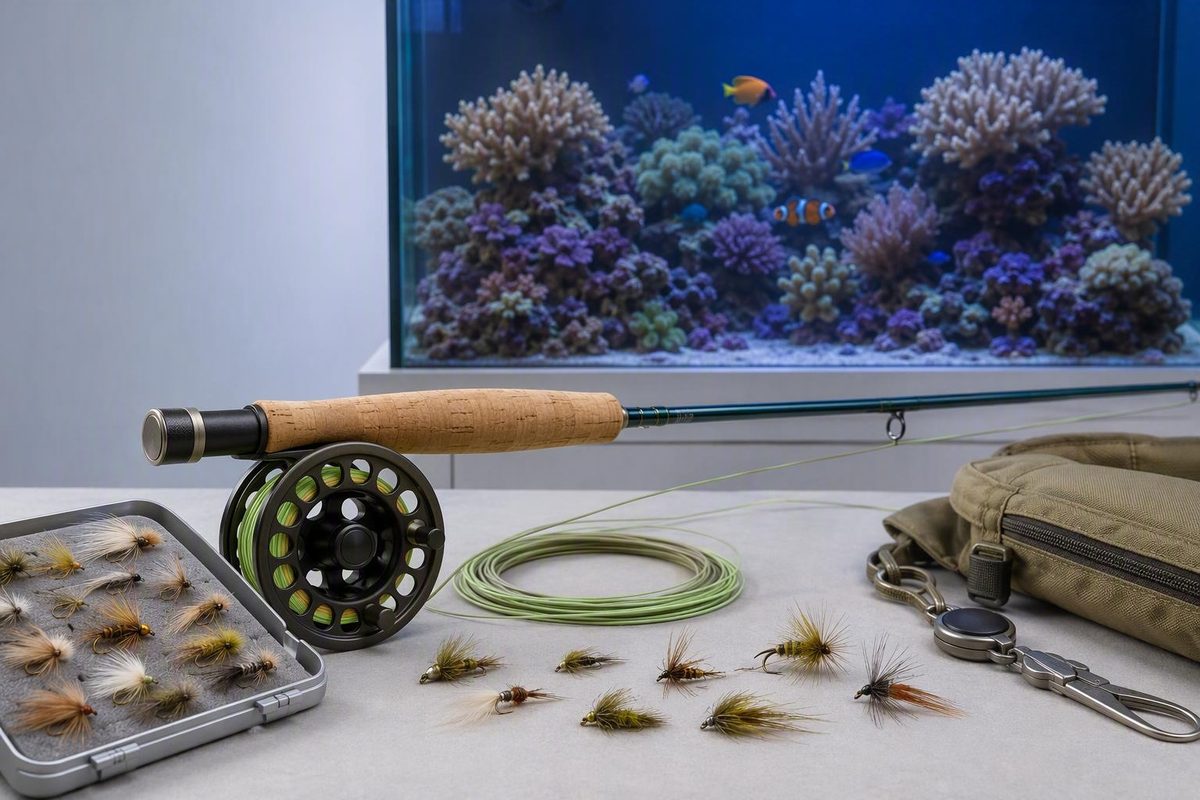
The weighted line carries the nearly weightless fly, rather than the lure pulling the line. A fly may imitate an insect, small fish or other prey.
Fly fishing is a method of angling that uses an artificial fly, a specialized rod, and a weighted fly line. The key difference from spin or bait fishing is what makes the cast possible: in fly fishing, the line carries the nearly weightless fly; in conventional casting, the lure or sinker usually pulls lighter line behind it. That change in mechanics is why fly anglers use a distinct casting motion and pay close attention to how the fly lands and moves.
The name can be misleading. An artificial “fly” may imitate an insect, but it can also suggest a small fish or another kind of prey. The goal is to present that imitation where a fish is likely to feed. The National Park Service overview of fly fishing describes flies made from materials such as thread, feathers, and fur, while Orvis’s explanation of the method emphasizes that the weight and taper of the fly line deliver the light fly.
How Fly Fishing Works
A fly cast transfers energy through the rod into the line. The angler moves the rod backward, pauses while the line straightens, then makes a controlled forward stroke. As the loop of line unrolls, it carries the leader, tippet, and fly toward the target. The objective is not simply to cast as far as possible. A useful cast puts the fly in the right place with the right amount of disturbance.
After the cast, “presentation” becomes the central task. Depending on the fly and the water, that may mean letting a floating fly drift naturally, guiding a sinking fly through a feeding lane, or retrieving a streamer so it resembles moving prey. Current, depth, wind, and the behavior of the target fish all affect the choice.
This is also why fly fishing often feels more active than waiting with bait. The angler repeatedly observes the water, adjusts the cast, manages loose line, and changes the fly or presentation. The Illinois Department of Natural Resources’ beginner fly-fishing guide recommends learning local fish, conditions, and methods before buying a setup.
The Basic Fly-Fishing Setup
A functional outfit is a connected system. Its parts need to suit one another and the fish being pursued.
- Fly rod: The flexible rod loads during the cast and helps form the loop of line. Rods are sold in different lengths and line weights for different settings and fish sizes.
- Fly reel: The reel stores the fly line and backing, helps balance the rod, and can help control a fish after it is hooked.
- Backing and fly line: Backing sits behind the fly line on the reel. The thicker fly line provides the mass that makes the cast possible. Floating line is a versatile beginner choice for many shallow freshwater situations, but line selection should follow the water and technique.
- Leader and tippet: A tapered leader connects the thick fly line to a much finer terminal section called tippet. The fly is tied to the tippet so the heavy line does not land directly beside it.
- Artificial flies: These are hook-based imitations selected for the target species, available prey, depth, and desired movement.
- Small tools: Nippers, forceps or pliers, and a landing net make line trimming, hook removal, and fish handling easier.
Waders are optional rather than a defining part of fly fishing. Anglers can fish from a bank, dock, boat, or shoreline without entering the water. Where wading is appropriate, boots need traction, and local rules matter. The NPS notes that felt-soled boots can move aquatic organisms between waterways and are prohibited in some parks; current site-specific rules should always control the choice.
Beginners do not need to assemble every component independently. A matched rod, reel, and line outfit can remove much of the guesswork. Choose the target water and fish first, then ask a local fly shop, instructor, guide, or experienced angler for an outfit suited to that use.
What Counts as a Fly?
Flies are often grouped by where and how they are fished:
- Dry flies float on the surface and can imitate adult insects or other food found on top of the water.
- Nymphs and other subsurface patterns sink below the surface, often representing immature aquatic insects or small food items moving with the current.
- Streamers are retrieved through the water to suggest baitfish or other swimming prey.
Those categories describe presentation, not rigid rules. A pattern can be weighted or unweighted, and anglers may vary its depth by changing the leader, adding permitted tackle, or using a different line. The right choice is the one that fits the fish’s food, the water, and local regulations.
You also do not need to tie your own flies. Commercial flies are widely available, and the Illinois DNR guide specifically notes that beginners can start with a small selection matched to the fish they expect to encounter. Fly tying is a separate hobby that can come later.
Where—and What—Can You Fly Fish?
Fly fishing is strongly associated with trout streams, but the method is much broader. It can be used in flowing or still water, from a bank or boat, and in freshwater or saltwater. Depending on the location, anglers pursue trout, bass, panfish, pike, carp, salmon, steelhead, and marine species.
For a first trip, an accessible pond, lake edge, or open section of stream is usually easier to manage than tight brush, heavy current, or a remote backcountry water. Open space behind the caster reduces the chance of snagging the back cast. A familiar local water also makes it easier to confirm access, learn the common fish, and get advice about a simple fly selection.
Fishing rules are attached to a jurisdiction and water—not to the general technique. License requirements, seasons, harvest limits, protected species, allowable hooks, bait restrictions, and access rules can differ. Because they can change, check the current managing-agency regulations for the specific water and the date of the trip. The NPS overview, for example, tells anglers to carry a valid license where required and warns that individual parks may regulate barbed hooks, lead weights, and catch-and-release practices.
A Simple First Outing
Keep the first session narrow enough to learn from it.
- Choose one legal, accessible water. Confirm public access, the current fishing rules, and whether a license or permit is required.
- Pick one likely fish. A local shop or fisheries agency can identify common species and an appropriate basic setup.
- Use a matched outfit. A rod, reel, and line designed to work together is more important than buying a long list of accessories.
- Carry only a few suitable flies. Include patterns recommended for the water rather than trying to cover every possible situation.
- Practice away from people and obstacles. Learn a short, controlled cast before trying for distance, and check behind you before every back cast.
- Focus on presentation. Watch how the fly lands and moves. Make one change at a time—position, depth, retrieve, or fly—so the result teaches you something.
- Handle any fish deliberately. Have pliers and a net ready before fishing, and know whether the fish must be released or may legally be kept.
Expect missed strikes, tangled leaders, and imperfect casts. They are ordinary parts of learning line control and timing. A short lesson can accelerate the process because an instructor can see casting errors that are difficult to diagnose alone.
Responsible Fishing and Fish Handling
Good technique includes protecting the water and the fish. Follow local invasive-species requirements for equipment, including any restrictions on wading-boot materials, and avoid trampling sensitive banks or crowding other anglers.
If a fish will be released, prepare before the cast. The NPS catch-and-release guidance recommends tackle strong enough to land a fish without an unnecessarily long struggle, wet hands or gloves, a rubber or soft knotless net, and keeping the fish in the water as much as possible. It also advises supporting the fish rather than squeezing it, avoiding the gills, and using pliers or a hook remover to work quickly.
Single barbless hooks can reduce handling time where they are permitted or required. If water is unusually warm or flows are very low, fishing may add avoidable stress; the NPS recommends choosing another time under stressful water conditions. Local fisheries agencies may publish more specific thresholds or closures, and those current instructions take precedence.
Fly Fishing in One Sentence
Fly fishing is the practice of using a weighted line and specialized cast to present a light artificial fly in a way that imitates prey. It can be as simple as a matched outfit, a few flies, and an hour at a local pond—but it rewards careful observation, repeated practice, and respect for fish and water.
Frequently Asked Questions
Is fly fishing only for trout?
No. Trout are a traditional target, but fly tackle can be adapted for many freshwater and saltwater fish. The water, species, and fly determine the appropriate rod, line, leader, and presentation.
Does the fly have to float?
No. Dry flies float, while nymphs, wet flies, and streamers are commonly presented below the surface. Many fly-fishing situations happen entirely underwater.
Is live bait used in fly fishing?
The defining approach uses artificial flies. Regulations vary by water, but an angler does not need live bait to fly fish.
Is fly fishing hard to learn?
The basic cast can be learned with instruction and practice, but accurate presentation and line control take time. Starting with short casts and one uncomplicated setup keeps the learning curve manageable.