
Trout Tastes Milder and More Delicate Than Salmon
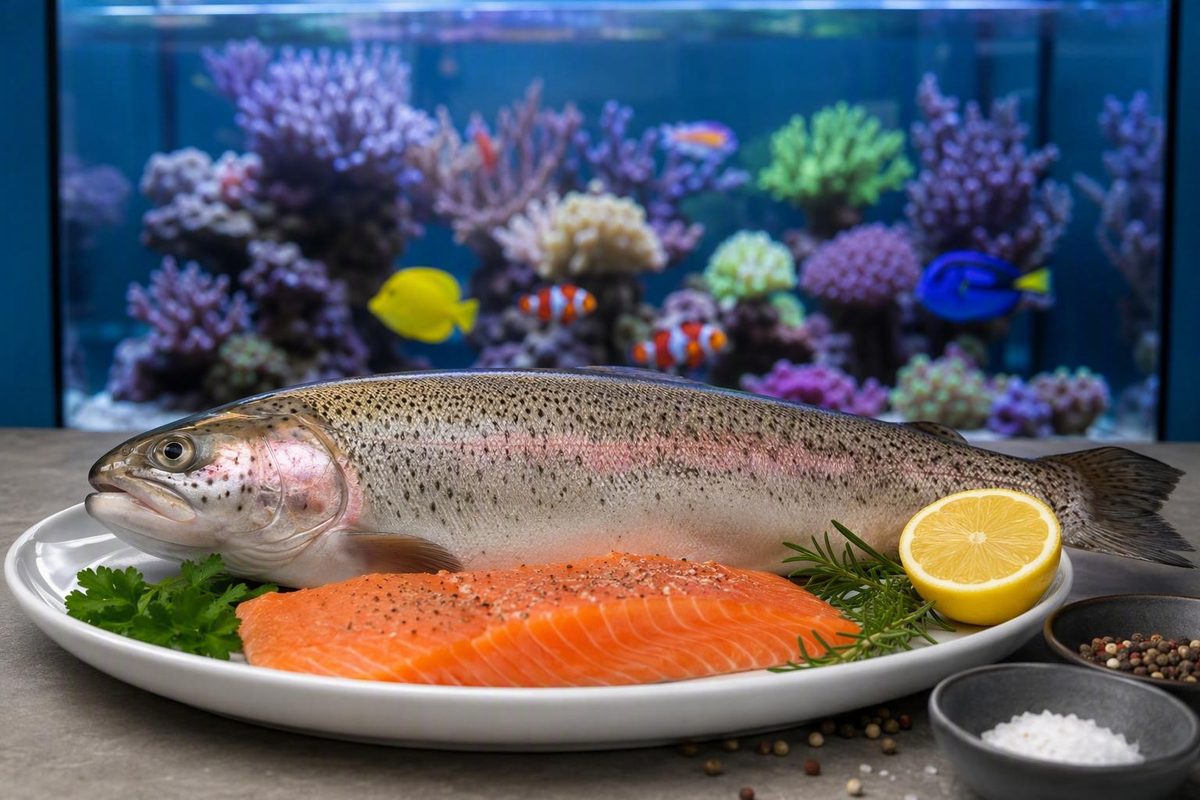
The usual profile is mild, clean and gently savory. Lake trout can be fuller, oilier and stronger, while freshness and cooking can matter as much as species.
Trout usually tastes mild, clean, and gently savory, often with a faint sweetness or nutty finish. Its flesh is tender and flakes easily when cooked. If salmon seems rich or assertive to you, most trout will taste lighter and subtler. That is the useful short answer—but the particular fish on your plate can range from delicate to earthy or noticeably oily.
“Trout” covers multiple species and growing conditions, so there is no single universal flavor. Species matters, but habitat, diet, freshness, handling, and cooking method can matter just as much. Think of the species name as a starting point, not a guarantee.
The basic trout flavor profile
A well-handled trout has a restrained fish flavor rather than the strong marine character associated with some oily ocean fish. The texture is soft and fine-flaked, and simple cooking lets its subtle flavor show through. The Food and Agriculture Organization’s trout guide describes trout as milder than salmon and notes that its delicate flesh works with many preparations.
Expect some combination of these qualities:
- mild rather than aggressively fishy;
- delicate, moist flakes when cooked properly;
- a light savory flavor, sometimes described as sweet, nutty, or earthy;
- enough richness to work with butter, but not so much that the fish needs a sharp sauce;
- a flavor that readily takes on smoke, browning, herbs, citrus, or a marinade.
Taste is subjective. One diner may call an earthy note pleasantly rustic, while another calls the same note muddy. The fish’s source and condition help explain why two people can give very different answers to the same question.
Why one trout can taste different from another
Species and life history
The FAO guide identifies rainbow trout, brook trout, and brown trout as distinct commonly eaten species. Broad tasting descriptions can help at the fish counter, but there is plenty of variation within each group.
- Rainbow trout: Usually the safest reference point for a first-time buyer. It is commonly described as mild, tender, and a little nutty. A detailed rainbow trout tasting guide also emphasizes how much its flavor changes with where and how the fish was raised.
- Steelhead: Often sold with deeper-colored flesh and commonly described as closer to salmon—richer and firmer, but still usually milder.
- Brown and brook trout: These are often described as delicate but more earthy or distinctive than rainbow trout. Their individual habitat and diet can outweigh the label.
- Lake trout: Often perceived as fuller, oilier, and more strongly flavored than smaller rainbow or brook trout. People who like rich fish may prefer it; someone seeking the mildest option may not.
These are tasting tendencies, not quality grades. A consumer comparison of brown, rainbow, steelhead, and lake trout illustrates the usual differences, but freshness and preparation can reverse a simple species ranking.
Habitat and diet
Fish build their flesh from what they eat. A trout feeding on insects, crustaceans, or smaller fish may not taste like one raised on a uniform prepared feed. Water conditions, season, size, and activity can also affect fat level and texture.
That does not support a rule that wild is always better or farmed is always worse. Either can be excellent. It means source is useful context: ask what kind of trout it is, where it came from, and whether it was wild-caught, stocked, or farm-raised. Then judge the actual fish by freshness rather than relying on the label alone.
Freshness and handling
Freshness has an immediate effect on flavor. The FDA’s seafood selection guidance says fresh fish should smell mild—not sour, rancid, strongly fishy, or ammonia-like—and should have firm flesh. Previously frozen fish can still be very good; freezing itself is not evidence of poor quality.
A strong off-odor is not a “trout flavor” to cover with seasoning. Do not eat seafood that smells sour, rancid, or ammonia-like. At the same time, smell and taste cannot prove a fish is microbiologically safe, so proper storage and cooking still matter even when the fish seems fine.
Does trout taste like salmon?
There is a family resemblance, but trout is generally the quieter fish. Both can have tender flakes and enough fat to stay moist, yet salmon usually tastes richer, sweeter, and more pronounced. Trout tends to be milder and more responsive to whatever is in the pan.
Steelhead is the common trout choice for someone who wants a salmon-like experience. Rainbow trout is a better first choice for someone who wants a lighter flavor. Compared with very lean white fish, trout often has a little more richness and a softer texture, without becoming heavy.
How cooking changes the taste
Because trout is delicate, the cooking method can become the dominant flavor. Start simply if you want to learn what the fish itself tastes like.
- Pan-seared: Browning makes the skin crisp and adds a toasted, savory edge. Butter makes the result richer; neutral oil keeps the trout flavor clearer.
- Baked: Gentle baking preserves moisture and keeps the taste clean. Lemon and herbs add brightness without hiding the fish.
- Grilled: Direct heat adds char and smoke. This works especially well for a whole trout or a firmer fillet, but delicate flesh can stick or break.
- Poached or steamed: These methods create the mildest presentation and a soft texture. Aromatics such as ginger, scallion, dill, or fennel provide contrast.
- Smoked: Smoke, salt, and curing become central, producing a much bolder result than fresh cooked trout.
For a first taste, season one fillet with only salt, a small amount of fat, and lemon served at the table. Cook a second portion with your preferred herbs or sauce. That side-by-side comparison shows which flavors come from the fish and which come from the preparation.
Avoid cooking solely by the clock. Fillet thickness, starting temperature, and cooking method all change the timing, and overcooked trout becomes dry and chalky.
How to choose mild-tasting trout
If your goal is a clean, approachable flavor:
- Start with rainbow trout from a seller who can identify its source.
- Choose fish with firm flesh and a fresh, mild smell.
- Keep it cold on the way home.
- Cook it simply before trying a heavily smoked or strongly seasoned version.
- If you caught it yourself, follow current harvest rules and local fish-consumption advisories for that water body.
Color alone does not prove freshness or flavor. The FDA notes that diet, environment, and processing can affect color, so use smell, firmness, package condition, and storage history instead.
Handle and cook trout safely
Flavor advice is not a substitute for food-safety controls. Keep raw trout separate from ready-to-eat food, wash hands and utensils after handling it, and refrigerate promptly. FDA guidance says seafood intended for use within two days should be stored at 40°F (4°C) or below; otherwise, wrap it well and freeze it.
Cook trout to 145°F (62.8°C) at the thickest part, measured with a food thermometer. The USDA safe-temperature chart lists 145°F for fish and shellfish, and FDA guidance gives the same target. If you do not have a thermometer, the FDA says cooked fish should be opaque and separate easily with a fork, but a thermometer is the clearest check.
Refrigerator thawing is the simplest safe method. For quicker thawing, seal the fish and place it in cold water, or use a microwave only when the fish will be cooked immediately. Do not leave trout warming on the counter.
Frequently asked questions
Is trout very fishy?
Usually not. Fresh rainbow trout is among the milder choices. Lake trout or some brown trout may taste richer or more earthy, while poor freshness can create an unpleasant strong odor or flavor that should not be mistaken for normal species character.
What fish is trout most similar to?
Salmon is the most familiar comparison, although most trout tastes lighter. Mild rainbow trout can also appeal to people who like delicate white fish but want a slightly richer, softer bite.
Does wild trout taste better than farmed trout?
Not automatically. Diet, water, handling, and freshness vary in both categories. Source information can set expectations, but the actual fish and the care taken after harvest matter more than a simple wild-versus-farmed label.
What is the best trout for a first-time eater?
Rainbow trout is a practical starting point because it is widely available and usually mild. Bake or pan-sear it with light seasoning, serve lemon on the side, and avoid overcooking it. That gives you the clearest answer to what trout tastes like before stronger sauces or smoke take over.