
Montana Spring Trout Fishing: Where to Go, What to Use, and How to Plan
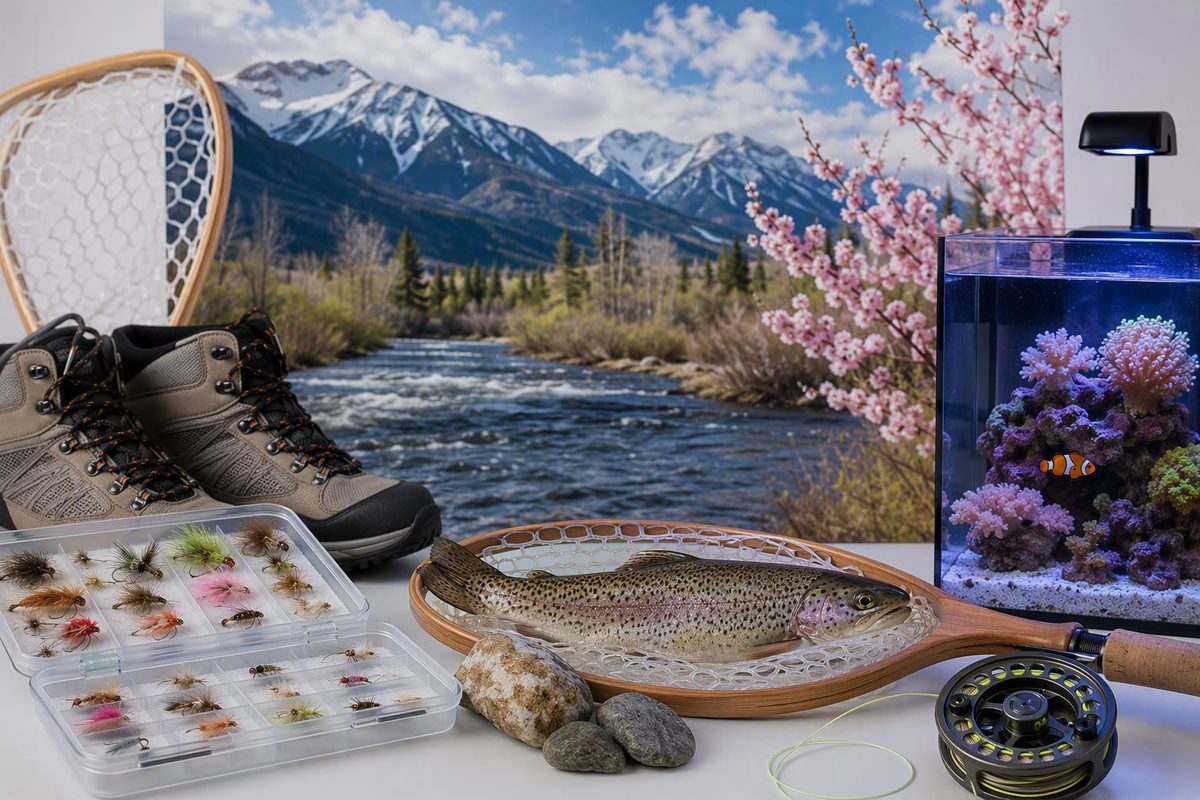
Snowmelt can swell and muddy freestone rivers. Tailwaters and spring creeks are more reliable then because their flows and clarity depend less on melting snow.
Montana Spring Trout Fishing: Where to Go, What to Use, and How to Plan
Overview
Spring can be a productive window for Montana trout fishing, provided you match your water choice to conditions. Trout feed actively after winter, crowds are often lighter than in summer, and tailwaters, spring creeks, and pre-runoff freestones each offer workable options in March, April, and May — the deciding factor is picking the right water type for the conditions you find.
Guides at Montana Angler describe early spring as an underrated season: trout are hungry after a long winter and pressure on popular waters is comparatively sparse. That framing sets the planning job for this guide — choose a month, choose a water type suited to likely conditions, prepare cold-water flies and presentations, and verify current rules and access before you go.
One scope note: the available guidance for Montana spring trout is heavily fly-fishing oriented, so the tactics here follow that lead. If you fish with spinning gear or other methods, the timing, water-selection, and verification advice still applies, but confirm method-specific tackle rules for your chosen water before you fish.
Spring timing in March, April, and May
Think of spring as three loosely defined phases rather than a fixed calendar: late-winter conditions in March, a transitional pre-runoff window in April, and a runoff-influenced period that typically develops in May. Exact timing shifts year to year with snowpack and weather, so treat these phases as planning defaults to confirm against current reports, not guarantees.
March generally means cold water and slower fish, but it also means trout that have been eating little all winter. Montana Angler’s spring overview notes that trout are hungry after a long winter, which is why early-season anglers often do well with slow, deep presentations on waters that stay fishable through cold snaps, such as tailwaters and spring creeks. Expect short feeding windows, and plan around the warmest part of the day.
April is often the most flexible month on paper. Water is warming, early-season insect activity picks up, and many freestone rivers can fish well before snowmelt clouds them. It is also the least predictable month: a warm stretch can start runoff early, and a cold system can push conditions back toward winter. Build an April trip with a primary water and a fallback that handles dirty water.
May tends to be shaped by runoff. When snowmelt swells and muddies freestone rivers, tailwaters and spring creeks become the more reliable options because their flows and clarity are less dependent on melting snow. If your dates fall in May, plan your trip around waters that stay clear rather than hoping a freestone holds.
Across all three months, the same rule applies: pick dates first, then let the likely conditions for those dates drive your water choice — not the other way around.
Choose water by spring conditions
The core spring decision is among three water types — tailwaters, freestones, and spring creeks — because they respond differently to cold weather and runoff. Tailwaters flow from dams, which moderates their temperature and clarity; freestones rise and fall with snowmelt and rain; spring creeks are fed by groundwater, giving them stable flows and, as PAFlyFish’s Montana river guide puts it, gin-clear water with astounding biomass and extremely high trout densities.
The matrix below organizes those differences into a practical spring choice. It reflects general patterns from the sources above, not current conditions — always check a recent local report before committing.
| Factor | Tailwaters | Freestones | Spring creeks |
|---|---|---|---|
| Best spring use case | Reliable fishing through cold snaps and runoff | Pre-runoff windows in March and April | Clear, stable water when rivers are muddy |
| Sensitivity to runoff | Lower — dam-controlled flows | High — can blow out quickly with snowmelt | Low — groundwater-fed and stable |
| Typical difficulty | Moderate; can be crowded on famous sections | Moderate; conditions change fast | High; clear water demands careful presentation |
| Wade vs. float fit | Both, depending on section | Wade early; float where conditions and access allow | Almost entirely walk-and-wade |
| Good fit for | Anglers who need dependable conditions | Flexible anglers who can move with conditions | Technical anglers, or beginners with a guide |
| Watch-outs | Verify access points and any section rules | Have a backup plan for dirty water | Private-water access and rod fees are common; confirm details in advance |
Use the matrix in two passes. First, eliminate what conditions rule out: if freestones are muddy, focus on tailwaters and spring creeks. Second, match what remains to your skill and style — a beginner wanting forgiving water leans tailwater; an experienced angler wanting sight-fishing to visible fish in clear water leans spring creek. Wade-versus-float is usually decided by the water, not preference: spring creeks are wade fisheries, while larger rivers can support float trips when flows and access cooperate.
Montana trout waters to consider in spring
No single Montana water is “best” in spring; the better question is which commonly discussed options fit your dates and likely conditions. The waters below appear repeatedly in spring-focused guidance from Montana Angler and destination roundups like PAFlyFish’s Montana list, which cover individual rivers along with trout species, access, guides, and hatch context.
- Paradise Valley Spring Creeks (DePuy’s, Armstrong’s, Nelson’s). Montana Angler singles out these three creeks as offering red-hot fishing during spring. They are clear, technical, and typically fished on foot, making them a strong choice when bigger rivers are dirty — but they involve private access arrangements you should confirm before planning around them.
- Yellowstone River. A large freestone that can offer good pre-runoff windows in early spring, with brown, rainbow, and cutthroat trout in the mix. Its condition-dependence cuts both ways: excellent when clear, off the table when snowmelt arrives.
- Madison River. One of Montana’s most frequently recommended trout rivers, with both wade and float opportunities depending on section. Spring anglers often target it before runoff or on sections where flows stay more manageable.
- Missouri River. A tailwater commonly cited for dependable spring fishing because dam-controlled flows keep it fishable when freestones blow out. Its rainbow and brown trout populations make it a frequent fallback for runoff-season trips.
- Gallatin River. A more intimate freestone with substantial roadside walk-and-wade access, often mentioned as a practical early-spring option for anglers who want to cover water on foot before snowmelt changes the picture.
Species context helps you read these descriptions: rainbow and brown trout dominate most of the waters above, with cutthroat more prominent in some drainages and whitefish present in many rivers. Species mix rarely decides a spring trip on its own, but it shapes expectations — clear spring creeks reward stealth over any particular species strategy, while bigger rivers offer more margin for error.
Beyond these headline waters, Montana holds many less-famous rivers and creeks that can fish well in spring with lighter pressure. If crowds matter more to you than name recognition, ask local fly shops about quieter options near your base — the same condition logic applies everywhere.
Flies, hatches, and presentations for cold spring trout
Prepare a spring box around three categories: subsurface attractors and food-form flies, early-season hatch imitations, and streamers — then let water temperature and clarity decide which you fish. Cold spring trout typically hold deep and move less for food, so most spring fishing is nymphing until conditions warm.
For specific patterns, Orvis’s early-spring list for Montana trout is a useful baseline. Its top patterns include the San Juan Worm, Otter’s Soft Milking Egg, Crystal Meth, and Pat’s Rubberlegs — worm, egg, and stonefly imitations that fish well when trout are keyed on high-calorie subsurface food. Orvis frames these as flies “you need in your box” for early spring and lists sizes and seasonal notes for each, so check the source for the full ten before you tie or buy.
On the hatch side, early spring in Montana is primarily about small insects. Midges are the reliable cold-weather food, and Blue-Winged Olives (Baetis) are the marquee early mayfly, often bringing fish to the surface on overcast spring afternoons. Spring creeks and tailwaters add scuds and sowbugs as year-round staples worth carrying. You don’t need an exact hatch calendar to prepare — carry small nymphs and a few dry-fly options in these categories and match what you see.
Presentation matters more than pattern in cold water. A few bounded adjustment principles cover most spring situations:
- Nymphing: fish slower, deeper water; add weight until you’re near the bottom; use an indicator to manage depth in walking-pace runs.
- Streamers: slow your retrieve in cold water, and use them when clarity drops — a larger profile is easier for fish to find in off-color flows.
- Dry flies: treat surface fishing as opportunistic; watch for midge or Baetis activity in the warmer midday window rather than forcing it.
- Clear water: on spring creeks especially, lengthen your leader, lighten your tippet, and prioritize a drag-free drift over fly choice.
Exact leader formulas and rig depths depend on the specific water and day, so use these as starting adjustments and refine on the water. If you fish gear rather than flies, the underlying logic still transfers — slow, deep presentations in cold water, brighter or larger offerings in dirty water — but confirm what methods are legal on your chosen section first.
Access, regulations, safety, and logistics to verify before you fish
A spring trip in Montana rises or falls on verification, because rules, access, and conditions change and none of them can be assumed from a general guide. Sources like the PAFlyFish Montana roundup note access and guide considerations vary river by river, which makes a pre-trip checklist the practical answer.
Work through these checks before committing to dates or water:
- License and regulations. Confirm current Montana fishing license requirements and the regulations for your specific water with Montana Fish, Wildlife & Parks, including any season dates, method restrictions, or harvest rules that apply to the section you plan to fish.
- Closures and emergency rules. Check for seasonal or emergency closures on your chosen water close to your trip date; spring conditions can trigger changes.
- Access points and private water. Verify legal public access for wade fishing, and for private spring creeks such as the Paradise Valley creeks, confirm booking requirements and rod fees directly with the fishery — these details are not fixed and should never be assumed.
- Current flows and clarity. Check recent flow data and a local fly-shop report a day or two before fishing; spring rivers can change from fishable to blown out quickly.
- Cold-water safety. Spring water is cold and flows can rise fast. Wade conservatively, avoid marginal crossings, dress for immersion risk, and keep dry layers in the vehicle.
- Weather and roads. Spring storms can affect mountain roads and access sites; check forecasts and road conditions, especially for early-season trips.
- Float logistics. If floating, confirm launch and takeout access, shuttle arrangements, and whether current flows suit your craft and experience.
- Costs and bases. Guide rates, spring creek fees, shuttles, and lodging vary by operator and season; get current quotes directly rather than relying on published articles.
None of these checks is difficult, but skipping them is the most common way a spring plan fails. Build the verification pass into your planning a week out, then re-check flows and weather the day before you fish.
DIY or guided spring trout fishing
You can fish Montana in spring on your own, and many anglers do — the honest answer is that a guide adds the most value when conditions, water type, or logistics exceed your current experience. Neither choice is inherently better; match it to the trip you’re actually planning.
DIY works well when you have time to research, flexibility to move with conditions, and a water type that suits self-guided fishing. Walk-and-wade freestone sections with public access, such as parts of the Gallatin, and accessible tailwater reaches give a prepared DIY angler plenty to work with, especially if you lean on local fly shops for current reports. The main DIY costs are time and uncertainty: you carry the burden of reading water, finding access, and adjusting when a river blows out.
A guide earns their fee in three spring situations in particular. First, technical water: the Paradise Valley spring creeks are clear and demanding, and a guide can compress a steep learning curve into a productive day — sources like PAFlyFish note guide services are a common part of planning on Montana’s major waters. Second, float trips: if you lack a boat, rowing experience, or shuttle knowledge, a guided float solves all three at once. Third, short visits: if you have one or two days and unfamiliar water, guided local knowledge protects your limited time against spring’s variable conditions.
Whichever route you choose, verify current guide availability and rates directly with outfitters, since spring calendars and pricing are not something a general guide can state reliably.
Responsible spring trout fishing
Spring overlaps with rainbow trout spawning in many Montana waters, so responsible behavior is part of the season, not an optional extra. The practical rule is simple: fish for actively feeding trout in normal holding water, and move on from fish that appear to be spawning.
The Orvis early-spring pattern guide reflects this seasonal reality — its list includes egg imitations like the Otter’s Soft Milking Egg precisely because eggs are a natural spring food source. Fishing egg patterns to trout feeding in runs and pools downstream of spawning areas is a normal spring tactic; targeting fish that are actively paired up on spawning gravel is a different matter, and most anglers consider it something to avoid.
Be cautious about where you wade as well as where you cast. Trout spawn on clean gravel in shallower water, and their nests — called redds — can be disturbed by boots even when no fish are visible. If you see conspicuously clean, light-colored gravel patches in spring, walk around them rather than through them, and when in doubt, choose a different line.
You don’t need biological expertise to fish responsibly in spring. Favor deeper runs and obvious feeding lies, avoid harassing fish that hold stubbornly in shallow gravel, handle any fish you land quickly and gently, and let local guidance from fly shops or fisheries managers refine the specifics for the water you choose. Fishing this way costs you very little and protects the wild trout that make a Montana spring worth planning around.