
Leather Coral Care, Types, Placement, and Troubleshooting Guide
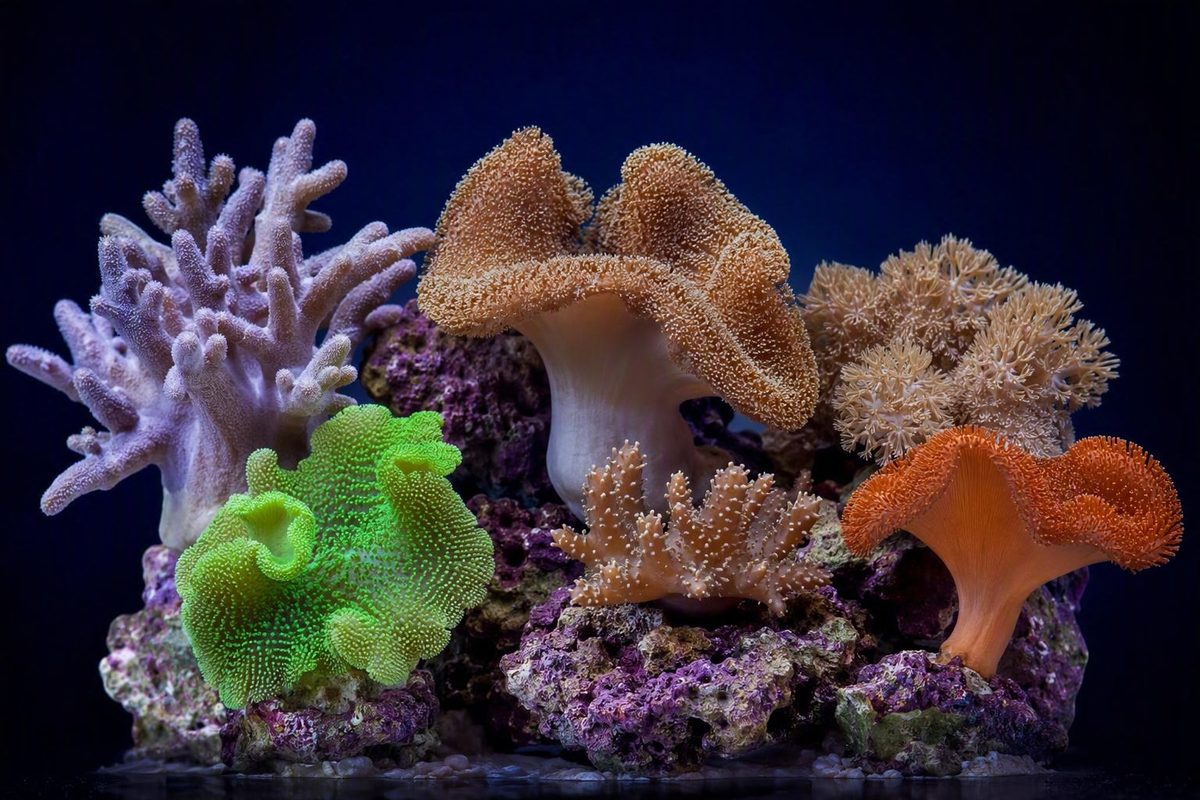
Periodic closure and a shed waxy film are usually normal; persistent tissue breakdown or ongoing decline signals a real problem, not routine maintenance.
Leather Coral: Care, Types, Placement, and Troubleshooting Guide
Overview
A leather coral is a soft coral (an octocoral) recognized by its leathery skin and fleshy body, and it is one of the more approachable soft corals many reef hobbyists add to a mixed reef tank. This guide helps you decide whether one fits your tank, which common type to consider, how to place and care for it, and how to tell normal behavior from a real problem.
Leather corals photosynthesize through symbiotic algae and are commonly kept in saltwater reef aquariums, where they are often described as beginner-friendly and resilient. That framing is fair but not a guarantee: “approachable” still means stable conditions, thoughtful placement, and attention during the first weeks. What follows is topic-led, cautious guidance drawn from reef-care sources, focused on the decisions you actually face before and after adding a leather coral.
What leather corals are
Leather corals are soft corals set apart from other octocorals by their leathery skin, as Salty Underground notes in its taxonomy overview of the family Alcyoniidae. In plain terms, they are corals without a hard stony skeleton, built instead from flexible, often thick tissue that gives the group its name. That leathery texture is the single most reliable identifier when you are looking at an unfamiliar specimen.
Within this group you will encounter several genera that hobbyists name often, including Sarcophyton, Sinularia, and Lobophytum, along with Cladiella and Alcyonium. Salty Underground describes common morphologies such as thick encrusting forms, which is one reason a single “leather coral” label covers a wide range of shapes. Some grow as a mushroom-like cap on a stalk, others as lobed or finger-like branches, and others as low encrusting mats.
The practical complication is that common names do not map cleanly onto these scientific groups. A name like “toadstool” describes a shape more than a precise species, and the same trade name can be applied to corals from different genera depending on the seller. This matters because care and behavior can differ by type, so a name alone is a weak basis for a care decision.
For identification, focus on what you can actually observe: the leathery tissue, the overall growth form (stalked cap, lobed, finger-like, or encrusting), and how the polyps sit on the surface. Leather corals share the octocoral trait of feathery, eight-tentacled polyps, though these retract and are not always visible. Use the genus and common name as a rough guide, then confirm care expectations against observed form and behavior rather than the label on the tank.
The takeaway: identify a leather coral by its leathery tissue and growth form first, treat common names as helpful but imperfect labels, and expect some variation in behavior across genera.
Is a leather coral right for your reef tank?
For many beginner-to-intermediate reef keepers, a leather coral is a reasonable early soft coral, but the honest answer depends on tank stability, your lighting and flow capacity, and your coral mix. Leather corals are widely described as beginner-friendly and resilient, and Manta Systems frames the toadstool leather coral in particular as one of the most beginner-friendly and resilient soft corals in the hobby. Resilient is not the same as effortless.
The first requirement is a stable, established tank. Soft corals generally tolerate a range of conditions better than more demanding stony corals, but they still respond poorly to swings in water quality. A newly cycled tank that is still settling is a harder home than one that has run steadily for a while. If your parameters still fluctuate week to week, it is worth stabilizing first.
The second consideration is your equipment and layout. Leather corals need appropriate light and water flow, and you should be confident you can provide a suitable spot for both. If your only open real estate is a low-light corner with dead flow, that is a placement problem worth solving before you buy.
The third is your existing livestock. Leather corals can release compounds and shed a waxy film as part of normal life, and both can affect neighbors in a mixed reef. If you already keep sensitive corals close together, you will want a plan for spacing and observation rather than assuming everything will coexist automatically.
Consider a leather coral if you have a stable tank, can meet light and flow needs, and are willing to watch how neighbors respond in the first weeks. Reconsider, or at least slow down, if your tank is brand new, your lighting or flow is marginal, or you cannot give the coral room away from sensitive neighbors. “Easy” here means forgiving, not no-care.
Leather coral type chooser
Choosing a leather coral type is mostly about matching growth form and behavior to your tank space and coral mix, not chasing a single “best” option. The genera hobbyists encounter most often are covered across the reef-care sources reviewed here, and each tends toward a recognizable shape and habit. Because trade names are applied inconsistently, treat the table below as a starting orientation and confirm care against the actual specimen in front of you.
The most common forms map loosely to genera as follows. Sarcophyton corals are the classic “toadstool” shape, a cap on a stalk, and the toadstool is repeatedly described as a beginner-friendly, resilient soft coral. Sinularia corals often grow as finger-like or lobed leathers. Lobophytum corals, sometimes called devil’s hand or lobed leathers, form thick lobed structures. Cladiella corals are frequently sold as “colt” or cauliflower-type soft leathers, and Alcyonium is another genus within the same leathery-skinned family described by Salty Underground.
| Common type / genus | Typical form | Beginner suitability | Placement notes |
|---|---|---|---|
| Toadstool (Sarcophyton) | Cap on a stalk | Often considered beginner-friendly and resilient | Give room for the cap to expand; watch shading of corals below |
| Finger / lobed leather (Sinularia) | Finger-like or lobed branches | Generally approachable soft coral | Allow spread; observe neighbor response as it grows |
| Devil’s hand / lobed (Lobophytum) | Thick lobed “hand” shape | Generally approachable soft coral | Space from sensitive neighbors; plan for size |
| Colt / cauliflower (Cladiella) | Soft branching leather | Generally approachable soft coral | Provide steady flow; watch for shed film |
| Encrusting / other (Alcyonium and relatives) | Thick encrusting mats | Varies by specimen | Confirm form and behavior before placement |
The single most important buying caveat is trade-name ambiguity. Common labels such as toadstool, finger leather, cabbage, and devil’s hand describe appearance and are applied inconsistently across genera and sellers, which the overlapping name coverage across these sources makes clear. Two corals sold under the same name may not behave identically, and the same coral may appear under two different names in two different stores.
To use this chooser well, start from your available space and flow, pick a form that fits that space at a mature size rather than its current frag size, and then verify the specimen’s identity and behavior in person. If a coral is labeled ambiguously, ask the seller what genus it is and how it has been growing, and treat the common name as a hint rather than a specification.
The takeaway: choose by growth form and mature footprint, favor a well-documented, healthy specimen over a specific trade name, and confirm identity directly because names in this group are unreliable.
Core leather coral care requirements
Leather corals need stable reef conditions, appropriate light and flow, and mostly rely on photosynthesis, with feeding as an optional supplement. The reef-care sources reviewed here consistently cover tank setup, water parameters, placement, lighting, flow, and feeding as the core husbandry topics, and Queen City Corals lays out practical setup instructions across exactly these areas. Rather than chase exact numbers, aim for stability and a good match between the coral and its spot.
Start with stability. Soft corals tolerate a reasonable range, but they respond poorly to swings, so consistent salinity, temperature, and general water quality matter more than hitting a single perfect value. A tank that holds steady week to week is a better foundation than one chasing ideal readings.
Lighting and flow are the two placement-defining variables. Leather corals house symbiotic algae (zooxanthellae) in their tissue and derive much of their energy from photosynthesis, so they need enough light to drive that process without being blasted into permanent retraction. Water flow should be enough to keep the coral clean and help it shed film, but not so strong that it cannot open. Because both light and flow vary widely by fixture and pump, the practical method is to place the coral, observe how it opens over days, and adjust rather than target a fixed setting.
Feeding is secondary. Because leather corals rely heavily on photosynthesis, feeding is generally optional rather than mandatory. Manta Systems’ toadstool guide addresses feeding among its practical care tasks, and the reasonable interpretation is that small plankton-sized foods can supplement a coral but are not the primary energy source. Do not overfeed a tank on the assumption that a leather coral requires heavy feeding.
Routine behavior is part of care, too. Leather corals may periodically retract their polyps, look “closed,” or shed a waxy surface film, and these can be normal maintenance behaviors rather than emergencies. The troubleshooting section below covers how to read them. For day-to-day care, the goal is a stable tank, a light-and-flow spot the coral visibly likes, and restraint on feeding and on moving the coral.
The takeaway: prioritize stable water, dial in light and flow by watching the coral rather than a number, treat feeding as optional, and expect occasional closure or shedding as part of normal life.
Buying and first-week care
Buying a leather coral well comes down to picking a healthy specimen and planning a calm first week, not chasing the cheapest listing or the flashiest color. Because current prices and availability shift constantly and are not something to state as fixed facts, compare listings yourself on size, attachment, growth form, and whether the coral is aquacultured or wild-collected rather than relying on any quoted figure.
Aquacultured frags and wild-collected colonies both appear in the hobby, and each has trade-offs worth weighing, but claims that one is categorically better on sustainability or hardiness need current, specific evidence rather than assumption. Treat the aquacultured-versus-wild distinction as a factor to ask about and consider, not a settled verdict. Where a seller makes a sustainability claim, ask them to substantiate it.
Choosing a healthy specimen
The most reliable buying checks are the ones you can see: general tissue condition, polyp behavior where observable, and secure attachment. A promising specimen looks intact rather than torn or receding, and where polyps are extended it suggests the coral is comfortable in the seller’s system, though leather corals commonly retract for benign reasons so a temporarily closed coral is not automatically unhealthy.
Use these visible checks and questions before buying:
- Tissue condition: Look for intact, evenly colored tissue without obvious open wounds, sloughing patches, or areas that look mushy or discolored.
- Polyp behavior: Extended polyps are reassuring where you can see them, but recognize that closure alone is not proof of a problem in this group.
- Attachment: Prefer a coral that is settled on a plug, rock, or frag, and ask how recently it was cut, since fresh fragging is a stressor the coral is still recovering from.
- Questions to ask: How long has it been in the store’s system, is it aquacultured or wild-collected, and has it been opening and growing recently?
Because the supplied evidence is limited, avoid treating any single visible sign as a definitive diagnosis of disease or pests. Ask the seller what they have observed over time, and weigh their answers alongside what you can see. If a coral has only just been fragged, understand that some initial closure is expected.
The takeaway: buy an intact, attached specimen with a known history, treat visible cues as signals rather than certainties, and clarify recent fragging and sourcing before you commit.
Acclimation, dipping, quarantine, and the first week
Your first week should be conservative: acclimate gently, inspect, decide on dipping or quarantine based on your own established process, place cautiously, and then mostly leave the coral alone. Manta Systems’ toadstool guide covers acquisition and acclimation as distinct early steps, which reflects how much the first days matter. The steps below are a cautious sequence, not a set of universal rules.
- Acclimate to your water gradually rather than dropping the coral straight into the tank, easing the temperature and water transition before it goes in.
- Inspect the coral and its base for pests or damage before it joins your system, paying attention to the underside and attachment point.
- Decide on dipping or quarantine using your own normal protocol. These are judgment calls that depend on your risk tolerance and setup, not mandatory steps for every keeper or every coral, so follow the process you already trust for new arrivals.
- Place it conservatively in a spot with moderate light and flow rather than the brightest or strongest position, giving it a chance to settle.
- Adjust flow if the coral cannot open or stays folded, since flow that is too strong is a common reason a new leather stays closed.
- Resist the urge to keep moving it. Repeated relocation is stressful; give it time to adapt before deciding a spot is wrong, and only move it if there is a clear, persistent problem.
Expect some closure or a shed film in the first days as the coral adjusts to new light, flow, and water. That settling-in period is normal, and patience is usually more productive than intervention. The takeaway: go slow, inspect and use your own dip/quarantine judgment, place cautiously, and give the coral time before making changes.
Mixed reef placement and compatibility
Place a leather coral where the light and flow suit it and where it has room away from sensitive neighbors, then watch how those neighbors respond over the following days. Placement and mixed-reef compatibility are treated as a distinct decision across the reef-care sources reviewed here because leather corals both need the right physical conditions and can interact chemically with other corals.
Start with light and flow, because those determine whether the coral thrives at all. Pick a spot where the coral opens and looks comfortable, favoring moderate conditions over extremes, and let observed behavior guide fine adjustments. A coral that consistently opens in a given position is telling you the light and flow are acceptable there.
Then think about room and neighbors. Leather corals can grow and can shade or crowd corals placed too close, and they can also affect neighbors chemically. In a mixed reef, that argues for giving a leather coral its own space rather than tucking it against other corals. Because exact “safe distances” are not something the evidence supports as universal, the practical approach is generous spacing plus active observation rather than a fixed rule.
Watch the neighbors, not just the leather coral. If nearby corals begin to close persistently, recede, or fail to open when they normally would, that is a signal to reassess spacing, flow paths that carry shed material or compounds, and water management. Adjust deliberately rather than reacting to a single bad day, since corals of all kinds have off periods.
Guidance about placement near specific coral groups such as SPS and LPS should stay cautious. The reasonable, evidence-bounded stance is that leather corals can coexist in mixed reefs with room and observation, but there is no universal compatibility rule that guarantees a given neighbor is safe at a given distance. The takeaway: place for good light and flow, give real spacing, and let neighbor behavior tell you whether your layout is working.
Allelopathy and chemical conflict risk plan
Leather corals can engage in chemical conflict, releasing compounds and shedding mucus or a waxy film that may irritate nearby corals in a closed system, so the practical goal is prevention plus a response plan rather than a promise of no interaction. The reef-care sources reviewed here consistently raise allelopathy, toxin release, mucus, and the use of activated carbon and spacing as compatibility concerns, and Manta Systems’ toadstool guide addresses chemical release directly among its care tasks. What the evidence does not support is a universal safe-distance number, so treat the following as a bounded risk plan.
Prevention starts with spacing and water management. Give leather corals room from sensitive neighbors, maintain good flow and water quality, and consider running activated carbon as a routine measure to help reduce dissolved organic compounds. These steps lower the odds of a problem without pretending to eliminate it.
If you suspect chemical conflict, work through a measured response:
- Confirm the symptom in neighbors, such as persistent closure, recession, or failure to open in corals that were previously fine, rather than acting on a single closed day.
- Increase or refresh activated carbon, which is commonly used to help pull dissolved compounds out of the water.
- Escalate water changes to dilute any released compounds and improve overall water quality.
- Improve spacing and flow paths so shed film and compounds are not carried directly onto sensitive corals.
- Observe over days, giving neighbors time to recover before making further changes.
Keep expectations realistic. Chemical conflict is a real, documented concern in mixed reefs, but its severity varies and you cannot assume a fixed threshold applies to your tank. Watch your specific corals, respond proportionally, and treat carbon, water changes, and spacing as tools rather than guarantees. The takeaway: prevent with room, flow, water quality, and carbon; respond to confirmed neighbor symptoms with carbon, water changes, and better spacing; and judge success by whether neighbors recover.
Growth, fragging, and long-term management
Plan for a leather coral to grow, because long-term placement and occasional trimming or fragging are part of ownership rather than optional extras. The reef-care sources reviewed here treat growth, propagation, and fragging as recurring tasks, and Queen City Corals includes fragging in its practical setup coverage. Thinking about mature size before you place the coral saves you from moving an established colony later.
Leather corals grow over time and can eventually take up meaningful space, so a frag that looks small today may become a dominant feature. The main long-term risks are crowding sensitive neighbors and shading corals placed below or behind a large cap or lobed structure. Because maximum sizes vary and are not something to state as a fixed figure, plan placement around the possibility of substantial growth rather than a specific dimension.
Trimming and fragging serve two purposes: managing size and propagating the coral. At a high level, leather corals can be propagated by cutting a portion of tissue and allowing it to attach and heal, which is one reason they are common in the hobby and available as aquacultured frags. This is a conceptual overview rather than a step-by-step procedure; cutting is a stressor, and the coral needs stable conditions and time to recover, so it is not a routine action to take casually.
Long-term management is mostly about foresight. Give a leather coral a permanent spot that will still work when it is larger, keep an eye on whether it is beginning to shade or crowd neighbors, and trim proactively if it starts to overwhelm its space rather than waiting until a neighbor is already suffering. If you are working in a smaller beginner tank, be especially realistic about how much room a mature leather coral will claim.
The takeaway: assume growth, place for the mature size, watch for shading and crowding, and treat trimming or fragging as a deliberate, stress-managed action rather than an impulse.
Normal shedding versus warning signs
The hardest reef-keeping question with leather corals is telling routine behavior from a real problem, and the short answer is that periodic closure and a shed waxy film are usually normal, while persistent tissue breakdown or ongoing decline is not. The reef-care sources reviewed here support shedding, mucus, polyp behavior, and stress signs as recognized topics, and Manta Systems’ toadstool guide explicitly addresses slime and shedding among its common care questions. Use the framework below cautiously, because it separates categories rather than diagnosing a specific illness.
Normal, expected behaviors include periodic polyp retraction where the coral looks “closed,” and the shedding of a waxy surface film, which leather corals do to clear their surface. A newly added coral often closes for a while as it adjusts to new light, flow, and water. A “grumpy” leather coral that folds up for a day or two, especially after a change, is frequently just going through routine maintenance rather than dying. In these cases, the right move is usually patience and observation, not intervention.
Warning signs are different in character: they persist and they involve the tissue itself. Tissue that is breaking down, sloughing, turning mushy, or receding steadily over days is more concerning than a coral that is simply folded up. A coral that never reopens after an extended closed period, or that keeps declining regardless of conditions, warrants a closer look at water quality, flow, placement, possible chemical conflict from neighbors, pest irritation, or algae overgrowing the coral’s surface. Because the evidence here is limited, treat these as categories to investigate rather than a confirmed diagnosis.
To make this concrete, consider one common failure mode. Trigger: you place a new leather coral directly into a high-flow position and it folds up and refuses to open for several days. Consequence: if you interpret that closure as illness and repeatedly relocate the coral in search of a better spot, the added handling and instability can prolong the stress and keep the coral from settling. Response: first reduce or redirect the flow so the coral is not being blasted, confirm your water parameters are stable, and then leave it in place to adjust; give it time before concluding the spot is wrong, since flow that is too strong is a common reason a new leather stays closed. Only if it continues to decline over an extended period despite good conditions do you escalate to checking for chemical conflict, pests, or tissue breakdown.
A few practical cues help you sort normal from concerning:
- Recent closure after a change or a move: usually normal; give it time before acting.
- A shed waxy film that the coral then reopens from: normal surface maintenance.
- Steady tissue recession, sloughing, or mushy areas over days: a warning sign to investigate water quality, placement, and neighbors.
- A coral that never reopens or keeps declining regardless of conditions: worth a deeper review rather than continued waiting.
- Algae creeping over the coral’s surface or visible pest irritation: a prompt to address the underlying cause rather than only the coral.
When you do investigate, prioritize the fundamentals first: stability of water parameters, appropriateness of light and flow, spacing from potentially conflicting neighbors, and whether the coral is simply still settling in. Avoid the reflex to keep moving a coral that is only closed, because handling and relocation add stress that can look like the very decline you fear.
The takeaway: treat periodic closure and shedding as likely-normal, watch for persistent tissue breakdown as the real warning sign, fix flow and stability before assuming disease, and give the coral time to prove whether a spot is working before you intervene.