
What You Need to Know About 125-Gallon Aquarium Dimensions and Weights
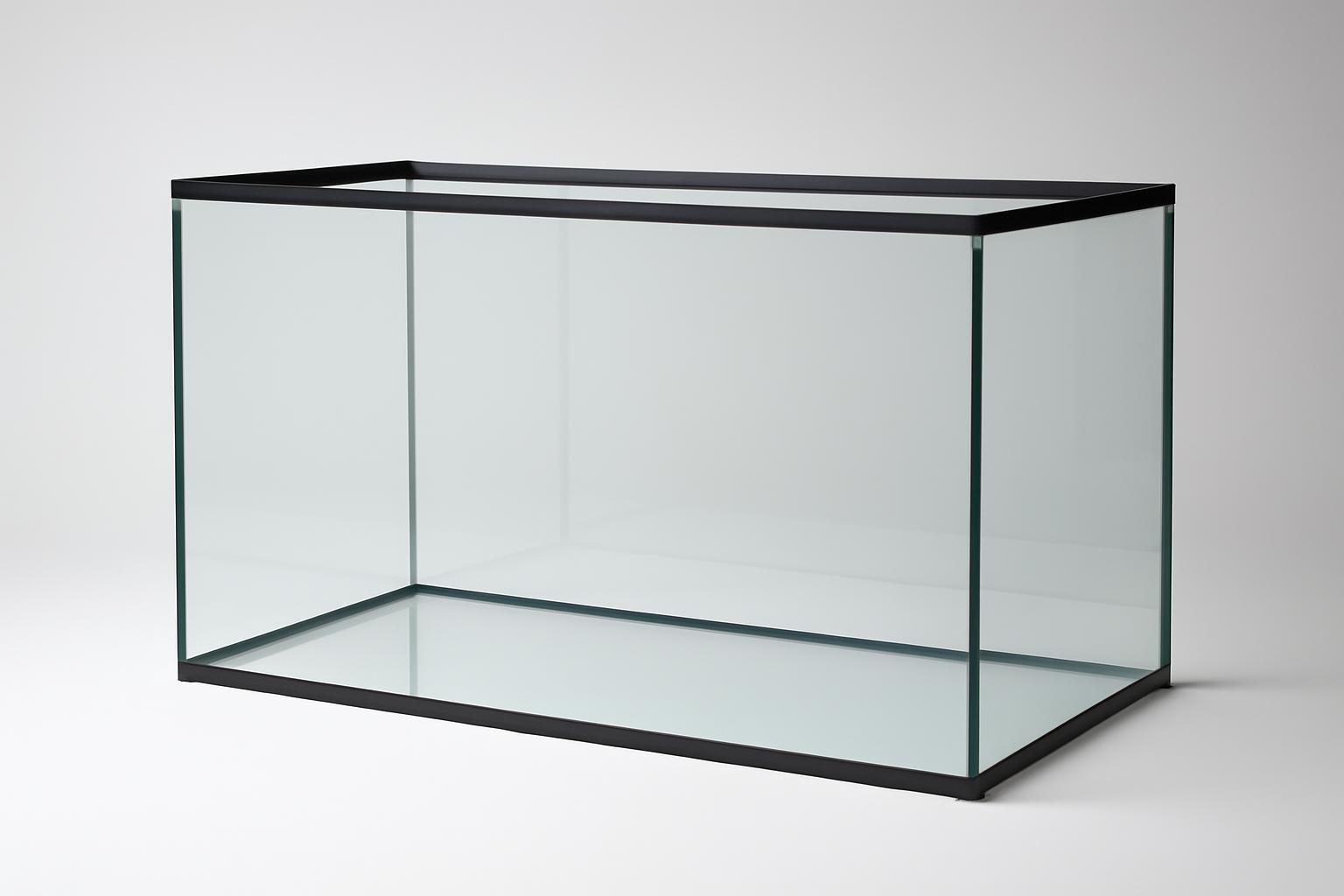
Many rectangular 125-gallon glass tanks share a 72 × 18-inch footprint, but tanks are not dimensionally identical across brands and shapes.
If you are planning a reef upgrade, shopping for a used tank, or checking whether a stand, sump, or canopy will fit, there is a helpful starting point: many standard rectangular 125-gallon glass aquariums cluster around a 72-inch by 18-inch footprint.
In the listings and size tables reviewed here, the most common shorthand is:
- About 72 inches long
- About 18 inches front to back
- About 20 to 22 inches tall
That makes the standard 125 one of the more predictable large aquarium sizes to plan around. But “predictable” is not the same as “identical.” Aqueon, Perfecto, and Marineland all publish slightly different measurements for tanks sold as 125 gallons, and those differences matter once you start matching stands, ordering lids, cutting inserts, or checking tight room clearances.
The other important point is that a tank sold as 125 gallons usually does not hold 125 gallons of working water in normal reef use. Interior space is reduced by the tank walls, most tanks are run below the rim, and rock, sand, overflows, and equipment all displace water. For dosing and system planning, that distinction matters more than the number in the product name.
Standard External Dimensions for 125-Gallon Tanks
For standard rectangular glass tanks, the most common published 125-gallon measurements are 72 inches long by 18 inches wide, with height usually landing around 21 to 22 inches.
That pattern shows up across several named sources:
| Source example | Published dimensions |
|---|---|
| Standard aquarium size chart | 72” x 18” x 21” |
| Aqueon Standard 125 listing | 72” L x 18” W x 22” H |
| Perfecto rectangular 125 size sheet | 72” x 18” x 22” |
| Marineland High-Definition 125 listing | 72.5” x 18.69” x 22.13” |
So if you want the practical answer to “What are the usual outside measurements for a 125-gallon aquarium?” it is this:
Assume roughly 72” x 18” x 21-22” unless the exact model specification says otherwise.
That shorthand is good for early planning: room layout, stand shopping, door clearance, and deciding whether a 6-foot tank is realistic in your space.
These are planning dimensions, not guaranteed interior dimensions
The dimensions published in product listings and tank-size tables are the dimensions you should use for fit and footprint planning. They describe the tank you have to accommodate in the room and on the stand. They do not tell you the exact inside water box.
That distinction matters because the published number includes the tank walls, and sometimes trim or framing features that affect how accessories sit. A tank that is sold as 72” x 18” externally will have less interior length and width than those numbers suggest.
The common pattern is the 72” x 18” base
The most consistent feature of a standard rectangular 125 is the 6-foot by 18-inch footprint. Height varies a bit more than the base does.
That is why so many 125-gallon references converge even when the exact height differs:
- 21 inches appears in one general aquarium size chart
- 22 inches appears in both Aqueon and Perfecto listings
- A little over 22 inches appears in Marineland’s published dimensions
For rough planning, the footprint tells you more than the gallon label alone.
Why the gallon label and the dimensions do not map neatly
This is where many readers get confused, and it is worth stating directly:
Marketed aquarium gallon ratings do not always map neatly to simple box math using today’s published external dimensions.
For example:
- A 72” x 18” x 22” box works out to about 123.4 gallons if you multiply the external dimensions and divide by 231
- A 72” x 18” x 21” box works out to about 117.8 gallons by the same method
So why are both sold or referenced as 125-gallon tanks?
Because that simple calculation is only a rough geometric check, not a reliable manufacturer-capacity standard. Published dimensions are external, model specs vary, and aquarium sizing is sold by nominal capacity conventions, not by a universal rule that every current listing must match a perfect external-dimension formula.
So use the dimensions for fit, and use measured interior water volume for dosing and system calculations.
Brand-Specific Dimensions and Variations
The 72” x 18” footprint is common, but exact published dimensions still vary by brand and model. If you are buying new, mixing a used tank with a new stand, or ordering custom accessories, use the named model spec rather than assuming all 125s are interchangeable.
Here is the clearest side-by-side comparison from the reviewed sources:
| Brand / model | Published dimensions | Source type | Notes |
|---|---|---|---|
| Aqueon Standard 125 | 72” L x 18” W x 22” H | Retail listing for Aqueon standard tank | Typical framed rectangular glass 125 |
| Perfecto Rectangular 125 | 72” x 18” x 22” | Perfecto tank size sheet | Listed for black and oak frame versions |
| Marineland High-Definition 125 | 72.5” W x 18.69” D x 22.13” H | Marineland ensemble retailer listing | Slightly larger than the common standard |
| Marineland stand for that system | 74” W x 20.25” D x 28” H | Same Marineland listing | Stand is larger than tank footprint |
Aqueon: a strong baseline reference
If you want a mainstream rectangular glass example, the clearest current listing is the Aqueon Standard 125 at 72” L x 18” W x 22” H.
That size lines up with what many hobbyists mean when they say “standard 125”:
- 6 feet long
- 18 inches front to back
- about 22 inches tall
For planning around a common off-the-shelf rectangular 125, Aqueon is a reasonable baseline.
Perfecto: same dominant footprint
Perfecto’s published rectangular 125 dimensions are also 72” x 18” x 22”, in both black and oak frame versions in the size sheet reviewed.
That matters because it supports the larger pattern: multiple mainstream rectangular 125s really do cluster around the same base footprint.
Marineland: close, but not identical
Marineland’s High-Definition 125 shows why exact model specs matter even when the tank is “basically standard.”
Its published dimensions are:
- 72.5 inches wide
- 18.69 inches deep
- 22.13 inches high
Those differences sound small, but they can matter if you are:
- fitting the tank into an alcove
- reusing an existing stand
- ordering a custom lid
- building a close-fitting canopy
- planning minimal side clearance
A half inch of extra width and a bit more depth can be enough to turn an assumed fit into a problem.
Forum consensus is useful for rough shorthand only
Hobbyist discussions in the evidence pack generally circle around a 72” x 18” base when people refer to a standard 125. That is helpful as shorthand, and it broadly matches the manufacturer and retailer specs above.
But forum shorthand is not precise enough for fabrication. Once you are matching an exact stand, drilling, ordering a lid, or cutting anything custom, use the published dimensions for your exact model and then measure the actual tank yourself.
The safe summary
The evidence supports a qualified conclusion, not an absolute one:
Many rectangular 125-gallon glass tanks share a common 72” x 18” footprint, but 125-gallon tanks are not dimensionally identical across all brands and shapes.
Empty and Filled Tank Weights
A 125-gallon aquarium is not just large. It is heavy enough that stand strength, delivery access, and floor-load awareness all deserve real planning.
Across the published size references in the evidence pack, standard rectangular glass 125s fall into this general range:
| Weight type | Published range |
|---|---|
| Empty tank weight | About 160 to 206 lbs |
| Filled freshwater weight | About 1160 to 1206 lbs |
The named examples are:
- 72” x 18” x 21” size chart: 206 lbs empty / 1206 lbs filled
- Perfecto 72” x 18” x 22” size sheet: 160 lbs empty / 1160 lbs filled
Why the empty weight is not one fixed number
A spread of roughly 46 pounds between published empty weights can look large until you remember that these are estimates from different sources for different tanks.
The evidence itself warns that weights vary with factors such as:
- glass thickness
- exact dimensions
- frame or brace design
- water type
- how simplified or conservative the published estimate is
So the honest answer to “How much does a 125-gallon tank weigh empty?” is not one exact figure. It is:
Plan for roughly 160 to 206 pounds for the tank itself, depending on the model.
Filled weight is a baseline, not a total system number
Published filled weights of 1160 to 1206 pounds are useful because they show that the display alone is already in the half-ton range when full of freshwater.
But those numbers are still only a starting point. They do not account for everything that may be part of a real reef installation, such as:
- rock
- sand
- sump water
- plumbing
- stand weight
- lights and canopy
- pumps and other equipment
So use the published filled weight as a planning baseline, not as the final installed system weight.
Saltwater weighs a little more than freshwater
One weight reference in the evidence pack lists:
- Freshwater at specific gravity 1.000: 8.34 lbs per gallon
- Saltwater at specific gravity 1.025: 8.54 lbs per gallon
That is only a modest increase per gallon, but on a nominal 125-gallon volume it adds up to about 25 pounds more water weight than freshwater.
In practice, the display may hold less than a full 125 gallons of water, so the real difference may be somewhat less than that. But the general takeaway is sound:
A saltwater system is a bit heavier than the same nominal volume of freshwater.
Treat all published weights as estimates
This is the most important caution in the section. The evidence sources themselves describe these figures as rough guidelines.
Real installed weight depends on:
- actual water volume
- salinity
- rock and sand load
- overflow and sump water
- glass thickness
- attached equipment
Use published weights for:
- stand selection
- moving logistics
- floor-awareness planning
- deciding how many helpers you need
Do not use them as exact engineering numbers for a finished reef system.
Internal Dimensions and Measurement Tips
Internal dimensions are where many hobbyists get into trouble.
External dimensions are easy to find in listings. But interior measurements are the ones that matter for:
- dosing calculations
- custom lids and screen tops
- inserts and dividers
- overflow guards
- acrylic panels
- exact working-water estimates
The problem is that reliable manufacturer-published internal dimensions are often unavailable.
The inside is always smaller than the outside
That part is not controversial. The interior water box is smaller because the tank walls take up space.
A measurement guide in the evidence pack warns that using outside dimensions can overstate volume by about 5% to 8% on large tanks, because exterior measurements include the tank walls. Another calculator guide says usable volume often ends up 5% to 15% lower than a simple external-dimension calculation once you account for glass thickness and normal headspace.
So if you need real internal dimensions, do not assume the listing size tells you the inside size.
Be careful with “standard” inside-dimension guesses
A reef forum thread about cutting an acrylic bottom insert for a standard 125 includes an owner’s guess that a 72” x 18” outside tank might be around 71.5” x 17.5” inside.
That thread is useful for one reason: it confirms how common the 72” x 18” outside size is in hobby discussion.
But it does not provide a verified measured interior dimension. No manufacturer spec is given, and no poster supplies a confirmed glass-to-glass measurement.
So treat that number only as an example of the kind of estimate hobbyists make—not as a standard internal size for all 125-gallon tanks.
General glass-thickness guidance is not the same as a tank-specific spec
The evidence pack includes two pieces of generalized guidance:
- one calculator guide lists 1/2-inch glass as a common figure for 100- to 180-gallon tanks
- one measurement guide says large display tanks over 125 gallons can have glass up to 3/4 inch
Those references are helpful for understanding why internal space can shrink noticeably. But they are not manufacturer specs for every 125-gallon tank.
So avoid working backward from a generic thickness chart if you need exact dimensions for a specific tank. The correct workflow is still to measure the actual aquarium.
How to measure internal dimensions correctly
For accurate internal dimensions:
- Open the lid or canopy
- Place the tape measure inside the tank
- Measure glass to glass
- Do not include trim, frame lips, or outer edges
- If a custom insert must sit flat, be mindful of silicone beads and corners
- For water-volume calculations, measure height to the actual waterline, not automatically to the top rim
This is the safest method because it gives you the dimension that your accessory, insert, or volume calculation actually depends on.
Fabrication tip: treat insert tolerances as custom, not standard
The same reef forum thread includes one responder’s suggestion to leave roughly 1/4 inch of gap around acrylic pieces so they can be placed and sealed without binding.
That may be sensible as hobbyist fabrication advice, especially when tanks are not perfectly square and silicone beads vary. But it is still advice from a forum discussion, not a manufacturer standard for 125-gallon aquariums.
So if you are building anything custom:
- measure your own tank
- check more than one point
- account for silicone and squareness
- build in tolerance based on your actual measurements, not a presumed standard gap
Best practical rule
For a specs-focused article, the internal-dimension bottom line is simple:
Use published exterior dimensions for planning, but use direct glass-to-glass measurements for anything custom or volume-critical.
Acrylic and Non-Rectangular 125-Gallon Options
When most hobbyists search for 125 gallon tank measurements, they mean the common rectangular glass format. But 125-gallon tanks also exist in acrylic and in specialty shapes, and those can be very different from the standard 72” x 18” glass layout.
TRUVU acrylic rectangular 125
One acrylic example in the evidence pack is a TRUVU 125-gallon freshwater acrylic aquarium listed at:
- 72” x 18” x 20”
- 3/8” body and top thickness
- actual gallons: 112.2
That example matters for two reasons.
First, it keeps the familiar 72” x 18” footprint but shortens the height compared with the 22-inch glass listings above.
Second, it explicitly states an actual capacity of 112.2 gallons despite being sold as a 125-gallon tank. That is a clear reminder that nominal naming and actual capacity are not always the same thing.
The listing also says the tank is built to order with a 3- to 4-week lead time.
Clear-for-Life half-cylinder 125
A very different acrylic option is the Clear-for-Life 125-gallon half cylinder, listed at:
- 48” L x 24” W x 30” H
- 1/2” body
- 1/2” top
- for fresh or salt water
This is still sold as a 125-gallon tank, but it is obviously not the same kind of tank as a standard rectangular 72” x 18” 125.
Compared with the typical rectangular glass version, it changes almost everything about the footprint:
- shorter overall length
- more height
- more front-to-back presence
- curved panoramic presentation
The listing also says it is built on demand with a 2- to 4-week build time and notes freight delivery.
Acrylic options are less standardized
The two acrylic examples here show the core point well: acrylic 125s are real, but they are not as standardized as mainstream rectangular glass tanks.
In this evidence pack, acrylic listings show:
- different heights
- different wall thicknesses
- specialty shapes
- explicit actual-capacity notes
- built-to-order lead times
One seller of the half-cylinder model also markets acrylic as lighter, safer, and stronger than glass. That is the seller’s product description, not a universal measurement standard, but it helps explain why shoppers look at acrylic alternatives in the first place.
Non-rectangular 125s exist, but do not assume standard accessories fit
If your goal is a conventional reef display, the typical rectangular glass 125 remains the format most people mean. But the existence of acrylic long tanks and half-cylinders means the gallon label alone tells you very little about:
- stand compatibility
- lid fit
- canopy shape
- usable swim length
- how to calculate the volume
A 125-gallon label does not guarantee a standard rectangle.
Actual Water Volume vs. Nominal 125 Gallons
This is the point most hobbyists eventually run into:
A tank sold as 125 gallons usually does not hold 125 gallons of actual working water in normal use.
That matters for dosing, salinity correction, medication, and realistic system planning.
Why actual water volume is lower
The evidence pack gives several reasons:
- Tank walls reduce interior space
- Water is usually kept below the rim
- Rock and sand displace water
- Overflow structures and equipment take up space
- Nominal tank sizing is not the same as day-to-day working volume
A calculator guide in the evidence pack says usable volume is often 5% to 15% less than a simple gross figure once you account for wall thickness and normal headspace. Another source notes rated volumes can be overstated by 10% to 20% after displacement and fill-level realities are considered. The exact reduction varies, but the direction is clear: working volume is lower than the label suggests.
The basic rectangular formula
For a standard rectangular tank:
Gallons = (internal length × internal width × water height in inches) ÷ 231
That formula is correct, but the answer is only as good as the measurements you use.
If you enter external dimensions and full tank height, you are calculating a gross outer box, not real working water.
Headspace matters
A calculator guide in the evidence pack says water level drop from the rim is typically around 1.5 to 3 inches. Another measuring guide says practical calculations should use the waterline rather than the top rim.
That may sound minor, but on a 6-foot tank, even a modest reduction in water height removes a meaningful amount of water volume.
Rock, sand, and overflows reduce water volume further
Once the tank is aquascaped, actual display water can be far below the number implied by the product label.
That is why nominal tank size is a weak basis for:
- dosing supplements
- medication calculations
- salinity adjustment
- nutrient-control planning
If you want a number you can actually use, calculate the water that is really in the system.
External-dimension math is not a manufacturer-capacity standard
This is worth repeating because it resolves a common confusion.
A simple external-dimension calculation is useful as a rough geometry check, but it does not define the official capacity standard for every marketed aquarium. The evidence pack itself shows “125-gallon” tanks published at dimensions that do not line up perfectly with 125 gallons by simple outer-box math.
So when dimensions and gallon labels seem inconsistent, the right lesson is not that the math is wrong. It is that external dimensions, nominal model names, and actual working water volume are three different things.
Add the sump separately
For reef systems, total system volume is often more useful than display volume alone.
One example in the evidence pack is the Eshopps RS-200 reef sump, listed at 30” x 12” x 16” and rated for tanks in the 125- to 225-gallon range.
That does not mean every 125 should use that sump. It simply illustrates an important planning point:
- calculate the display volume separately
- calculate the sump at its actual operating water height
- then add the two together
That is the number that matters for many reef-keeping decisions.
Stands, Canopies, and Reef Setup Considerations
Once you move from “What size is a 125?” to “Will this whole setup work?” the dimensions start affecting much more than the tank itself.
Stands are often slightly larger than the tank
That is normal.
The clearest published example in the evidence pack is the Marineland ensemble:
- Tank: 72.5” x 18.69” x 22.13”
- Stand: 74” x 20.25” x 28”
That extra size can help with:
- edge support
- trim clearance
- cabinet structure
- appearance
- access inside the stand
So if you are buying a stand separately, do not assume that any stand labeled for a “125” will fit every 125-gallon tank equally well.
Standard footprint does not remove the need to measure
The common 72” x 18” footprint is helpful, but it is not a substitute for checking the actual setup path and support surfaces.
Before you buy or build around a 125, confirm:
- tank exterior dimensions
- stand top dimensions
- stand opening dimensions
- sump insertion path through stand doors
- canopy clearance
- brace and overflow locations
- room clearance around the tank
This is where small model-to-model differences stop being theoretical.
Why the common 125 footprint is popular
A hobbyist discussion in the evidence pack describes the 72” x 18” x 21” 125 as a favorite size because it is widely available, offers a long 6-foot run, and is easier to reach into than some taller displays.
That is useful perspective, but it should be treated as hobbyist preference, not as a universal design rule.
What the measurements clearly support is this:
- 6 feet of length is useful when you want a long display
- 18 inches of depth is easier to place in many rooms than a deeper tank
- 21 to 22 inches of height is more reachable than much taller display formats
Those are layout and usability consequences of the measurements themselves.
Lids, canopies, and inserts depend on exact dimensions
For reef planning, measurement-dependent accessories often matter more than the nominal gallon label.
Examples include:
- mesh tops
- glass canopies
- light mounts
- overflow covers
- acrylic inserts
- plumbing clearances
- sump fit under the stand
If you plan to keep jump-prone fish, exact lid fit matters. If you plan a sump-based system, stand-door width and interior cabinet space matter. If you are ordering a custom top or insert, brace and overflow position matter.
That is why “close enough to standard” is often not close enough in practice.
How to Calculate Your Tank’s Precise Volume
If your goal is accurate dosing, realistic stocking math, or precise salinity correction, you need a better number than “125 gallons.”
Here is the practical way to get it.
Step 1: Measure the inside dimensions to the waterline
For a rectangular tank, measure:
- inside length
- inside width
- actual water height
Use glass-to-glass measurements inside the tank. Do not automatically use the published outer dimensions.
If you prefer an external-dimension calculator, use one that also asks for glass thickness and water level drop from the rim.
Step 2: Use the rectangular formula
For a rectangular aquarium:
Gallons = (L × W × H) ÷ 231
Example using purely hypothetical measured inside-water dimensions:
- 70” long
- 17” wide
- 19” water height
Calculation:
70 × 17 × 19 = 22,610 cubic inches 22,610 ÷ 231 = 97.9 gallons
That is the kind of display-water estimate you can actually use.
Step 3: Add sump volume separately
If your system has a sump, calculate the sump at its normal operating water height, not its full glass height.
Then add:
- display water volume
- sump water volume
This gives a much better estimate of real system volume.
Step 4: Refine for displacement if needed
One aquarium system calculator in the evidence pack goes further by subtracting displacement from:
- wet live rock
- dry sand
- other system components
That calculator uses a 50% porosity assumption for rock and sand. That can be useful as a rough refinement, but it is still an approximation rather than a guaranteed measured fact for your aquascape.
Use it to improve an estimate, not to pretend you now have laboratory precision.
Step 5: Use the right shape calculator
Not every 125-gallon tank is rectangular.
The reviewed calculators support shapes such as:
- rectangle
- cube
- bow-front
- cylinder
- half-cylinder
- hexagon
- corner shapes
- L-shaped systems
If your tank is a specialty acrylic build or a curved-front model, do not force rectangle math onto the wrong shape.
Step 6: Use an empirical reality check if you want one
A Reef Builders method in the evidence pack suggests estimating actual system volume in a new setup by using a pre-measured salt mix and observing the resulting salinity rise.
That can be a useful cross-check when:
- the tank is newly set up or reset
- the aquascape and equipment are already installed
- you want a sanity check on calculated working volume
It is less clean on an established tank with many moving variables, but it illustrates an important point: real system volume often differs more from the label than hobbyists expect.
Best use of the final number
Once you have a measured estimate of true water volume, use that number for:
- dosing supplements
- salinity adjustments
- medication calculations
- nutrient-planning decisions
- practical stocking judgment
That number is more useful than the product label.
FAQ
What are the most common dimensions for a 125-gallon tank?
For a standard rectangular glass 125, the most common published dimensions are about 72 inches long by 18 inches wide, with height usually around 21 to 22 inches. The clearest named examples are Aqueon at 72” x 18” x 22”, Perfecto at 72” x 18” x 22”, and one general size chart at 72” x 18” x 21”.
How much does a 125-gallon tank weigh empty and full?
Published estimates in the reviewed sources put a standard rectangular glass 125 at about 160 to 206 pounds empty and around 1160 to 1206 pounds filled with freshwater. Those are planning estimates only. Real installed weight depends on salinity, actual water volume, rock, sand, sump water, and equipment.
Do all 125-gallon tanks have the same measurements?
No. Many rectangular glass 125s share the common 72” x 18” footprint, but there are confirmed variations. Marineland’s High-Definition 125 is listed at 72.5” x 18.69” x 22.13”. Acrylic long tanks can be 72” x 18” x 20”, and specialty shapes like a half-cylinder can be 48” x 24” x 30” while still being sold as 125 gallons.
What is the difference between nominal and actual water volume?
Nominal volume is the marketed tank size. Actual water volume is the water the aquarium system really holds in operation. Actual volume is lower because the tank walls reduce internal space, the waterline sits below the rim, and rock, sand, overflows, and equipment displace water. In the reviewed guidance, usable volume is often about 5% to 15% lower than a simple gross figure, and it can be lower still in a heavily aquascaped reef.
How do I measure internal dimensions for custom mods?
Measure inside glass to inside glass, not outside edge to outside edge, and do not include trim or frame lips. If your part needs to sit flat or fit tightly, account for silicone beads and check more than one point because tanks are not always perfectly square. Avoid relying on generic “standard” inside dimensions; measure your own tank directly before ordering or cutting anything.