
The 2026 Hawaii Vote Did Not Raise Yellow Tang Prices
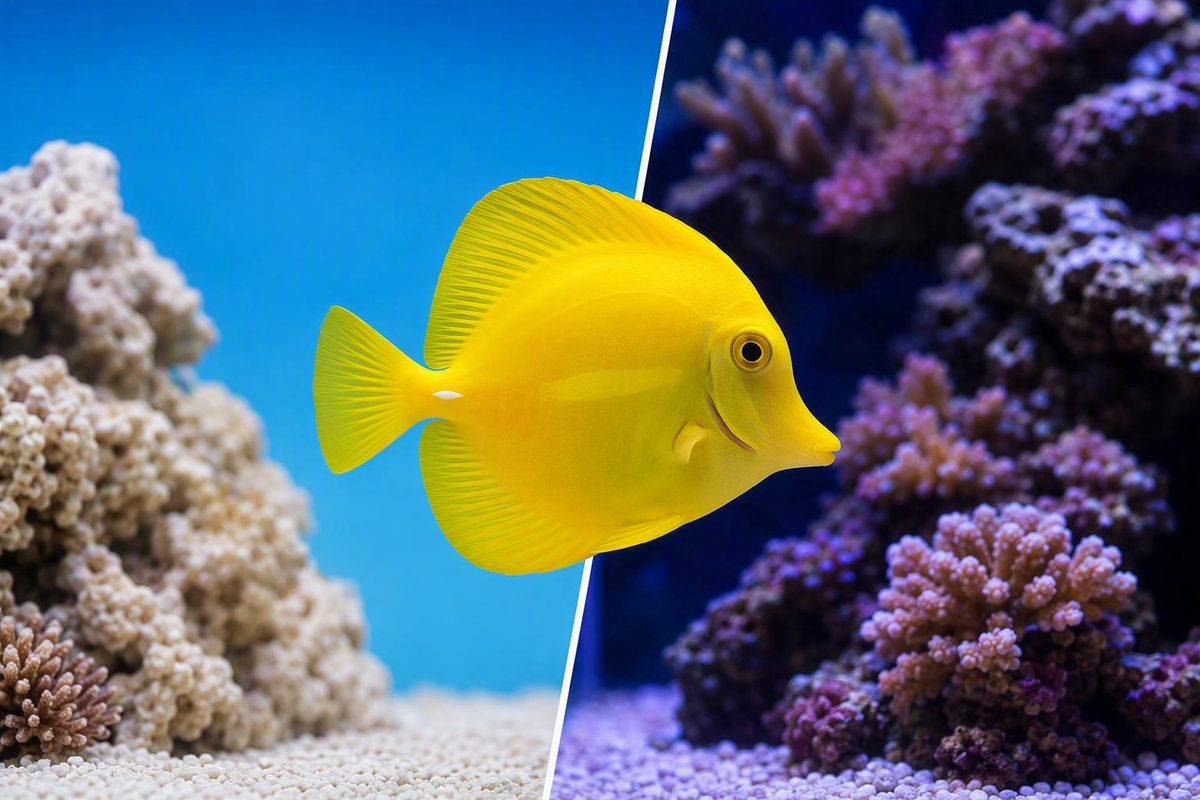
The 2026 Hawaii vote did not create a new yellow tang shortage. See the halt timeline, reported prices, and what to verify before buying.
The August 28, 2026 Hawaii Land Board vote does not change what a yellow tang costs at your local fish store today: West Hawaii collection had already been halted for nine years and the statewide commercial supply for five. The vote rejected a route to reopening rather than imposing a new restriction, so any price difference predates this week’s decision.
Why Buyers Expect A New Price Shock
The expected reaction is understandable. Yellow tangs were once routinely discussed as $15–$50 fish, while reported post-halt examples run from a $125 captive-bred auction purchase to a $750 specialty-market report. A headline saying Hawaii rejected commercial collection can therefore sound like the removal of fresh supply.
The broad historical shift is real. Hobbyists recalled paying about $15 in the early 2000s, less than $20 at some local stores, roughly $40 several years before the cited discussion, and $50 in 2018. Those are personal recollections rather than a verified market average, but they consistently describe a fish priced in tens of dollars rather than hundreds (Reddit).
The mistake is attaching that established price change to the August 2026 vote. Regular Hawaiian wild supply had already ended. Captive breeding, non-Hawaii wild sourcing and a segmented resale market developed around that reality years before the Board acted.
Move the year slider to see whether that date created a new supply interruption or continued an existing halt.
Select a year to separate a fresh supply interruption from a continuation of the existing Hawaii collection halt. The published fraction shifted to captive-bred or non-Hawaii stock is unavailable for every year.
| Year | Hawaii Commercial Status | Documented Trade Signal | Fraction Shifted |
|---|---|---|---|
| 2015 | Operating before reported West Hawaii halt | Regular Hawaiian wild channel available | — not reported |
| 2016 | Operating before reported West Hawaii halt | Regular Hawaiian wild channel available | — not reported |
| 2017 | West Hawaii collection halted | Regional interruption begins | — not reported |
| 2018 | West Hawaii collection halted | $50 private purchase later recalled | — not reported |
| 2019 | West Hawaii collection halted | Regional halt continues | — not reported |
| 2020 | West Hawaii collection halted | Regional halt continues | — not reported |
| 2021 | Statewide permits invalidated | Captive-bred inventory reportedly clears quickly | — not reported |
| 2022 | Statewide regular supply still halted | Injunction lifted, but collection did not resume; captive-bred listings observed | — not reported |
| 2023 | No permits granted; collection remained unlawful | Seven-permit, eight-species proposal reported | — not reported |
| 2024 | Statewide regular supply halted | Captive-bred and other reported channels remain relevant | — not reported |
| 2025 | Statewide regular supply halted | $125 auction and $185 captive-bred listing reported; non-Hawaii wild fish also reported | — not reported |
| 2026 | Statewide regular supply halted; reopening rejected August 28 | April court ruling preceded Board rejection; no new operating supply was removed | — not reported |
Default 2026 reading: the latest vote continued the established supply position rather than creating a new interruption.
Sources: Earthjustice’s August 28, 2026 account; Reef Builders reports from 2021 and 2023; dated price observations cited in the article. “—” means the evidence supplies no percentage.
The Supply Halt Happened In Stages
“Hawaii ban” is useful search shorthand, but commercial aquarium-fish collection halt is more precise. The policy concerns taking fish commercially from Hawaiian waters, not merely exporting fish that continued to be collected normally.
According to Earthjustice’s August 28 account, commercial aquarium collection stopped in West Hawaii in 2017. Existing commercial aquarium-fishing permits were invalidated statewide in January 2021, ending the regular legal flow of newly collected Hawaiian yellow tangs.
An injunction preventing permits from being issued was lifted in 2022. That procedural change was sometimes described as the ban being lifted, but permits were not consequently issued and collection did not resume. A February 2023 Reef Builders report described a proposed fishery restricted to seven permits, eight collectible species and catch quotas, with yellow tang among the proposed species.
In April 2026, an Environmental Court ruled that the Land Board was statutorily authorized to prohibit commercial collection through an administrative rule. On August 28, the Board rejected the proposal to resume collection in West Hawaii and directed the Department of Land and Natural Resources to reconsider alternatives, according to Earthjustice.
That sequence makes the price implication narrow. The Board closed the remaining live route back to a Hawaiian wild supply; it did not remove fish that were entering wholesalers’ systems on August 27.
The latest supplied account is an advocacy organization’s press release describing an outcome it supported. The evidence available here does not include the corresponding official Board decision, minutes or agency notice. Earthjustice also said the Division of Aquatic Resources could revisit the issue through further rulemaking and public hearings, so the rejection should not be read as proof that collection can never resume.
The Price Increase Predates The 2026 Vote
There is no verified 2026 average, median or market-wide percentage increase. The available observations mix memories, asking prices, auctions, private resales and service-inclusive listings. They establish a large directional change, not one universal post-ban price.
| Date | Reported Price | Fish Or Channel | Evidence Type |
|---|---|---|---|
| Early 2000s | About $15 | Origin unspecified | Hobbyist recollection |
| 2018 | $50 | Private owner’s purchase | Reported transaction |
| October 2022 | About $165 | Small Biota captive-bred | Observed asking price |
| October 2022 | About $239 | Larger Biota captive-bred | Observed asking price |
| October 2022 | $250 | Captive-bred | Forum observation |
| 2023 | $400 | Resale of fish bought in 2018 | Private resale report |
| 2025 thread | $125 | Biota captive-bred auction | Reported purchase |
| 2025 thread | $185 | Biota captive-bred listing | Reported asking price |
| January 2025 | $299 | Store fish, origin unstated | Forum observation |
| 2025 thread | About $400 | Reported Sea of Japan fish | Participant report |
| 2025 thread | $750 | Reported Sea of Japan fish | Isolated outlier report |
| Date unstated | $499.99 | Marketed as Hawaiian | Service-inclusive listing |
The October 2022 figures came from a hobbyist video reporting about $165 for a small captive-bred fish and $239 for a larger one (YouTube). A separate 2022 discussion referred to a $250 captive-bred fish and debated whether future supply might lower prices (Bay Area Reefers).
A 2025 discussion reported a $185 Biota listing, a $125 Jersey Corals auction purchase and a $299 store price. Participants in the same thread referred to purported Sea of Japan specimens at about $400 and later $750 (Reef2Reef). These are participant reports, not verified import or market records.
The $499.99 example was a retailer page advertising a fish as Hawaiian. The price included claimed professional quarantine, health verification, overnight shipping and a three-day live-arrival guarantee (retailer listing). It documents the seller’s price and service claims, not independently verified provenance or a market-wide value.
Averaging these figures would create a misleading benchmark. A $125 auction fish and a $750 specialty report differ in origin claims, size, seller, transaction type, date and included services. Even the $165 and $239 captive-bred observations show that size alone can materially change the comparison.
The Trade Adjusted Around Other Supply Channels
The statewide halt produced an immediate supply disruption in 2021. Reef Builders reported that demand for Biota’s captive-bred yellow tangs jumped after the shutdown, saleable inventory cleared quickly and only limited stock was expected before larger-scale sales resumed (Reef Builders). The report did not publish a dollar price.
Captive-bred yellow tangs remained available later. A 2025 CORAL Magazine interview said only one facility was breeding the species at that time and described aquacultured fish as substantially more expensive than historically available wild fish, but it supplied no retail-price dataset (CORAL Magazine).
Forum participants also reported wild fish from outside Hawaii, particularly the Sea of Japan. The supplied evidence does not independently verify those origins or quantify their share of the trade.
No source in the evidence provides the fraction of annual yellow tang sales that shifted to captive-bred or non-Hawaii wild stock. That fraction is therefore shown as unknown in the timeline tool rather than estimated. What the dated listings do establish is that those alternative channels were operating before August 2026.
Seeing a yellow tang for sale after 2021 consequently does not prove recent Hawaiian collection. It may be captive-bred, reportedly sourced from another wild population or an older privately held fish. The reverse assumption is also unsupported: the evidence does not show that every post-2021 fish was captive-bred, old inventory, mislabeled or unlawfully collected.
The conservation and cultural arguments are broader than retail pricing. Earthjustice states that most wild-caught aquarium fish die within their first year in captivity, while yellow tangs can live for more than 40 years in the wild. Collection opponents also cite reef protection, public-trust obligations and Native Hawaiian traditional and customary practices. Industry advocates describe a restricted fishery as potentially sustainable and economically valuable. The price observations do not resolve that dispute, and the fact that the latest vote creates no new retail shock is not an argument against the Board’s authority or conservation rules.
What A Buyer Should Check On The Tag
A tag saying “yellow tang” establishes too little for a useful price comparison. The first check is the scientific name, Zebrasoma flavescens. The second is production method: captive-bred or wild-caught. If wild-caught, the seller should identify the claimed collection region rather than relying on “Hawaiian” as a premium adjective.
A Hawaiian-origin claim deserves specimen-specific support. Ask when the seller acquired the fish and what lawful-origin or chain-of-custody information supports the description. A label alone does not reveal collection date or independently prove provenance. The supplied evidence does not establish which records every seller is legally required to retain, so the practical test is whether the seller can explain the claim clearly and document it.
Actual length matters more than a seller’s loose “small” or “large” category. Ask for an approximate measurement and whether it includes the tail. The October 2022 observations of about $165 and $239 do not establish a standard size premium, but they show why two captive-bred fish can carry different prices without either listing being anomalous.
The price type belongs beside the livestock price. Note whether it is a standing retail offer, promotional listing, completed auction, private resale or conventional completed sale. A $125 auction result shows what one bidder reportedly paid under those auction conditions; it does not make $125 an on-demand retail price.
Delivered cost is the comparable number. Include shipping, box or handling charges, taxes where applicable and any minimum-order requirement. Keep livestock-only comparisons separate from offers that bundle conditioning, treatment, quarantine, overnight shipping or a guarantee.
Service words need definitions. Ask how long the fish was observed, what treatments or tests were performed, and what documentation is available. Read the live-arrival claim window, required evidence, exclusions and remedy. A refund, replacement and store credit do not transfer the same risk to the seller.
These checks distinguish a plausible premium from a headline-driven markup. They also prevent a small captive-bred auction fish from being compared as though it were the same product as a larger, service-inclusive fish marketed as Hawaiian.
Reopening Would Not Guarantee $50 Yellow Tangs
The available evidence offers no basis for predicting a return to $50 fish. The 2023 concept involved only seven permits, eight species and catch quotas rather than restoration of the former high-volume supply chain.
Additional lawful supply could put downward pressure on some prices. The result would still depend on the permits and quotas actually approved, collection and freight costs, fish sizes, wholesale distribution, captive-production capacity, retailer pricing and buyer preference for captive-bred versus wild fish. The draft evidence provides no figures with which to calculate that effect.
A small quota-limited fishery could produce premium Hawaiian fish rather than inexpensive commodity stock. Greater volume could instead create competition and lower some prices. Neither outcome can be quantified from the supplied reports.
For a buyer looking at a tank and a store tag today, the August 28 decision changes the prospect of future Hawaiian supply, not the source or wholesale cost of the fish already in front of them. Compare that specimen’s production method, claimed origin, size, included services and delivered price. Do not add a new-shortage premium merely because a nine-year West Hawaii halt generated a new headline.