
Unveiling the Vibrant World of Sunrise Shells: Rare Hawaiian Treasures for Jewelry and Collecting
A low price may reflect a different shell type, loose labeling or secondhand condition. Compare exact photos, measurements and whole or pre-drilled status.
If you are researching a sunrise shell, the most important thing to understand up front is the evidence base. The material available here comes mainly from seller listings, a wholesaler site, jewelry collections, marketplace results, and a few promotional blog or product pages. That makes this guide strongest as a marketplace and shopping guide: it can show how sunrise shells are described, what formats they are sold in, what price ranges appear, and which seller-attributed sourcing details recur.
What it cannot do from this evidence alone is independently verify species-level taxonomy, legal collection status, or older cultural history. That distinction matters because sunrise shell listings often mix concrete details—such as size, color, drilling status, shipping terms, or whether you are buying a single shell or a pair—with broader claims about rarity, symbolism, or Hawaiian heritage.
Read this guide, then, as a careful answer to a practical question: How are sunrise shells presented and sold, and how can a buyer screen listings more intelligently?
Across the seller pages captured here, a sunrise shell is consistently presented as a colorful, scallop-shaped Hawaiian shell used in jewelry and collecting. ShellsHawaii describes them in shades such as pink, yellow, orange, and peach, often with stripes or spots, while WhiteSandJewelry and Laine Honolulu show them as components in handmade jewelry. Sunrise Shells Wholesale frames them as loose shells for makers, collectors, and stores, with inventory organized into singles, matched pairs, and small lots.
That gives buyers a useful starting point. It does not make every sunrise-shell claim equally strong. The most reliable information in this evidence set is transactional and visual: exact item photos, stated dimensions, whether a shell is drilled or whole, whether it is sold singly or as a pair, the seller’s stated location, and the observed price. The farther a claim moves away from those details and toward mythology or prestige language, the more cautiously it should be read.
This guide walks through what sunrise shells look like in the market, where sellers say they source them, how they are used in jewelry, what current listings suggest about price, and how to shop more carefully online or in Hawaii without mistaking seller storytelling for independent proof.
What Is a Sunrise Shell?
In marketplace terms, a sunrise shell is a seller-described Hawaiian shell with a scallop-like shape and vivid color. That description is consistent across raw-shell listings, wholesale collections, finished-jewelry pages, and blog-style promotional content, even though the level of detail varies a lot by source.
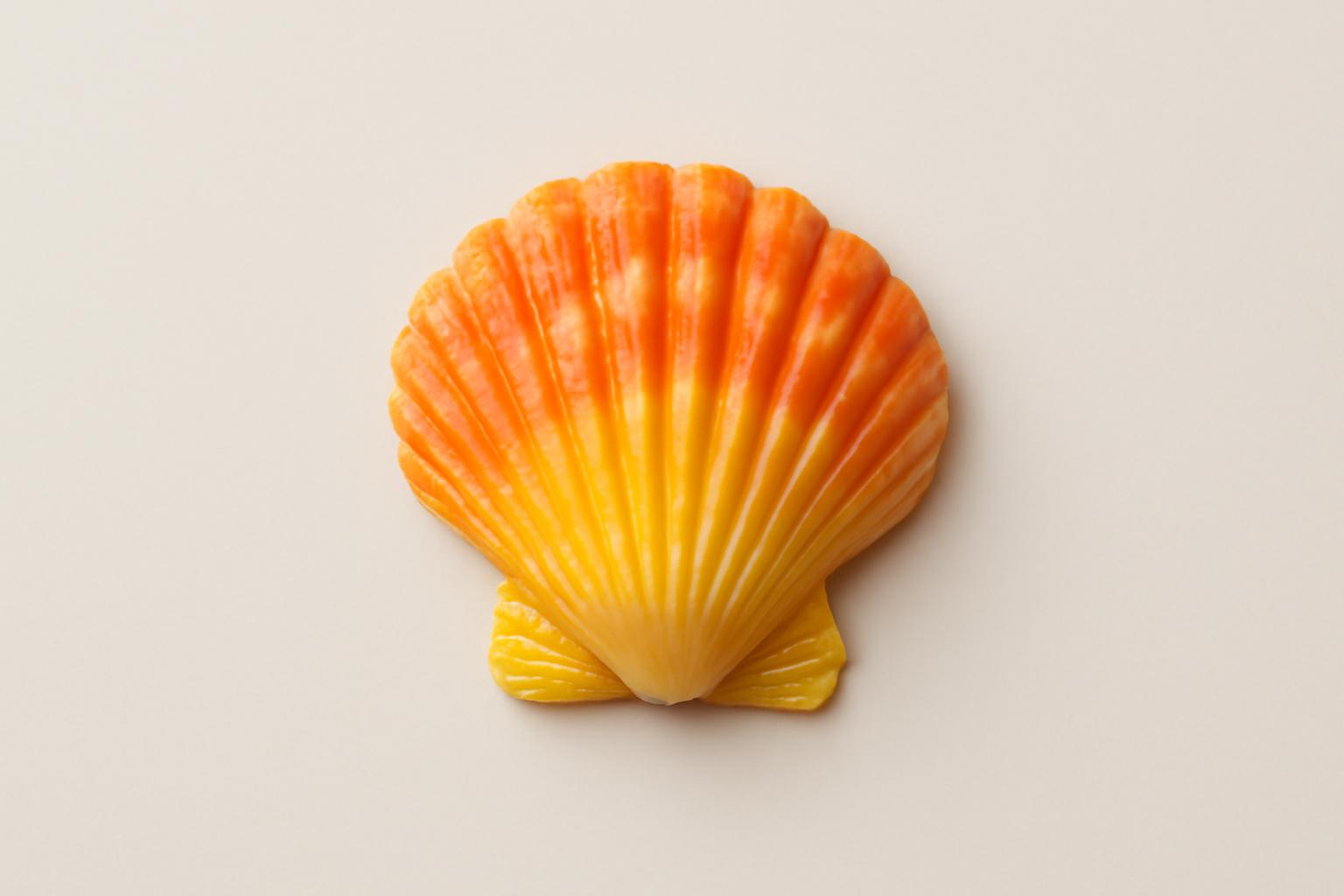
ShellsHawaii gives the clearest retail description in the evidence set. It describes sunrise shells as rare, scallop-shaped shells from Hawaiʻi, in shades ranging from pink and yellow to orange and deep peach, often with natural stripes or spots. That same seller presents them as individual pieces rather than standardized inventory, which matches how they appear in the product photos: each shell has its own pattern, color blend, and overall look.
From the listings and images captured here, buyers can expect sunrise shell products to commonly show:
- a fan or scallop-like outline
- warm mixed colors rather than a single flat tone
- visible patterning such as stripes, spots, or blended bands
- one-off variation from shell to shell
- use either as a loose specimen or as a jewelry focal element
For jewelry makers, ShellsHawaii provides the most concrete size information. Its loose sunrise shells commonly appear in the 21 to 32 mm range, with product examples such as a 27 mm yellow-and-green shell. That size range helps explain why they are repeatedly marketed for earrings, pendants, shell leis, and layered necklaces: they are large enough to show color and pattern, but still small enough to wear.
ShellsHawaii also uses the label “Hawaiian Langford’s Pecten.” In this evidence pack, that name appears as seller terminology, not as independently verified scientific classification. So it is safest to treat it as a marketplace label unless you have outside shell-reference confirmation.
Another useful marketplace distinction is whole versus pre-drilled shells. ShellsHawaii says some sunrise shells are sold pre-drilled and others whole. For buyers, that matters immediately:
- Whole shells may appeal more to collectors or buyers planning custom work.
- Pre-drilled shells are easier for jewelry makers who want to use the shell right away.
WhiteSandJewelry adds a different kind of evidence. Its sunrise-shell collection does not explain biology or taxonomy, but it shows the shell used in handmade-in-Hawaii jewelry, including bracelets and necklaces. That confirms an important point about how the term functions commercially: “sunrise shell” is not just a decorative theme or print motif in the market. It is also a recognizable shell component sold as loose material and as finished jewelry.
So, in practical shopping terms, a sunrise shell listing is easiest to recognize when several of these features appear together:
- the seller ties the shell to Hawaii
- the shell has a scallop-like form
- the palette includes pink, yellow, orange, peach, or mixed tones
- the photos show the individual shell itself
- the item is sold for jewelry making, collecting, or finished Hawaiian-style jewelry
That combination is more useful than relying on romantic product wording alone. It helps you identify what sellers mean by “sunrise shell” in actual commerce, even when independent scientific verification is not provided.
Hawaiian Sourcing and Availability
The strongest sourcing pattern in the evidence is simple: sellers overwhelmingly present sunrise shells as Hawaiian-sourced, and Oahu appears often in the most specific listings.
Sunrise Shells Wholesale says it is located on the North Shore of Oahu and has been supplying jewelry makers, retail stores, and collectors since 2009. It further says that it finds and cleans the shells it sells. That is still self-reported sourcing, but it is more specific than generic “from Hawaii” wording because it ties the business to a place, a business history, and a particular product pipeline.
ShellsHawaii also gives location cues. Its sunrise shell listings repeatedly identify shells as being from Hawaii, with examples tied specifically to Oahu. Compared with vague souvenir copy, those listings are more useful because they combine seller-attributed origin with measurable details such as size, color, and whether the item is a single shell or a set.
In practice, sunrise shells show up in several different retail formats:
- Loose single shells
- Matched pairs
- Small lots
- Finished jewelry
- Store stock in Hawaii
- Large marketplace listings
That matters because “available” can mean very different things depending on your goal.
If you want a finished sunrise shell necklace or bracelet, the evidence suggests that availability is fairly straightforward. WhiteSandJewelry showed a sunrise-shell collection with about 30 products, and Laine Honolulu had a sunrise-shell necklace collection page, though only one item was shown there in the captured view.
If you want raw shells, availability narrows but does not disappear. ShellsHawaii displayed 17 sunrise shell items, and Sunrise Shells Wholesale organized inventory into single shells, matched pairs, and small lots. That makes the category feel commercially active rather than merely aspirational.
If you want broad search-marketplace access, availability looks larger still. An eBay search snapshot for “Hawaiian Sunrise Shells” showed 214+ results, mostly in jewelry-related categories. But those results also illustrate the downside of broad marketplaces: the keyword space included Florida shell listings and other products that do not clearly belong to the Hawaiian sunrise shell niche.
The availability picture therefore breaks down like this:
- WhiteSandJewelry / Laine Honolulu: easier for finished jewelry buyers
- ShellsHawaii: useful for loose shells with size and color details
- Sunrise Shells Wholesale: useful for singles, pairs, lots, and wholesale-style buying
- eBay: large supply, mixed relevance, more labeling noise
Sunrise Shells Wholesale adds one more practical detail about local access. It says its shells are available through Ben Franklin and Ace Hardware stores in the Hawaiian Islands. That suggests sunrise shells are not marketed only through boutique jewelry brands; buyers in Hawaii may also encounter them through broader island retail channels.
The key sourcing takeaway is not that Hawaiian provenance is independently proven in every listing. It is that Hawaii, and especially Oahu, is central to how sunrise shells are marketed and differentiated. Buyers should therefore read source language carefully:
- “from Hawaii” is broad
- “from Oahu” is more specific
- “North Shore of Oahu” is more specific still
All of those remain seller claims in this evidence set. But the more specific the seller is, the more context the buyer has for evaluation.
Just as important, the current evidence pack does not include primary regulatory or museum sources that would verify collection rules, export rules, or species distribution. So if legal or ecological sourcing matters to you, this article can show how sellers frame origin, but it cannot confirm that framing independently.
Sunrise Shells in Jewelry Making and Crafts
Jewelry is where the sunrise shell market is most developed. Even though some buyers collect loose shells, the clearest commercial identity of the sunrise shell in this evidence set is as a component in handmade Hawaiian jewelry.
WhiteSandJewelry’s sunrise-shell collection showed finished pieces such as:
- Gold Sunrise Shell Bracelets at $395
- Shoreline Necklace at $425
- Shoreline Glow Necklace at $445
Laine Honolulu showed a different example:
- Small Pink Pearl Sunrise Shell & Bead Lariat Necklace at $152 listed as sold out in the captured view
These examples matter because they show more than one price tier and more than one design style. Sunrise shell appears both in higher-ticket statement jewelry and in simpler necklace designs at a lower price point.
At the loose-material level, ShellsHawaii says sunrise shells are suitable for:
- leis
- earrings
- layered creations
It specifically suggests pairing them with Momi or Laiki shells, which places sunrise shell within a broader Hawaiian shell-jewelry vocabulary rather than as a completely standalone novelty item.
Sunrise Shells Wholesale adds an especially useful maker-oriented detail by separating inventory into:
- Single Shells
- Matched Pairs
- Small Lots
That product structure maps directly onto how makers shop.
A single shell is usually the right format for:
- a pendant
- a charm
- a central necklace focal
- a collector specimen
A matched pair makes more sense for:
- drop earrings
- mirrored dangles
- coordinated two-shell designs
A small lot is more relevant for:
- production jewelers
- resellers
- buyers who want sorting choice
- designers building inventory
That format distinction is not minor. It changes both value and usability. A jewelry maker who needs well-matched earrings is not really shopping for the same thing as a collector who wants one particularly colorful shell.
Pre-drilled shells add another decision point. ShellsHawaii says some sunrise shells are sold pre-drilled, which reduces labor for crafters. But once a shell is drilled, it is permanently altered. So the right choice depends on purpose:
| Product type | Best for | Main advantage | Main tradeoff |
|---|---|---|---|
| Loose single shell | Collectors, pendant makers | Unique one-off piece | May need drilling or custom setting |
| Matched pair | Earring makers | Better visual coordination | Narrower selection criteria |
| Small lot | Resellers, production makers | More inventory at once | Requires sorting by look and quality |
| Finished jewelry | Gift buyers, wearers | Ready to wear | Price reflects labor, design, and branding |
Shipping and fulfillment details also matter in this category because many of the sellers are Hawaii-based. WhiteSandJewelry and Laine Honolulu both advertise free U.S. shipping on orders over $150. Laine Honolulu also states a 10 to 14 business day processing time, excluding weekends and Hawaiʻi state or federal holidays. For buyers ordering a gift, an event piece, or inventory, that is important context: this is not always same-day mass retail fulfillment.
The sunrise-shell motif also extends beyond actual shell products. Trader Vic’s sells a ceramic “SUNRISE SHELL” mug priced at $38, described as an 18-ounce item and shown as unavailable in the captured page. That product does not provide evidence about the shell itself, but it does show how recognizable the sunrise-shell image has become in decorative merchandise. It is a sign of the shell’s commercial symbolism, not a source for shell biology or sourcing facts.
Taken together, the evidence suggests that sunrise shell is not just sold as raw natural material. It is sold as:
- a jewelry-making component
- a collectible loose shell
- a Hawaiian-made finished jewelry feature
- a broader visual motif in themed merchandise
For most buyers, the first practical question is therefore not “Is sunrise shell used in jewelry?” It clearly is. The better question is: Do you want raw material, a coordinated pair, inventory for production, or a finished wearable piece?
Pricing Breakdown for Sunrise Shells
Sunrise shell pricing only becomes coherent when you stop treating it as one single market. The evidence supports at least four overlapping categories:
- loose raw shells
- matched pairs
- wholesale lots
- finished jewelry
A fifth category—open marketplaces such as eBay—adds more listings, but also more ambiguity.
Here is the clearest evidence-based pricing snapshot from the captured pages:
| Category | Observed range | Notes |
|---|---|---|
| Loose raw shells / small pairs | $55 to $135 | Often 21–32 mm; some pre-drilled |
| Wholesale lots | $200 to $1,000 | Varies by lot and seller-stated quality |
| Finished jewelry | $152 to $445 | Includes necklaces and bracelets |
| Broad marketplace listings | $12+ and up | Mixed inventory; not always clearly comparable |
| Seller-issued certificate | $10 extra | Offered by ShellsHawaii |
At the raw end, ShellsHawaii provides the clearest examples. Its sunrise shell listings included:
- a 27 mm yellow and green shade sunrise shell at $60
- sets of two shells around $85 to $135
- overall pricing across its category from $55 to $135
This range is most relevant to buyers who want the shell itself rather than a finished piece of branded jewelry.
Wholesale pricing climbs fast. Sunrise Shells Wholesale shows lot pricing from about $200 to $1,000, with examples including:
- one lot at $350
- another lot at $1,000
Those are inventory buys, not one-to-one equivalents of single retail shells. A lot price reflects quantity, selection, and the seller’s own quality framing, so it should not be read as directly comparable to a single shell on a craft site.
Finished jewelry sits in a different pricing band. From the retail examples captured here:
- Laine Honolulu’s sunrise-shell lariat necklace was listed at $152
- WhiteSandJewelry’s sunrise-shell bracelets and necklaces were listed around $395 to $445
That difference makes sense because finished jewelry prices include more than shell value alone. The captured listings do not break out cost components, but the product category itself clearly includes design, assembly, materials, presentation, and brand positioning.
Then there is eBay. The search snapshot shows sunrise-shell-related listings beginning around $12 and up, but that low entry point needs careful handling. The eBay results include a mix of:
- necklaces
- earrings
- bulk shell listings
- handmade items
- unrelated or loosely related shell products
Some listings in the same search space are explicitly Florida shells, which is the clearest warning sign in the marketplace evidence. A low price may reflect a different shell type, looser labeling, secondhand condition, or simply a less curated listing environment.
ShellsHawaii also offers a certificate of authenticity for $10. In this evidence set, that should be understood as seller-issued documentation, not independent third-party verification.
Several pricing patterns appear repeatedly enough to be useful:
- Format affects price. Raw shell, pair, lot, and finished jewelry are different buying categories.
- Matching matters. Listings built around pairs or curated sets occupy a different value tier than random single pieces.
- Visual appeal is part of pricing. Sellers emphasize color and uniqueness, and those traits are central to how the items are presented.
- Marketplace context matters. Dedicated Hawaii-linked sellers tend to provide more detail; broad marketplaces tend to provide more noise.
For buyers, the simplest way to interpret the market is this:
- Lower-cost browsing: open marketplaces, but with more screening required
- Raw-shell buying: often around $55 to $135 in the examples captured
- Wholesale or maker inventory: a few hundred dollars up to about $1,000
- Finished jewelry: roughly $152 to $445 in the retail pages captured here
That range is broad, but not random. It reflects different products sold under the same sunrise-shell label.
Seller Claims on Rarity and Cultural Appeal
Sunrise shells are sold with a strong story. Some of that story is directly visible in the marketplace: individual shells look distinctive, Hawaii is central to the branding, and jewelry sellers position them as special keepsakes. But the evidence pack is much stronger at showing current marketing language than at proving historical or cultural claims.
Across the seller and promotional pages, sunrise shells are commonly described as:
- rare
- vibrant
- treasured
- authentic Hawaiian
- desirable for jewelry and collecting
Sunrise Shells Wholesale says it offers “high quality authentic Hawaiian Sunrise Shells.” ShellsHawaii calls them rare and emphasizes that each shell is unique. Those claims are commercial, but they are also consistent with the visual individuality sellers highlight in product photos.
Other pages extend the story into symbolism. Coconut Ave describes the Hawaiian sunrise shell as prized for its vibrant colors, intricate patterns, and rarity, and links it to themes such as rebirth, renewal, and new beginnings. Trader Vic’s ceramic sunrise-shell mug uses similar symbolic language, describing sunrise shells as linked to hope and strength. These examples are useful evidence of brand storytelling and contemporary motif-building.
The Oahu Surfing Experience blog goes further by using highly romantic language around rarity and Hawaiian beach discovery. But it is a surfing company blog, not a shell authority, so its value here is limited to showing how sunrise shells are talked about in tourism-adjacent promotion.
The safest way to read all of this is:
- Rarity is clearly part of the sales story.
- Hawaiian identity is central to the shell’s market appeal.
- Symbolic meanings such as renewal, hope, or strength appear in branded storytelling.
- Older historical or cultural narratives are not independently established by this evidence pack.
That last point is the most important. Without museum, academic, or primary historical sourcing in the evidence set, it is better to avoid treating promotional cultural language as established fact. The available material supports the conclusion that sunrise shells are marketed as meaningful Hawaiian objects. It does not fully verify the deeper historical narratives sometimes attached to them.
For buyers, that distinction matters because story influences price and desire. A shell sold as a rare Hawaiian treasure with emotional symbolism may feel more compelling than one sold only by size and color. That is normal in jewelry and souvenir markets. But if you are buying for collection quality or provenance, the strongest evidence remains practical rather than poetic:
- exact item photos
- stated dimensions
- seller identity
- stated location
- single vs. pair vs. lot
- whole vs. pre-drilled
- clearly described shipping and return context
In short, the evidence pack supports sunrise shell’s commercial and symbolic appeal much better than it supports definitive statements about rarity, origin, or cultural history.
Buying Tips: Authenticity, Shipping, and Marketplace Navigation
This is where the article needs the clearest framing. Based on the evidence here, you can do two useful things:
- screen listings well
- compare seller quality intelligently
What you cannot do from this evidence alone is definitively authenticate a sunrise shell the way a museum, malacologist, or regulatory authority might.
So in this guide, “authenticity” should be understood narrowly: Does the listing consistently match the seller’s own claim of being a Hawaiian sunrise shell? That is a worthwhile buying question, even if it is not the same as independent scientific or legal verification.
Start by choosing the market type that fits your goal.
If you want finished jewelry, WhiteSandJewelry and Laine Honolulu are clearer starting points than a broad marketplace. WhiteSandJewelry showed about 30 sunrise shell products in the captured collection and labels the jewelry Handmade in Hawaii. Laine Honolulu showed a sunrise-shell necklace page with a $152 sold-out lariat and published clear shipping and processing policies.
If you want loose shells, ShellsHawaii is more relevant because it provides item-by-item size, color, and pricing details across 17 listings. If you want singles, matched pairs, or lots, Sunrise Shells Wholesale is more useful still because it structures inventory around those exact needs.
A practical shopping sequence looks like this:
-
Choose the format first. Decide whether you want a loose single shell, matched pair, lot, or finished jewelry.
-
Read the source claim carefully. “Hawaii” is broad; “Oahu” or “North Shore of Oahu” is more specific, though still seller-attributed.
-
Check whether photos show the exact shell. This is especially important for loose shells, where color and pattern are a major part of value.
-
Confirm measurements. ShellsHawaii commonly lists sizes in the 21–32 mm range, and exact millimeters matter for jewelry planning.
-
Confirm whether the shell is whole or pre-drilled. This affects both maker usability and collector appeal.
-
If buying earrings, inspect matching quality. Wholesale pair listings are useful because pairing is a real design need, not just a convenience.
-
Treat certificates realistically. A certificate from ShellsHawaii may be helpful as seller documentation, but it is not independent proof by itself.
-
Read shipping and processing terms before purchase. Hawaii-based fulfillment can involve different timelines than mass-market listings.
This is also the right place to be explicit about the limits of verification. The current evidence pack does not provide museum-backed identification criteria, regulatory confirmation of collection rules, or independent species authentication standards. So any buying advice here should be read as listing evaluation, not definitive authentication.
That said, the evidence does support a strong practical checklist for spotting better listings. A stronger sunrise-shell listing tends to include:
- the exact shell or exact pair in the photos
- a measured size
- whether the item is a single, pair, or lot
- whether it is pre-drilled or whole
- a seller-stated Hawaii or Oahu origin
- close-up images that show pattern and condition
- seller notes about color variation in person
- clear shipping and payment information
ShellsHawaii is especially useful on the photo-review point because it explicitly advises shoppers to zoom images and notes that colors may look a little different in person. That is one of the most practical buyer tips in the evidence set. With a shell sold largely on visual appeal, close image inspection is part of smart shopping.
Marketplace navigation matters even more on eBay. The captured eBay search showed 214+ results for “Hawaiian Sunrise Shells,” but it also mixed in listings that were not clearly Hawaiian sunrise shells at all. If you use eBay, filter for:
- Hawaii-specific wording
- exact-product photos
- seller feedback
- item specifics with measurements
- clear distinction between jewelry and loose shells
- listings that make it obvious what you are actually buying
Be especially alert for keyword pollution. The presence of Florida shell listings in the same result space is the clearest sign that search volume does not equal category accuracy.
Shipping terms also vary by seller type. The evidence includes:
- Free U.S. shipping over $150 from WhiteSandJewelry
- Free shipping over $150 and 10–14 business day processing from Laine Honolulu
- Worldwide USPS Priority Mail from Sunrise Shells Wholesale
- PayPal acceptance from Sunrise Shells Wholesale
If you are shopping in Hawaii, Sunrise Shells Wholesale says it can arrange a private meeting to view loose shells in person, and it also points to island retail placements. In-person viewing is useful because shells are highly visual objects; color, pattern, and surface condition are easier to judge in person than through compressed listing images.
One more buying-context gap is worth stating plainly: this evidence pack does not independently verify legal, permitting, sustainability, or export claims. So if those questions affect your decision, do not rely on seller copy or promotional blog language alone. This guide can show how shells are marketed and sold, but not certify the regulatory context.
The most realistic bottom-line advice is simple: buy the listing, not the legend. The more concrete the listing details, the more confidently you can judge whether the product matches the seller’s own claim.
Care and Handling for Raw Sunrise Shells
Care is the thinnest part of the evidence base. The available material does not include museum conservation guidance or independent shell-preservation instructions, so this section should be read as a conservative summary of seller-reported cleaning and condition information, not a definitive preservation manual.
Sunrise Shells Wholesale says it finds and cleans the shells it sells and notes a blog post titled “How to Clean Sunrise Shells” dated January 22, 2016. The full care method is not provided in the evidence excerpt, but the existence of that post at least confirms that cleaning is a recognized concern in the market.
ShellsHawaii contributes two practical condition notes:
- shells are hand-selected for beauty and quality
- colors may look a little bit different in person, and buyers should zoom images for detail
Those details may seem small, but they imply that condition assessment matters as much as color. For a raw shell, the buyer is judging not only hue but also surface quality, wear, edges, and overall presentation.
Given the limits of the evidence, the safest practical approach is:
- Ask whether the shell has already been cleaned
- Confirm whether it is whole or pre-drilled
- Review close-up photos carefully for color and visible wear
- Prefer seller-specific care guidance where provided
- Keep seller paperwork, listings, and photos if provenance matters
Whole shells and pre-drilled shells also create different handling expectations. A pre-drilled shell is ready for assembly, which makes it useful for makers. A whole shell preserves the shell in a less altered form, which may matter more to collectors or buyers planning custom work.
Because the evidence pack does not include independent conservation sources, it is wise not to infer aggressive home-cleaning methods from general internet advice. If a seller says the shell has already been cleaned, or provides care instructions, that is a stronger basis for action than unsourced folklore.
The same conservatism applies to storage. The evidence here does not provide verified storage protocols such as recommended humidity, wrapping materials, or long-term preservation methods. So the article cannot responsibly invent those details. What it can say is that documentation is part of care in a market where provenance is often seller-asserted. If you are collecting rather than immediately wearing or using the shell, save:
- the original listing
- screenshots
- seller emails
- receipts
- photos of the exact shell received
- any seller-issued certificate
ShellsHawaii’s optional $10 certificate of authenticity may be useful in that record-keeping sense. It should still be understood as seller documentation, not independent certification.
So the most evidence-based care advice available here is intentionally modest:
- buy from sellers who show condition clearly
- inspect exact-shell images closely
- choose whole versus pre-drilled intentionally
- use seller cleaning guidance where available
- save your own records
That may sound less romantic than marketing copy, but it is the practical reality of buying a natural shell object in a market where condition, appearance, and seller attribution all matter.
Taken together, the evidence supports a clear overall conclusion: sunrise shell is best approached as a seller-defined Hawaiian shell category sold through jewelry brands, shell specialists, wholesalers, and broad marketplaces. The strongest facts here concern how shells are described, photographed, priced, packaged, and shipped. The weakest facts concern older history, legal status, and definitive authentication. Buyers will do best when they separate those two layers.
FAQ
What colors and sizes do sunrise shells come in?
ShellsHawaii describes sunrise shells in shades such as pink, yellow, orange, and deep peach, often with stripes or spots. Its item listings also show mixed tones such as green, gray, and warm blended shades, which suggests the market accepts a fairly broad palette as long as the shell fits the expected sunrise-shell look. For loose shells sold for jewelry making, the clearest repeated size range in the evidence is about 21 to 32 mm. The Oahu Surfing Experience blog gives a looser comparison of dime to silver-dollar size, but the millimeter measurements from seller listings are much more useful for actual buying.
Where can I buy loose sunrise shells for jewelry making?
The clearest loose-shell options in this evidence pack are ShellsHawaii and Sunrise Shells Wholesale. ShellsHawaii shows individual sunrise shells and small sets with sizes, colors, and prices, while Sunrise Shells Wholesale organizes stock into single shells, matched pairs, and small lots. Those formats are better suited to makers than finished-jewelry boutiques. If you are in Hawaii, Sunrise Shells Wholesale also says it can arrange in-person viewing and points to island retail placements.
What is the price range for sunrise shell jewelry?
For finished sunrise shell jewelry, the observed examples range from about $152 to $445. Laine Honolulu listed a Small Pink Pearl Sunrise Shell & Bead Lariat Necklace at $152, while WhiteSandJewelry showed sunrise-shell bracelets and necklaces priced from $395 to $445. On eBay, sunrise-shell-related listings begin around $12 and up, but those results are mixed and may not be directly comparable to curated Hawaii-based jewelry collections. For dedicated retail jewelry, the captured evidence points more to the low-hundreds range than to bargain pricing.
Are sunrise shells available on eBay and how reliable is it?
Yes. The captured eBay search for “Hawaiian Sunrise Shells” showed 214+ results, mostly in jewelry-related categories. Availability is not the problem; relevance and verification are. The same result space included Florida shell listings and other items that do not clearly fit the Hawaiian sunrise-shell category. That makes eBay useful for browsing and price comparison, but weak as a self-verifying source. If you buy there, inspect titles carefully, prioritize exact-item photos, and confirm whether the listing is for a loose shell, jewelry piece, or something else.
Do sunrise shell sellers offer shipping and in-person pickup?
Some do, but policies vary. WhiteSandJewelry and Laine Honolulu both advertise free U.S. shipping on orders over $150, and Laine Honolulu states a 10–14 business day processing time. Sunrise Shells Wholesale says it ships worldwide via USPS Priority Mail, accepts PayPal, and can arrange a private in-person meeting for buyers who want to inspect loose shells. It also says its products are available through some Hawaii retail stores. So both shipping and in-person access appear in the market, but they depend on the seller.
Bottom line: sunrise shell shopping is easiest when you treat it as a listing-quality problem, not a mythology problem. Trust dimensions, photos, format, seller identity, and shipping terms first; treat rarity, symbolism, and origin stories as secondary unless they are backed by stronger evidence than the seller’s own copy.