
Choose the Right Food for the Fish in Front of You
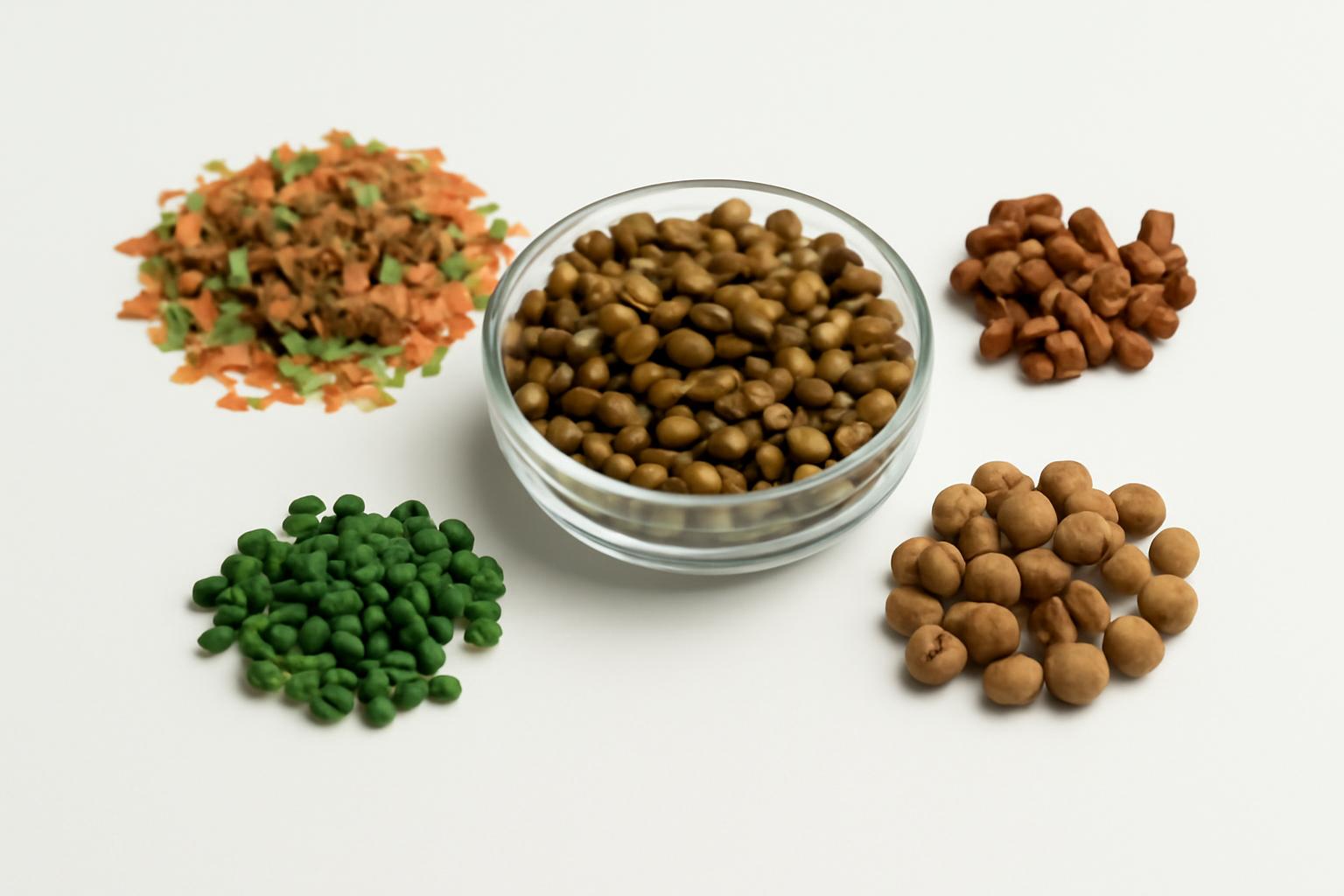
An impressive ingredient list is not enough. The food may be too large, sink beyond a surface feeder's reach or take too long to use after opening.
“High quality fish food” is not a single recipe, ingredient, brand, price tier, or physical format. It is food that suits a particular fish, can be captured and swallowed, remains usable under the package’s storage conditions, and performs acceptably in the aquarium.
That definition makes shopping more practical. Instead of asking which container is universally best, ask whether the food fits the species, life stage, mouth size, dietary pattern, feeding zone, and intended role. Then inspect the current label, choose a practical package size, and observe what happens when the food is fed.
What “high quality” should mean for aquarium fish
Quality is fitness for purpose. A food can have an impressive ingredient list and guaranteed analysis yet remain a poor choice if it is too large, sinks beyond the reach of a surface feeder, does not fit the fish’s dietary pattern, or will remain open longer than the keeper can reasonably use it.
No single feed suits every fish or life stage. University of Florida guidance recommends considering species, developmental stage, feeding behavior, intended use, nutrient profile, physical characteristics, and cost. It also explains that labels help buyers compare feeds but cannot disclose every aspect of formulation quality or animal performance (University of Florida guidance on interpreting fish-food labels).
A practical evaluation has five dimensions:
- Dietary fit: Does the formulation make sense for a broadly carnivorous, herbivorous, or omnivorous fish at its current life stage?
- Physical fit: Can the fish find, capture, manipulate, and swallow the food?
- Label transparency: Does the package provide a complete ingredient list, guaranteed analysis, intended use, feeding directions, responsible company, and relevant storage information?
- Freshness protection: Is the package intact, appropriately sized, and easy to close and store as directed?
- Observed performance: Does the fish accept and swallow the food, maintain appropriate body condition, and receive its share without excessive leftovers?
The food’s role matters too. A staple is intended to form the foundation of the diet. Treats and supplements have narrower purposes, such as variety, enrichment, greater acceptance, or support for a specialized feeding behavior. Color-focused foods emphasize a particular outcome but should not automatically replace an appropriate staple. Foods used for fry, conditioning, or transitioning a reluctant fish may likewise serve a specialized rather than indefinite role.
Ingredient lists and guaranteed analyses are useful screening tools, but they cannot independently establish:
- ingredient freshness;
- protein digestibility;
- amino-acid balance;
- nutrient bioavailability;
- undisclosed ingredient proportions;
- consistency between batches; or
- long-term performance in the intended species.
Terms such as premium, balanced, natural, nutient-rich, and high quality do not resolve those unknowns. A species name or attractive fish photograph can indicate how a product is positioned, but it does not replace a complete current label and species-appropriate reasoning.
The strongest choice is therefore not a universal winner. It is the food that fits the fish in front of you and continues to work after the package is opened.
Start with the fish: diet, life stage, mouth size, and feeding zone
Begin before picking up a container. A simple decision path keeps front-label claims and brand familiarity from becoming the primary selection criteria.
1. Identify the fish precisely
Use the species rather than relying only on broad categories such as “tropical fish,” “community fish,” or “marine fish.” Similar-looking or closely related fish can differ in dietary preferences, capture behavior, and normal feeding zone.
If identification is uncertain, resolve it before buying a specialized diet. A trade name that covers several species is not a nutritional profile.
2. Determine the broad dietary pattern
Classify the fish provisionally as carnivorous, herbivorous, or omnivorous. This is a starting point rather than a complete prescription: two fish described as omnivores may rely on different proportions and types of animal material, algae, plants, detritus, or small invertebrates.
Use the classification to look for a coherent formula:
- Carnivorous fish: Animal-derived protein ingredients should have a plausible role.
- Herbivorous fish: Algae, seaweed, or suitable plant materials should contribute meaningfully to the formulation.
- Omnivorous fish: A combination of animal and plant ingredients may be appropriate.
- Specialized grazers or predators: Broad categories may be inadequate, so species-specific husbandry should guide the choice.
Marine herbivores may be offered fish-appropriate algae, seaweed, or nori products. Verify the intended user, however. Retail collections can place fish foods beside coral, anemone, plankton, and other invertebrate foods; proximity on a page or shelf does not make the products interchangeable (example of a mixed marine-feeding retail collection).
3. Account for life stage
Fry, juveniles, and adults do not necessarily require the same food. Fry need particles they can capture and a formulation intended for their developmental stage. Crushing an adult pellet may make it physically smaller, but that alone does not establish nutritional suitability for early development.
Life stage should therefore be treated as a product-selection factor, not as a reason to import a nutrient target or feeding rule from an unrelated species or production system.
4. Estimate practical mouth size
A particle should be comfortably captured and swallowed—not merely capable of being forced into the mouth.
Watch the fish eat.
Labels such as “micro,” “nano,” and “small” are relative. One nominal particle size will not suit every fry, betta, tetra, goby, or other small fish.
5. Match the feeding zone
Choose buoyancy and density according to where the fish normally feeds:
- Surface feeders: Floating or gradually descending food can remain accessible.
- Midwater feeders: Slow-sinking pellets, granules, crumbles, or flakes may allow interception.
- Bottom feeders: Sinking pellets, wafers, tablets, or suitable gels can deliver food to the substrate.
- Grazers: Sheets, gels, wafers, or food attached to a surface may accommodate prolonged picking.
A bottom-feeding corydoras should not depend entirely on crumbs that happen to escape faster tankmates. Conversely, a surface feeder should not depend exclusively on particles that sink rapidly out of reach.
6. Observe how the fish captures food
Two fish occupying the same level may still feed differently. One may strike individual particles, another may browse a surface, and another may sift the substrate. Food should remain available long enough for the intended behavior without producing persistent leftovers.
One format may not reach every fish in a mixed-species aquarium. Use multiple feeding locations, depths, or particle behaviors when necessary. For example, distribute a surface ration and then place sinking food where bottom dwellers can reach it. Spacing portions can also help shy fish without simply increasing the total amount offered.
Physical accessibility is not secondary to nutrition. A theoretically appropriate formula has little practical value when the intended fish cannot obtain it.
How to read the ingredient list without falling for ingredient myths
Ingredients are generally listed in descending order by weight, while exact proportions commonly remain proprietary. Similar materials may also be grouped under collective terms, making direct comparisons less precise. These conventions and limitations are described in fish-feed labeling guidance, but they do not reveal how a food will perform in a particular aquarium.
Read the list in layers rather than judging only the first word.
What the leading ingredients can reveal
The first several entries identify ingredients contributing more weight than those farther down the list. Look for named materials that make sense for the intended fish:
- suitable animal-derived ingredients in a carnivorous formulation;
- a plausible combination of animal and plant ingredients for omnivores; or
- algae, seaweed, and suitable plant materials in food for herbivorous species.
A named protein near the beginning is a useful formulation clue. It is not proof of adequate inclusion after processing, freshness, digestibility, amino-acid balance, or superior performance.
The same caution applies to fish meal. Its source, composition, handling, and processing can vary, but the words fish meal do not disclose those details. A historical hobbyist article collected differing manufacturer descriptions of fish-meal sources and production practices while noting that proprietary formulation details were generally withheld (hobbyist article reproducing manufacturer statements). Those statements may suggest questions to ask, but they do not turn an ingredient name into a quality grade.
What the list hides
An ingredient panel usually cannot tell you:
- the exact percentage of each ingredient;
- the ingredient’s condition before manufacture;
- how effectively the target fish digests it;
- how processing changed it;
- whether different proteins complement one another;
- how well added nutrients persist through storage; or
- how the finished food performs against another formula.
Collective ingredient terms create additional ambiguity. More precise naming improves transparency, but even a detailed list does not replace feeding evidence.
Multiple proteins are not automatically dilution
The mere presence of several proteins does not demonstrate that a manufacturer has diluted a better ingredient.
Conversely, a long list of attractive proteins does not establish that each is present in a meaningful amount. Ingredients appearing far down the panel may make only a small contribution. Evaluate the formulation as a whole rather than counting fashionable names.
Starches and binders can have useful functions
Flakes and pellets must retain their shape during manufacture, packaging, and feeding. Starches and other binders can provide structure and help a particle remain intact in water. Their presence is not automatic evidence of useless filler; manufacturer-produced guidance also acknowledges their structural role in pellets and flakes (Aqueon’s explanation of fish-food ingredients).
Ask more useful questions:
- Is the overall formula suitable for the species?
- Does the particle stay intact long enough to be eaten?
- Does it soften appropriately?
- Can the fish capture and swallow it?
- Is a disproportionate amount left behind?
The same principle applies to fish meal, soy, grain, insect protein, by-products, and other frequently stigmatized ingredients. None can be classified as universally good or bad without considering its amount, processing, complementary ingredients, and suitability for the target fish.
A hypothetical label walkthrough
Consider this invented example, used only to demonstrate the reading process:
Front: “Premium Natural Color & Vitality Formula” Intended use: Daily food for omnivorous community fish Ingredients: Salmon meal, wheat flour, insect meal, spirulina, fish oil, pea protein, dried yeast, vitamins, minerals Guaranteed analysis: Crude protein minimum 42%; crude fat minimum 9%; crude fiber maximum 4%; moisture maximum 10% Format: 1 mm slow-sinking granule
Separate the information into four categories.
Observable label facts
- The package describes the food as intended for omnivorous community fish.
- Salmon meal appears first in the ingredient list.
- The formula includes animal- and plant-derived materials.
- The granules are described as 1 mm and slow sinking.
- The analysis states minimum or maximum values.
These are facts about what the package declares. They do not verify the product’s real-world sinking rate, species suitability, or performance.
Reasonable formulation clues
- The ingredient combination may be intended for broadly omnivorous fish.
- A slow-sinking design may help some midwater feeders.
- Wheat flour may contribute structure as well as nutrients.
- Spirulina appears before the vitamin and mineral additions, although its exact proportion is unknown.
Unknowns
- the percentage and condition of the salmon meal;
- digestibility for a particular species;
- amino-acid adequacy;
- ingredient freshness;
- actual sinking behavior in the buyer’s aquarium;
- whether the intended fish can swallow a 1 mm granule; and
- whether the food performs better than alternatives.
Promotional language
- “Premium,” “natural,” “color,” and “vitality” position the product.
- Those words do not independently demonstrate nutritional or biological superiority.
This method preserves what the label genuinely communicates without asking it to answer questions it cannot.
What guaranteed analysis can—and cannot—tell you
A guaranteed analysis reports declared nutrient values, commonly expressed as minimums or maximums. It can help compare stated nutrient quantities, but it is not a complete quality score.
Crude protein is a calculated estimate derived from measured nitrogen. The result does not by itself reveal digestibility, amino-acid balance, or biological availability. Two foods with the same crude-protein minimum may perform differently because their ingredients, formulation, processing, storage, and species suitability differ.
Protein supplies amino acids used in tissue maintenance and growth. Lipids provide concentrated dietary energy and supply fatty acids. Vitamins and minerals also matter in a complete formulation. No single protein, lipid, fiber, or ash target, however, applies to every aquarium fish, temperature, life stage, and physiological condition.
Published ranges for aquaculture production feeds can provide context but should not be converted into universal requirements for ornamental fish. University extension guidance frames feed selection around species, size, developmental stage, environment, and intended use rather than one nutrient number for every fish.
Fiber is likewise contextual. A herbivorous grazer, carnivore, and omnivore should not automatically be assessed against the same target. Interpretation depends on the material involved, the complete formulation, and the target species.
Ash is the total mineral matter remaining after analytical combustion. It is not synonymous with waste or useless filler. The ash figure also does not identify individual minerals, their sources, balance, or biological availability. A low number alone cannot establish superior ingredients or digestibility.
Moisture deserves particular attention. Dry and high-moisture foods should not be compared solely by package weight. Water contributes to the weight of frozen and semi-moist products, while dry foods concentrate more dry matter into the same package weight. This difference does not make one format inherently better; it changes how nutrient concentration and value should be compared.
| Label item | What it reports | What it may help compare | What it cannot prove |
|---|---|---|---|
| Crude protein | A calculated protein estimate derived from measured nitrogen, usually declared as a minimum | Stated protein quantity between reasonably comparable foods | Digestibility, amino-acid balance, freshness, or performance |
| Crude fat or lipid | Declared minimum fat level | Relative lipid concentration | Fatty-acid adequacy, oxidation status, or universal species suitability |
| Crude fiber | Declared maximum fiber measurement | Broad formulation differences | One universally desirable fiber level or digestibility |
| Ash | Total mineral matter after combustion | Broad mineral-content differences | Which minerals are present, their availability, or ingredient quality |
| Moisture | Declared maximum water content | Dry-matter and value comparisons | Freshness or nutritional completeness |
| Added vitamins and minerals | Declared additions or premix components | Whether named micronutrients are included | Retention during storage, bioavailability, or a health outcome |
| Ingredient order | Relative order by weight | Broad formulation emphasis | Exact inclusion rates, source quality, or biological performance |
Added vitamins, minerals, and essential fatty acids may be important components of a staple, but their appearance on a label does not justify promises about immunity, disease prevention, coloration, longevity, or growth.
High protein, low ash, fish meal listed first, or a high price cannot independently establish superior food. Each supplies limited information; none provides the final verdict.
Pellets, flakes, wafers, gels, frozen, freeze-dried, and live foods
There is no universal pellets-versus-flakes winner. Formulation, particle dimensions, density, storage history, and feeding behavior matter more than the category name.
Flakes can be distributed over a broad surface and crumbled for smaller mouths. Appropriately sized pellets can make targeted portioning easier and provide more predictable particle behavior. Neither convenience demonstrates universal nutritional superiority.
Wafers and gels can deliver food to bottom-feeding, slow, nocturnal, algae-grazing, or aufwuchs-feeding fish when the formulation is otherwise suitable. Frozen, freeze-dried, and live foods may support variety, acceptance, enrichment, prey-capture behavior, or specialized feeding, but their format does not automatically make them complete, equivalent, safer, or more nutritious.
| Format | Typical water behavior | Preparation | Storage considerations | Useful applications | Limitations |
|---|---|---|---|---|---|
| Floating pellet | Remains near the surface before softening or sinking | Usually ready to feed | Follow package directions; keep dry food resealed | Surface feeders; visible, targeted portions | Poor access for reluctant bottom feeders; size or hardness may be unsuitable |
| Slow-sinking pellet | Descends through the water column | Usually ready to feed | Protect as directed from moisture and adverse storage conditions | Midwater interception; some community tanks | May still sink too quickly or be taken by dominant fish |
| Sinking pellet | Moves toward lower levels | Usually ready to feed | Follow dry-food directions | Bottom feeders and targeted substrate feeding | Surface fish may miss it; leftovers can be concealed |
| Flake | Floats and spreads before gradually sinking | Can be crumbled | Reseal promptly and protect from moisture | Surface distribution and adjustable particle size | Portions can be imprecise; fragments may disperse |
| Wafer or tablet | Sinks and may remain intact for grazing | Usually ready to feed | Keep as directed | Bottom feeders, grazers, and nocturnal fish | May be monopolized; “algae wafer” does not establish species fit |
| Stick | Floating or sinking, depending on design | May need breaking | Follow package directions | Larger mouths or some surface-feeding species | Often too large for small fish |
| Granule or crumble | Floating, suspended, or sinking by formulation | Usually ready to feed | Keep dry and resealed when sold as dry food | Fry, juveniles, small fish, or midwater feeders | “Micro” does not guarantee suitable dimensions |
| Gel | Can be cut, shaped, attached, or placed on the bottom | Mix or prepare as directed | Storage depends on the specific formula and preparation | Grazers, bottom feeders, and slow or nocturnal fish | Preparation and nutritional role vary |
| Frozen | Commonly disperses or sinks after portioning | Prepare as directed | Keep and handle according to package instructions | Variety, acceptance, and prey-like feeding | High moisture; not automatically complete or risk-free |
| Freeze-dried | Often floats unless soaked | Feed dry or rehydrate as directed | Protect from moisture | Convenient supplemental prey items | Buoyancy and texture may not suit every fish |
| Live | Moves naturally through the aquarium | Handling depends on the organism | Species-specific | Enrichment, specialized predators, or some fry | Nutritional profile varies; one live food may be incomplete |
A varied diet is most defensible when built around an appropriate staple. Randomly rotating several incomplete or poorly matched foods does not guarantee balance. Give each supplement a defined purpose, such as supporting natural feeding behavior, providing variety, or helping a reluctant fish begin eating.
Variety must also reach the intended fish. If the same dominant individuals consume every format, adding more products has not created meaningful dietary variety for the rest of the aquarium.
Before buying a specialty product, read its intended-use statement rather than relying on shelf location. Fish, coral, plankton, and invertebrate foods can appear in the same retail collection while serving different animals.
Food quality, feeding technique, and aquarium water quality
Water quality is an outcome of the entire feeding system, not a property that a package can guarantee.
That system includes:
- food acceptance;
- the fish’s ability to capture and swallow each particle;
- digestibility and nutrient use;
- particle integrity and nutrient leaching;
- portion size;
- competition among fish;
- persistent leftovers; and
- filtration and maintenance.
A suitable food can still contribute to problems when too much is added. A physically unsuitable food may fragment or pass uneaten into concealed areas. Conversely, binders that help a pellet remain intact until consumption can serve a useful purpose. University extension guidance identifies binders as contributors to water stability and reduced nutrient leaching, and it identifies poor feed management as an important contributor to deteriorating aquaculture water quality (University of Florida discussion of feed stability and water quality).
That does not mean a particular binder, pellet, or ingredient order guarantees cleaner water. Claims of reduced waste or improved water quality require relevant comparative evidence.
Use an observation-based feeding process:
- Offer a small initial portion.
- Watch which fish detect and capture it.
- Confirm that they swallow rather than repeatedly reject it.
- Add another small portion only when appropriate.
- Check lower levels and concealed areas for missed food.
- Remove persistent leftovers where practical.
- Adjust the next feeding instead of repeating the same quantity automatically.
Some products are intended for prolonged grazing, so food that is not consumed immediately is not always waste. Assess it according to the format, intended fish, and package directions.
Competition can also resemble rejection. Place portions at different ends or depths when that improves access.
After changing foods, monitor:
- Acceptance: Do the intended fish approach and consume it?
- Capture and swallowing: Are particles repeatedly missed or rejected?
- Feeding-zone access: Does the food reach the intended fish?
- Body condition: Does the fish maintain an appropriate profile over time?
- Feces: Is there a persistent, unexplained change after the transition?
- Leftovers: How much remains or disappears into inaccessible areas?
- Water-quality trends: Do established measurements change after feeding practices change?
- Competition: Are shy or slower fish prevented from eating?
Change one major variable at a time when possible. Simultaneously changing food, portion size, filtration, and maintenance makes the result harder to interpret.
Treat “cleaner water” as a testable system outcome, not as something established by a fashionable ingredient, high protein figure, firm pellet, or front-label promise.
Freshness, storage, and value after the container is opened
A suitable formula can become a poor purchase if the package is damaged, stored contrary to its directions, or too large to use sensibly.
Start with the current package. Distinguish among:
-
Manufacture date: When the food was produced.
-
Post-opening instruction: Any direction specifically addressing refrigeration, freezing, resealing, or use after opening.
These fields are not interchangeable, and none automatically establishes a universal post-opening life for every product.
For dry food, follow the package directions, close the container promptly, and protect it from heat, direct light, air, and moisture as instructed. Do not assume that directions for a dry pellet also apply to frozen, semi-moist, freeze-dried, or prepared gel food.
One veterinarian-authored article recommends discarding opened food after six months, but the page does not cite research establishing that deadline for every food and storage condition. It should be treated as Jessie Sanders, DVM, DABVP’s rule of thumb rather than a universal requirement (Fish Vet’s selection and storage guidance).
Extension guidance describes dry pellets as relatively low-moisture products and notes that semi-moist feeds generally have shorter storage lives and may require refrigeration. Those observations reinforce the need to follow format-specific package directions; they do not establish one replacement date for every opened aquarium food.
Buying the largest container may reduce the price per gram while increasing the time the product remains open. A smaller package that can be used under its stated storage conditions may provide better practical value than a bulk container that deteriorates or becomes unacceptable to the fish.
Compare value using more than the sticker price:
- Price per unit weight: A useful starting point.
- Moisture: Important when comparing dry, semi-moist, and frozen products.
- Expected usable servings: Estimate what the aquarium will actually consume.
- Likely time open: Consider whether the package size matches feeding demand.
- Acceptance: Food the fish refuses has little practical value.
- Uneaten material: Count what is consumed, not merely what is added.
- Packaging: Consider whether the container can be closed and stored as directed.
- Preparation losses: Account for portions of thawed or prepared food that are not used.
Package weight is especially misleading across moisture categories. Frozen foods contain substantial water, so price per ounce is not necessarily price per equivalent amount of dry matter. Convenience may still have value even when a format costs more per unit of dry matter.
Recording the opening date on the container provides a useful reference without pretending that the date alone determines freshness or nutrient retention.
A conflict-aware checklist for comparing products
A disciplined comparison separates what the package must or does disclose from what the seller wants the buyer to conclude.
| Criterion | Questions to ask | Stronger indication | Warning sign |
|---|---|---|---|
| Species and life-stage fit | Is the intended fish and stage clear? | Specific, plausible intended use | Broad “all fish” positioning without useful guidance |
| Dietary fit | Does the complete formula suit the fish’s dietary pattern? | Coherent ingredients and purpose | One fashionable ingredient standing in for the whole diet |
| Particle size | Can the fish capture and swallow it? | Measured dimensions or a useful description | “Micro” or “small” without context |
| Buoyancy and density | Will it reach the normal feeding zone? | Water behavior is specified and later confirmed in use | No useful indication of particle behavior |
| Role | Is it a staple, supplement, treat, or specialty food? | Purpose is stated clearly | Promotional claims obscure the nutritional role |
| Label completeness | Are ingredients, analysis, directions, and company details available? | Full current label can be inspected | Only front-of-package claims are shown |
| Ingredient transparency | Are major ingredients identified clearly? | Specific names | Broad collective terms throughout |
| Storage protection | Is the package intact and practical to close? | Package supports the stated storage directions | Damaged seal or impractically large container |
| Package size | Can it be used sensibly after opening? | Size matches realistic feeding demand | Bulk size chosen only for a lower unit price |
| Feeding directions | Are they useful as a starting point? | Format- or species-aware directions | A rigid rule presented as universal |
| Cost per usable serving | What is actually consumed? | Accounts for moisture, acceptance, and leftovers | Comparison based only on package price |
| Evidence for claims | Are methods and comparisons supplied? | Relevant, measurable evidence | Unsupported health or performance promises |
For closer evaluation, classify information into five categories rather than treating every package statement as equally strong.
1. Required or regulated label declarations
Depending on the applicable rules and product, these can include product identification, responsible company information, an ingredient list, guaranteed analysis, and relevant directions or warnings. Any legal interpretation should be based on current federal and state requirements rather than assumptions drawn from one package.
2. Voluntary manufacturer specifications
Particle dimensions, floating or sinking behavior, intended species, and specialty uses may be useful specifications. The buyer can verify that the claim appears on the package, but its presence does not independently verify real-world performance.
3. Direct physical observations
Package integrity, particle dimensions when measured, odor after opening, and actual behavior in the aquarium can be observed directly. These observations are still context-dependent: sinking rate, for example, may vary with the particle and aquarium conditions.
4. Formulation clues and expert rules of thumb
A named animal protein near the top, algae in an herbivore food, or a suggested replacement period may guide further questions. These are not equivalent to controlled evidence of nutritional adequacy or performance.
5. Marketing and performance claims
Treat claims about immunity, coloration, growth, longevity, vitality, sustainability, digestibility, reduced waste, or cleaner water cautiously unless relevant methods, comparison groups, and results are supplied.
Palatability sits between observation and incomplete evidence. A food must be eaten to be useful, but eager consumption does not prove nutritional completeness. Fish may strongly accept a treat that would be unsuitable as their sole long-term diet.
Use current packaging rather than old reviews or copied retailer descriptions. Formulations, analyses, package sizes, prices, and availability can change.
Author favorites, affiliate recommendations, manufacturer articles, and retailer rankings can identify available formats and stated features. They are not controlled comparative tests. Aquarium Co-Op, for example, presents its roundup as a list of personal favorites while also selling the featured products; that makes the page useful for discovering formats, not for declaring a universal winner (Aquarium Co-Op’s retailer-authored roundup).
Reef Directory states that it does not sell equipment, accept sponsored posts, or maintain affiliate relationships with livestock vendors. That is the publisher’s own account of its editorial model, not evidence that it has manufactured, certified, laboratory-tested, or independently compared fish foods (Reef Directory’s editorial-independence statement).
Before buying, run through this final checklist:
- Identify the fish and its life stage.
- Confirm its broad dietary pattern.
- Check particle dimensions, shape, texture, and likely swallowing ease.
- Confirm whether the food floats, descends gradually, or sinks.
- Inspect the complete current ingredient list and guaranteed analysis.
- Decide whether the product is a staple, supplement, treat, or specialty food.
- Verify that a marine specialty product is intended for fish.
- Read the storage and preparation directions.
- Choose a package size that matches realistic use.
- Check the package condition and understand the printed date or lot information.
- Compare cost by usable serving rather than package price alone.
- Record the opening date.
- Transition deliberately and monitor the fish and aquarium.
Frequently asked questions
Are pellets better than flakes?
Not categorically. Appropriately sized pellets can simplify targeted feeding and portioning, while flakes can spread across the surface and be crumbled for smaller mouths. Either format may be suitable or unsuitable depending on its formulation, dimensions, water behavior, storage, and the fish.
Jessie Sanders, DVM, DABVP, favors pellets when an appropriately sized pellet fits the fish’s mouth because of proposed differences in exposure and nutrient retention. Her page does not provide comparative research establishing that every pellet is superior to every flake, so the recommendation should not be treated as a universal rule.
Does a higher crude-protein percentage mean better fish food?
No. Crude protein is a calculated estimate based on measured nitrogen. It helps compare the declared quantity of protein-related material but does not reveal digestibility, amino-acid balance, freshness, bioavailability, or suitability for a particular species.
A higher figure may be appropriate in one formulation and unhelpful in another. Interpret it alongside life stage, dietary pattern, ingredient sources, moisture, and the rest of the nutrient profile.
Is fish meal a sign of high- or low-quality food?
Neither conclusion follows from the name alone. Fish meal can vary in raw material, handling, processing, composition, and freshness. An ingredient list generally does not disclose enough information to grade it from the words fish meal.
Treat fish meal near the beginning of a list as a formulation clue. Then examine the intended species, complete analysis, other ingredients, label transparency, storage condition, and observed performance. The same restraint applies to by-products, insect protein, soy, and grain.
How long is fish food good after opening?
There is no defensible universal post-opening deadline for every format and storage condition. Follow the current package directions and distinguish its manufacture date, best-by date, lot code, and any post-opening instructions.
Consider the food type, package integrity, storage environment, and time since opening. Replace food sooner when the package is damaged or the product shows moisture intrusion, visible mold, abnormal odor, pest contamination, or other deterioration. A smaller package may be more practical than trying to keep a bulk container open for an extended period.
Should live or frozen food replace a prepared staple?
Not automatically. Live and frozen foods may be useful for enrichment, acceptance, prey-capture behavior, fry, reluctant feeders, or specialized species. One prey item may nevertheless have nutritional gaps, and neither “live” nor “frozen” establishes completeness, equivalence, or safety.
Build variety around an appropriate staple unless the alternative diet’s adequacy for the particular fish has been established. Give each supplement a defined purpose and confirm that every intended fish—not only the quickest individual—receives a suitable share.
The final decision sequence is straightforward: identify the fish’s dietary and physical needs, inspect the current label, choose food that reaches the correct feeding zone, decide whether it is a staple or supplement, buy a package size that can remain usable under its storage directions, and monitor both the fish and aquarium after the switch.
The best-supported definition of high quality is fit for the individual fish—not a premium adjective, favored ingredient, high protein number, physical format, high price, or universal brand winner.