
Fish Flathead Lake for Lake Trout and Whitefish
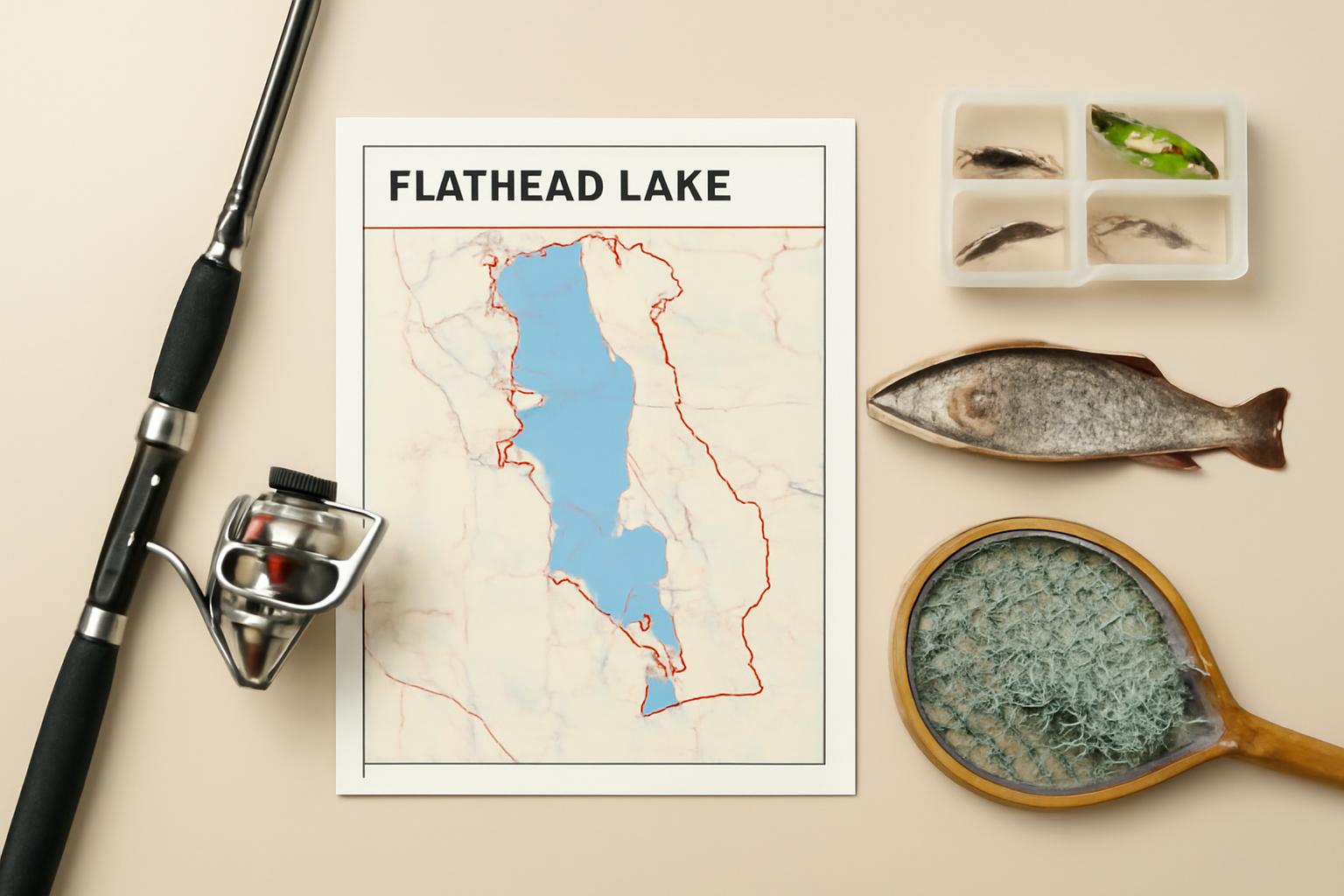
The southern-half whitefish limit is 20; the north requires a separate rule check. Match seasonal tactics, access and licensing to the lake section.
Flathead Lake fishing is best approached as two trips in one: choose a target species and seasonal pattern, then confirm whether you will fish the northern state-managed portion or the southern half within the Flathead Indian Reservation. Lake trout are the main open-water target, lake whitefish reward precise bottom presentations, and yellow perch offer a shallower option in protected bays. The license and permit boundary matters, and native bull trout and westslope cutthroat trout must be released.
This guide reflects regulations and access information checked on July 14, 2026. Always check the official rules and emergency restrictions again immediately before fishing.
Start with the license boundary
Flathead Lake crosses the boundary of the Flathead Indian Reservation. Do not assume one license package covers every part of a day on the lake.
- North of the Reservation boundary: Montana FWP’s 2026 fishing regulations apply. FWP says most anglers age 12 or older need a Conservation License, a base fishing license, and an Angler Aquatic Invasive Species Prevention Pass; confirm the current combination on the official fishing-license page.
- Southern half of Flathead Lake: A Flathead Reservation permit is required. The joint 2026–27 CSKT/FWP regulations, effective March 1, 2026 through February 28, 2027, list a south-half-only combined conservation/fishing option and a CSKT Prevention Pass. That lake-only option does not authorize other recreation elsewhere on the Reservation. Carry the required license and photo identification.
- Tribal land outside a state-park unit: Separate recreation-permit rules may apply even when the fishing license question is settled. Follow posted land status and access signs rather than relying on a generic map app.
Regulations can change temporarily. As of July 14, 2026, FWP’s current waterbody restrictions page listed a construction-related boating closure on a section of the Flathead River, not a lake-wide Flathead Lake closure. That snapshot is not a promise about tomorrow: check the page on the day of the trip and obey notices at launches.
What can you catch in Flathead Lake?
Lake trout: the primary deep-water target
Lake trout, often called mackinaw, are the lake’s signature fishery. They follow cold water and forage, so productive depth changes through the year. Montana FWP’s Flathead Lake Fishing Guide recommends looking around points, rubble slopes, drop-offs, and flats next to steep breaks rather than crossing featureless open water.
The 2026 rules on both halves of the lake set an unusually liberal lake-trout limit: 100 daily and in possession, with only one fish over 36 inches and mandatory release of all fish from 30 through 36 inches. Verify that wording before keeping fish, because temporary rules can supersede the booklet.
Seasonal starting points:
- April through June: Cold water brings lake trout closer to the surface and shore. Flatline spoons or minnow-style plugs over sloping structure, or cast from shore where deep water is nearby.
- Summer: Follow the thermocline and bottom structure. Vertical jigging or controlled-depth trolling is more reliable than fishing an arbitrary depth. Start around marked fish and bait, then adjust.
- October and November: Lake trout gather around rocky points, island structure, and other spawning habitat. Jigging and shore casting become useful again.
- Winter: Fishing remains possible where access and ice are safe, but ice conditions on such a large lake are variable. Never treat a calendar date as proof of safe ice.
For vertical jigging, lower a jig to the bottom, reel up slightly, and use short lifts followed by a controlled fall. Many strikes occur on the drop. For trolling, trace contours and steep breaks instead of driving a straight line across empty flats.
Lake whitefish: subtle bites near the bottom
Lake whitefish are abundant, but they can be harder to locate consistently. The FWP guide places them near the bottom, commonly over sand or gravel bars and off points. A light rod, thin line, and a small spoon or jig help reveal soft strikes.
Anchor or drift very slowly, keep the lure within inches of bottom, and mix short jigging motions with pauses. Early morning is a useful starting window. The current southern-half limit is 20 fish; anglers on the northern half should confirm the Western District standard and any current Flathead Lake exception before retaining fish.
Yellow perch: a shallower bay option
Yellow perch favor protected bays, sandy or silty bottom, and nearby weeds. Polson Bay is a well-known winter and spring location, especially around the April spawning period; Big Arm Bay and other sheltered southern bays may also hold schools. Move until you find active fish rather than waiting over an empty patch.
The 2026 state and Reservation rules allow no limit on smaller perch but only 10 daily over 10 inches; the state booklet lists no possession limit on the northern portion. Recheck the exact rule for the water you will fish.
Native trout require special care
Do not confuse lake trout with bull trout. Under the 2026–27 Reservation rules, bull trout are closed to fishing and possession, while cutthroat trout are catch-and-release. The state rules likewise require release of cutthroat trout in the northern part of Flathead Lake. If identification is uncertain, keep the fish in the water and release it.
Where to start
Choose access based on wind direction, launch capability, and the species pattern—not simply the closest pin on a map.
- Big Arm and Polson Bay: Protected southern and western water with perch opportunities; Polson also offers shore access.
- Wayfarers and West Shore: Shore anglers can reach steep, rocky water that can produce lake trout during the cool-water windows in May–June and October–November.
- Yellow Bay and the east shore: Steeper contours suit trolling and jigging for lake trout. Yellow Bay has a deep-water launch that Montana State Parks says is typically ice-free through winter.
- The Narrows and island structure: Points, ledges, and steep breaks concentrate forage and give boat anglers defined trolling or jigging routes.
Montana FWP’s Flathead Lake State Park page describes the Big Arm, Finley Point, Wayfarers, West Shore, Wild Horse Island, and Yellow Bay units. Review the individual unit page before leaving home: launch conditions, camping availability, fees, and seasonal services are not uniform. A park unit also does not grant permission to cross adjacent Tribal or private land.
A simple first-trip plan
- Pick one species. Lake trout are the most straightforward boat target; perch are more approachable in sheltered bays; whitefish demand finer bottom contact.
- Mark the jurisdiction boundary. Save the current state and Reservation regulations offline, and buy the correct licenses before launching.
- Choose two nearby structures. For lake trout, select a point and an adjacent steep break. For perch, select two protected bays. This creates a backup without requiring a long, rough crossing.
- Match the seasonal depth. Start shallower in spring and late fall. In summer, use sonar and temperature structure rather than last month’s depth report.
- Check wind, access, and closures again. Flathead Lake is large enough for conditions to change the safe plan. If the open-water crossing is questionable, use a sheltered access point or stay ashore.
- Identify every fish before keeping it. Know the lake-trout slot, release native trout, and record retained fish as needed to avoid exceeding the limit.
Boat and fish responsibly
The 2026–27 Reservation rules require watercraft entering the Flathead Basin to be inspected for aquatic invasive species and require operators to carry proof of inspection. Stop at every open inspection station on your route. Clean, drain, and dry boats and gear, and do not move live fish or water between waterbodies.
The same rules prohibit live fish as bait and prohibit using parts of salmonids—including trout, salmon, and whitefish—as bait. Regulations differ by water and can be more restrictive, so check the bait section before rigging.
Finally, review the fish-consumption guidance in the current regulations before planning meals. Larger, long-lived lake trout can carry higher contaminant loads than smaller fish. Keeping a legal fish and choosing how often to eat it are separate decisions.
Bottom line
A successful Flathead Lake fishing plan is specific: target lake trout, whitefish, or perch; choose structure that fits the season; launch from an access point suited to the day’s wind; and carry the license package for the part of the lake you will actually fish. Treat the Reservation boundary, native-trout release rules, invasive-species requirements, and live closure page as part of the trip—not paperwork to check after the boat is in the water.