
What to Expect From a Ghost Shrimp’s Lifespan in Your Aquarium
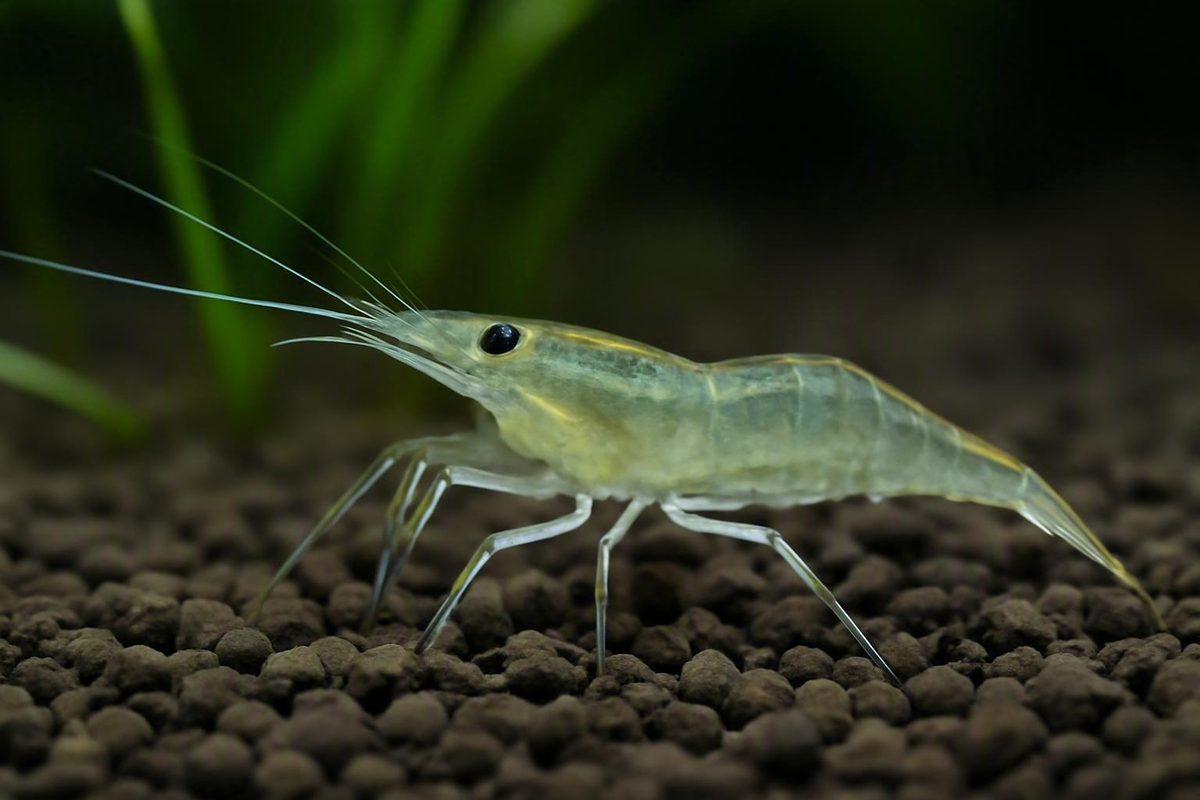
Expect about 1-2 years in total under suitable conditions. Time after purchase may be shorter because the shrimp's age and history are unknown.
The short answer: ghost shrimp usually live about 1–2 years
Freshwater ghost shrimp generally live for about 1–2 years in total under suitable aquarium conditions. Roughly 12–18 months is a useful benchmark because it overlaps several published care estimates, but it is not a scientifically established average or a promise for any individual shrimp. One hobbyist lifespan guide lists both the 12–18-month estimate and a broader usual range of one to two years while acknowledging that the figures are based mainly on keeper experience and limited biological inference rather than dedicated lifespan research. Aquarium Breeder explains the estimate and its evidentiary limits.
Three different time frames are easy to confuse:
- Potential total lifespan: approximately one to two years.
- Remaining lifespan after purchase: potentially much shorter because the shrimp’s age and history are unknown.
- Exceptional lifespan: possibly longer than two years, but poorly documented and not a realistic baseline.
Published care guides do not all use the same estimate. Some center the expected lifespan near one year, while others allow for survival approaching two years. That variation may reflect different species, stock quality, aquarium conditions, and the limited quality of the available evidence.
The purchase date is not the shrimp’s birth date. A store-bought adult may already have lived through a substantial portion of its total lifespan.
Claims that ghost shrimp can reach three years require particular caution. That figure appears as a possible maximum in hobbyist material, not as a verified biological maximum. It should be treated as an exceptional and weakly substantiated possibility rather than a routine result of excellent care.
The most defensible expectation is therefore simple: plan around a total lifespan of about one to two years, with 12–18 months as a qualified benchmark. Time in your aquarium may be considerably shorter because species, age, transport history, and health before purchase are usually unknown.
First confirm what “ghost shrimp” means
“Ghost shrimp” and “glass shrimp” are common trade names rather than consistently precise species identifications. This article concerns the translucent freshwater aquarium shrimp commonly sold under those names, often identified broadly as Palaemonetes species.
The same label can be applied to more than one translucent freshwater shrimp. Whisker shrimp, Amano shrimp, and other lookalikes may also be mislabeled in stores. A seller may identify an animal as Palaemonetes sp. without establishing its exact species.
That ambiguity matters because two transparent shrimp sold under the same common name may differ in:
- Adult size
- Temperament
- Predatory behavior
- Water-parameter tolerance
- Likely lifespan
- Suitability for a community aquarium
Ask for a scientific name when possible. Photographs and visible characteristics may help distinguish obvious lookalikes, but appearance alone will not always provide definitive identification.
Do not transfer Amano shrimp lifespan figures directly to ghost shrimp. In one aquarium discussion, an estimate of 18 months to three years appears to refer to Amano shrimp rather than the ghost shrimp discussed elsewhere in the thread. The same discussion also contains survival reports ranging from days to almost two years, illustrating why forum anecdotes cannot establish a species-level average. The AquariaCentral thread shows both the reported variation and the Amano shrimp confusion.
Scientific identification is one reason every ghost-shrimp lifespan estimate should be treated as a range rather than a guarantee. If you can establish the species, prioritize care information written for that species over guidance based only on a store label.
The scope here is explicitly freshwater aquarium shrimp. The available evidence does not establish lifespan or husbandry requirements for marine animals that may share a similar common name or transparent appearance.
Why lifespan after purchase may be much shorter
A shrimp’s potential biological lifespan is not the same as the length of time it will survive after you bring it home. At purchase, you usually do not know:
- Its exact species
- Its age
- How long it has been in the supply chain
- How it was handled during collection and transport
- Whether it received adequate food
- Whether its previous water conditions were stable
- Whether it was already injured, weakened, or chronically stressed
Ghost shrimp are often inexpensive and may be handled as feeder animals rather than display livestock. Dealer conditions can vary substantially. A specialist retailer estimates a potential lifespan of 1–1.5 years but also notes that shrimp coming from poor feeder-tank conditions may survive only a few weeks. Those are commercial care estimates rather than controlled research findings, but they illustrate why purchase history matters. The Shrimp Farm discusses both the potential lifespan and the effect of feeder-tank conditions.
Bag water may differ from the destination aquarium in temperature or chemistry, and the shrimp has already experienced handling and confinement. The available evidence does not establish one scientifically proven acclimation protocol, so an early death should not automatically be blamed on a particular method. Major environmental differences and transport history are possibilities to investigate, not definitive diagnoses.
Predation can also resemble a short lifespan. A missing shrimp may have been eaten rather than dying naturally.
Keeper reports describe survival ranging from a day or a week to nearly two years. Commonly proposed explanations include weak stock, acclimation stress, predation, unknown purchase age, and differences among animals sold under the same name. These are uncontrolled anecdotes and should not be averaged into a lifespan figure or treated as proof of any particular cause. AquariaCentral’s keeper reports demonstrate the range and limitations of anecdotal accounts.
Responsible care can reduce preventable risks, but it cannot restore time already lost to age or previous health problems. A shrimp dying after several months does not, by itself, prove that the current aquarium was unsuitable. At the same time, an unexplained death should not be dismissed as old age without checking the environment.
Water quality and stability are the foundation of survival
Add ghost shrimp only to a fully cycled freshwater aquarium.
The most consistent practical targets across the supplied care guidance are:
- No measurable ammonia
- No measurable nitrite
- Low nitrate
- Stable temperature and water chemistry appropriate for the identified species
- No abrupt, unnecessary parameter changes
Nitrate guidance varies. Some care material advises keeping it as low as practical, while another guide specifies a level below 20 ppm. The shared lesson is to prevent nitrate and other waste from steadily accumulating rather than assuming that one upper limit is universally safe.
Published temperature and pH recommendations also differ. Across the supplied guides, the outer recommendations extend from roughly 65–82°F, while the broadest stated pH limits extend from 6.5 to 8. FishLore lists 65–80°F and pH 6.5–8, whereas The Shrimp Farm recommends 65–82°F, pH 7.0–7.8, and 3–15 dKH. The Shrimp Farm provides its source-specific temperature, pH, hardness, and cycling recommendations. FishLore supplies the broader pH range and its own temperature guidance.
Those combined outer limits should not be converted into one universal “ideal range.” They come from different care guides and may encompass different species sold under the same common name.
Another commercial guide recommends 72–80°F, pH 6.5–7.5, no measurable ammonia or nitrite, and nitrate below 20 ppm. It also advises using a cycled aquarium and filtration that will not draw shrimp into the intake. These remain publisher recommendations rather than experimentally established requirements for every ghost shrimp. Micro Aquatic Shop gives these water and filtration targets.
For practical aquarium management:
- Identify the shrimp as closely as possible.
- Learn about the water in which it was previously kept.
- Confirm that the aquarium is cycled before adding it.
- Keep ammonia and nitrite below the detection limit of the test being used.
- Keep nitrate low through appropriate maintenance.
- Avoid sudden changes in temperature, pH, and hardness.
- Make adjustments gradually instead of repeatedly chasing competing online targets.
A test result is more informative than assuming that water is safe because it looks or smells clean.
Some general dwarf-shrimp material associates cooler water with slower metabolism and longer life. That broader proposition should not be converted into a ghost-shrimp-specific guarantee. The supplied evidence does not show through controlled research that deliberately lowering the temperature extends the life of correctly identified ghost shrimp. Stable, species-appropriate conditions are a more defensible objective than temperature manipulation intended to gain extra months.
Food, shelter, filtration, and tank mates also affect longevity
Ghost shrimp are scavengers, but scavenging does not guarantee adequate nutrition. In a clean or lightly fed community aquarium, leftovers may be inconsistent or eaten before the shrimp can reach them.
Make sure the shrimp have dependable access to suitable food. Sinking shrimp pellets and algae wafers are examples found in care guidance. The appropriate amount depends on the number of animals, available grazing surfaces, competition, and other food entering the aquarium. A rigid feeding schedule is not justified by the available evidence.
Observe what happens after food is added. Confirm that the shrimp can reach it, and remove unnecessary excess before it contributes to deteriorating water quality.
Shelter is also important. Plants, moss, substrate, rocks, wood, caves, and similar structures provide places to retreat. Cover is especially useful when shrimp share an aquarium with fish or are otherwise vulnerable.
Use gentle filtration and protect intake openings. Sponge filters are one straightforward option; other filters may be made safer with a suitable pre-filter or intake guard. The objective is to maintain circulation and biological filtration without pulling shrimp into equipment. Commercial ghost-shrimp guidance includes food access, cover, gentle filtration, and protected intakes among its practical care recommendations. Micro Aquatic Shop addresses feeding, shelter, and filtration precautions.
Tank-mate selection may determine whether a shrimp has a chance to approach its potential lifespan. Larger or predatory fish may eat ghost shrimp. Even when a fish cannot easily swallow an adult, its behavior should be observed rather than inferred from a general “community fish” label.
There is not enough evidence here to justify a comprehensive safe-fish list. Evaluate each proposed companion according to its size, diet, hunting behavior, mouth size, and observed conduct.
Overcrowding and inadequate shelter are best treated as potential stressors, not automatic explanations for every death. Their effects depend on the aquarium’s size, layout, filtration, food availability, and other inhabitants.
Copper and other aquarium hazards can cause premature death
Copper-containing fish medications can be dangerous to ghost shrimp. Before treating a shared aquarium, read the complete product label and check its warnings for shrimp and other invertebrates. Do not assume that a medication is safe merely because it is intended for freshwater fish.
One care profile recommends moving shrimp before medicating fish, paying particular attention to copper-containing products, and removing residual medication before the shrimp are returned. The product’s directions should remain controlling because formulations, doses, and treatment procedures vary. FishLore gives the copper warning and separation recommendation.
This warning should not be expanded into a claim that every fertilizer, medication, or trace copper concentration has the same effect. Product formulation, dose, duration of exposure, water chemistry, and the form of copper can differ. The narrower practical rule is to treat known copper exposure seriously and verify that any product used in a shared aquarium is appropriate for invertebrates.
If a ghost shrimp dies unexpectedly, review non-aging hazards such as:
- Measurable ammonia or nitrite
- Accumulating nitrate or neglected maintenance
- Abrupt temperature or chemistry changes
- A filter intake or equipment gap that can trap shrimp
- Fish or other inhabitants capable of predation
- Recent medication use
- Newly introduced equipment, decorations, or substances
- Poor access to food or shelter
These nonspecific signs should prompt observation, water testing, and an environmental review rather than a confident diagnosis.
When several shrimp decline or die close together, investigate shared conditions urgently. An aquarium forum discussion involving several adults declining together raised the same concern, although the proposed explanations remained anecdotal and unconfirmed. The AquariaCentral discussion illustrates why simultaneous losses should not automatically be attributed to age.
A timeline for troubleshooting early ghost shrimp deaths
Timing cannot establish a definitive cause, but it can help you decide what to investigate first.
If the shrimp dies or disappears within the first day, consider:
- Its condition at purchase
- Transport or acclimation stress
- Major differences between store and aquarium water
- Medication or another hazardous exposure
- Predation
- An unsafe filter intake or equipment gap
Test the water rather than assuming that acclimation was the sole cause. Inspect the filter and search sheltered areas before concluding that a missing shrimp died.
If losses occur during the first week, review the aquarium’s basic life-support system:
- Test ammonia and nitrite.
- Confirm that the aquarium was fully cycled before the shrimp were introduced.
- Review medications and possible copper exposure.
- Inspect filter intakes and other trapping hazards.
- Observe tank mates at different times of day.
- Confirm that food reaches the shrimp.
- Compare the current temperature and chemistry with the seller’s water if that information is available.
A week is far shorter than the expected biological lifespan, so old age should not be the default explanation. An already old or severely weakened shrimp could still die during that period, but the environment deserves investigation.
If deaths occur during the first month, continue monitoring stability rather than relying on one favorable test result. Recheck food access, shelter, predation, and stock condition.
Reports of survival for a week, a month, six months, or nearly two years provide anecdotal context only. They combine animals of unknown age and species with different transport histories, aquariums, predators, and water conditions. They are not evidence of fixed life stages.
If a shrimp dies after many months, natural aging becomes more plausible, especially if it was already adult-sized when purchased. Exact age remains unknowable, however. Time in your aquarium represents only the final part of a life that began before the sale.
If several shrimp decline together, prioritize a shared environmental problem over coincidental individual aging. Test the water promptly, review anything recently introduced, inspect the equipment, and observe the other animals. Include medication exposure and possible contamination in that review.
Do not diagnose the cause from appearance alone. A cloudy body, inactivity, hiding, or difficulty moving may accompany multiple problems and cannot independently establish disease, poisoning, molting failure, or old age.
A realistic longevity checklist
No checklist can guarantee a particular lifespan, but these steps can reduce preventable risks:
- Confirm the scope. Make sure the animal is a freshwater shrimp and identify it beyond the common name when possible.
- Use a fully cycled aquarium. Do not introduce shrimp merely because a new tank’s water has cleared.
- Keep ammonia and nitrite unmeasurable. Interpret results according to the limitations of the test being used.
- Keep nitrate low. Track its direction over time rather than treating one reading as permanent reassurance.
- Favor stability. Avoid abrupt or repeated changes in temperature, pH, and hardness.
- Provide dependable food. Do not assume that community-tank leftovers are always sufficient.
- Include shelter. Use plants, substrate, rockwork, wood, or other suitable retreats.
- Protect filter intakes. Maintain effective biological filtration without exposing shrimp to avoidable equipment hazards.
- Choose tank mates cautiously. Judge companions by their actual size, diet, and behavior.
- Read medication labels. Account for shrimp and other invertebrates before treating a shared aquarium.
- Review stock condition before purchase. Visible damage or poor dealer conditions should temper expectations.
- Investigate clustered losses. Several deaths together make shared water, equipment, medication, or tank-mate problems more urgent to examine.
Keep a simple record of the purchase date, water-test results, maintenance, tank mates, medication use, and losses. Record-keeping is not a validated diagnostic method, but it may reveal patterns that memory misses.
Evaluate success by the consistency of the care you provide, not by a promised number of months. Species, age, and prior health are often outside your control. Your responsibility is to reduce current risks and respond promptly when something changes.
Frequently asked questions
Can ghost shrimp live longer than two years?
Possibly, but survival beyond that point appears exceptional rather than normal. Some hobbyist material proposes a longer maximum, while also acknowledging that shrimp-lifespan estimates are not based on a dedicated biological study.
For practical planning, use the ordinary range rather than an exceptional claim. FishLore describes a lifespan of a year or two and notes that some may live longer, but it does not establish a verified maximum.
Why did my ghost shrimp die soon after I bought it?
Possible explanations include poor condition at purchase, transport or acclimation stress, an uncycled aquarium, measurable ammonia or nitrite, abrupt water differences, medication exposure, predation, or an unsafe filter intake. The shrimp may also have been older than it appeared.
Test the water, inspect the equipment, review recently used products, and observe the tank mates. An early death does not establish one cause or automatically prove that your present care was responsible.
How long will an adult ghost shrimp live after purchase?
There is no dependable way to calculate the remaining lifespan of a store-bought adult. Its exact age, species, previous conditions, and health history are usually unknown.
Adult size is not an age clock. Use the expected total lifespan only as context, not as a countdown beginning on the purchase date.
Are copper-based fish medications dangerous to ghost shrimp?
Yes. Copper-containing fish medications can be dangerous to ghost shrimp. Check the complete label before treating an aquarium containing shrimp or other invertebrates.
Depending on the product directions, fish may need to be treated in a separate suitable system or the shrimp may need to be moved. Account for residual medication before returning shrimp to a treated aquarium.
Do ghost shrimp need a heater?
Not in every aquarium. The need for a heater depends on room temperature, day-to-night stability, and the requirements of the actual species sold as a ghost shrimp.
It should not be used merely to force the aquarium toward an arbitrary midpoint.
The bottom line
A freshwater ghost shrimp may live about 1–2 years in total, with 12–18 months serving as a useful but non-guaranteed benchmark. These estimates come primarily from aquarium care guides and keeper experience, not controlled longevity studies. Aquarium Breeder summarizes the 12–18-month estimate and the limits of the underlying evidence.
Time after purchase may be much shorter because the shrimp’s species, age, health, and previous conditions are usually unknown. Focus on what you can control: a cycled and stable aquarium, no measurable ammonia or nitrite, low nitrate, dependable food, shelter, protected filtration, appropriate tank mates, and careful medication use. Sudden or simultaneous losses should prompt an environmental investigation rather than an automatic assumption that the shrimp simply reached old age.